Texas Longhorns with newborn calf in Bluebonnets

Texas Longhorns with newborn calf in Bluebonnets

Please note I have a new phone number...

512-517-2708

Alan Maki

Alan Maki
Doing research at the LBJ Library in Austin, Texas

It's time to claim our Peace Dividend

It's time to claim our Peace Dividend

We need to beat swords into plowshares.

We need to beat swords into plowshares.

A program for real change...

http://peaceandsocialjustice.blogspot.com/2013/03/a-progressive-program-for-real-change.html


What we need is a "21st Century Full Employment Act for Peace and Prosperity" which would make it a mandatory requirement that the president and Congress attain and maintain full employment.


"Voting is easy and marginally useful, but it is a poor substitute for democracy, which requires direct action by concerned citizens"

- Ben Franklin

Let's talk...

Let's talk...

Friday, February 12, 2016

Why Hillary Clinton Doesn’t Deserve the Black Vote

A very informative and interesting article raising the need for a new political party but still very weak on the question of peace. It is almost like someone has dictated that peace should not be a topic for discussion during the 2016 Elections:

Why Hillary Clinton Doesn’t Deserve the Black Vote
From the crime bill to welfare reform, policies Bill Clinton enacted—and Hillary Clinton supported—decimated black America.
By Michelle Alexander
FEBRUARY 10, 2016
The Nation

Hillary Clinton loves black people. And black people love Hillary—or so it seems. Black politicians have lined up in droves to endorse her, eager to prove their loyalty to the Clintons in the hopes that their faithfulness will be remembered and rewarded. Black pastors are opening their church doors, and the Clintons are making themselves comfortably at home once again, engaging effortlessly in all the usual rituals associated with “courting the black vote,” a pursuit that typically begins and ends with Democratic politicians making black people feel liked and taken seriously. Doing something concrete to improve the conditions under which most black people live is generally not required.

Hillary is looking to gain momentum on the campaign trail as the primaries move out of Iowa and New Hampshire and into states like South Carolina, where large pockets of black voters can be found. According to some polls, she leads Bernie Sanders by as much as 60 percent among African Americans. It seems that we—black people—are her winning card, one that Hillary is eager to play.

And it seems we’re eager to get played. Again.

The love affair between black folks and the Clintons has been going on for a long time. It began back in 1992, when Bill Clinton was running for president. He threw on some shades and played the saxophone on The Arsenio Hall Show. It seems silly in retrospect, but many of us fell for that. At a time when a popular slogan was “It’s a black thing, you wouldn’t understand,” Bill Clinton seemed to get us. When Toni Morrison dubbed him our first black president, we nodded our heads. We had our boy in the White House. Or at least we thought we did.

Black voters have been remarkably loyal to the Clintons for more than 25 years. It’s true that we eventually lined up behind Barack Obama in 2008, but it’s a measure of the Clinton allure that Hillary led Obama among black voters until he started winning caucuses and primaries. Now Hillary is running again. This time she’s facing a democratic socialist who promises a political revolution that will bring universal healthcare, a living wage, an end to rampant Wall Street greed, and the dismantling of the vast prison state—many of the same goals that Martin Luther King Jr. championed at the end of his life. Even so, black folks are sticking with the Clinton brand.

What have the Clintons done to earn such devotion? Did they take extreme political risks to defend the rights of African Americans? Did they courageously stand up to right-wing demagoguery about black communities? Did they help usher in a new era of hope and prosperity for neighborhoods devastated by deindustrialization, globalization, and the disappearance of work?

No. Quite the opposite.

* * *
When Bill Clinton ran for president in 1992, urban black communities across America were suffering from economic collapse. Hundreds of thousands of manufacturing jobs had vanished as factories moved overseas in search of cheaper labor, a new plantation. Globalization and deindustrialization affected workers of all colors but hit African Americans particularly hard. Unemployment rates among young black men had quadrupled as the rate of industrial employment plummeted. Crime rates spiked in inner-city communities that had been dependent on factory jobs, while hopelessness, despair, and crack addiction swept neighborhoods that had once been solidly working-class. Millions of black folks—many of whom had fled Jim Crow segregation in the South with the hope of obtaining decent work in Northern factories—were suddenly trapped in racially segregated, jobless ghettos.

On the campaign trail, Bill Clinton made the economy his top priority and argued persuasively that conservatives were using race to divide the nation and divert attention from the failed economy. In practice, however, he capitulated entirely to the right-wing backlash against the civil-rights movement and embraced former president Ronald Reagan’s agenda on race, crime, welfare, and taxes—ultimately doing more harm to black communities than Reagan ever did.

We should have seen it coming. Back then, Clinton was the standard-bearer for the New Democrats, a group that firmly believed the only way to win back the millions of white voters in the South who had defected to the Republican Party was to adopt the right-wing narrative that black communities ought to be disciplined with harsh punishment rather than coddled with welfare. Reagan had won the presidency by dog-whistling to poor and working-class whites with coded racial appeals: railing against “welfare queens” and criminal “predators” and condemning “big government.” Clinton aimed to win them back, vowing that he would never permit any Republican to be perceived as tougher on crime than he.

Just weeks before the critical New Hampshire primary, Clinton proved his toughness by flying back to Arkansas to oversee the execution of Ricky Ray Rector, a mentally impaired black man who had so little conception of what was about to happen to him that he asked for the dessert from his last meal to be saved for him for later. After the execution, Clinton remarked, “I can be nicked a lot, but no one can say I’m soft on crime.”

As president, Bill Clinton mastered the art of sending mixed cultural messages.

Clinton mastered the art of sending mixed cultural messages, appealing to African Americans by belting out “Lift Every Voice and Sing” in black churches, while at the same time signaling to poor and working-class whites that he was willing to be tougher on black communities than Republicans had been.

Clinton was praised for his no-nonsense, pragmatic approach to racial politics. He won the election and appointed a racially diverse cabinet that “looked like America.” He won re-election four years later, and the American economy rebounded. Democrats cheered. The Democratic Party had been saved. The Clintons won. Guess who lost?

* * *
Bill Clinton presided over the largest increase in federal and state prison inmates of any president in American history. Clinton did not declare the War on Crime or the War on Drugs—those wars were declared before Reagan was elected and long before crack hit the streets—but he escalated it beyond what many conservatives had imagined possible. He supported the 100-to-1 sentencing disparity for crack versus powder cocaine, which produced staggering racial injustice in sentencing and boosted funding for drug-law enforcement.

Clinton championed the idea of a federal “three strikes” law in his 1994 State of the Union address and, months later, signed a $30 billion crime bill that created dozens of new federal capital crimes, mandated life sentences for some three-time offenders, and authorized more than $16 billion for state prison grants and the expansion of police forces. The legislation was hailed by mainstream-media outlets as a victory for the Democrats, who “were able to wrest the crime issue from the Republicans and make it their own.”

When Clinton left office in 2001, the United States had the highest rate of incarceration in the world. Human Rights Watch reported that in seven states, African Americans constituted 80 to 90 percent of all drug offenders sent to prison, even though they were no more likely than whites to use or sell illegal drugs. Prison admissions for drug offenses reached a level in 2000 for African Americans more than 26 times the level in 1983. All of the presidents since 1980 have contributed to mass incarceration, but as Equal Justice Initiative founder Bryan Stevenson recently observed, “President Clinton’s tenure was the worst.”

Some might argue that it’s unfair to judge Hillary Clinton for the policies her husband championed years ago. But Hillary wasn’t picking out china while she was first lady. She bravely broke the mold and redefined that job in ways no woman ever had before. She not only campaigned for Bill; she also wielded power and significant influence once he was elected, lobbying for legislation and other measures. That record, and her statements from that era, should be scrutinized. In her support for the 1994 crime bill, for example, she used racially coded rhetoric to cast black children as animals. “They are not just gangs of kids anymore,” she said. “They are often the kinds of kids that are called ‘super-predators.’ No conscience, no empathy. We can talk about why they ended up that way, but first we have to bring them to heel.”

Both Clintons now express regret over the crime bill, and Hillary says she supports criminal-justice reforms to undo some of the damage that was done by her husband’s administration. But on the campaign trail, she continues to invoke the economy and country that Bill Clinton left behind as a legacy she would continue. So what exactly did the Clinton economy look like for black Americans? Taking a hard look at this recent past is about more than just a choice between two candidates. It’s about whether the Democratic Party can finally reckon with what its policies have done to African-American communities, and whether it can redeem itself and rightly earn the loyalty of black voters.

* * *
An oft-repeated myth about the Clinton administration is that although it was overly tough on crime back in the 1990s, at least its policies were good for the economy and for black unemployment rates. The truth is more troubling. As unemployment rates sank to historically low levels for white Americans in the 1990s, the jobless rate among black men in their 20s who didn’t have a college degree rose to its highest level ever. This increase in joblessness was propelled by the skyrocketing incarceration rate.

Why is this not common knowledge? Because government statistics like poverty and unemployment rates do not include incarcerated people. As Harvard sociologist Bruce Western explains: “Much of the optimism about declines in racial inequality and the power of the US model of economic growth is misplaced once we account for the invisible poor, behind the walls of America’s prisons and jails.” When Clinton left office in 2001, the true jobless rate for young, non-college-educated black men (including those behind bars) was 42 percent. This figure was never reported. Instead, the media claimed that unemployment rates for African Americans had fallen to record lows, neglecting to mention that this miracle was possible only because incarceration rates were now at record highs. Young black men weren’t looking for work at high rates during the Clinton era because they were now behind bars—out of sight, out of mind, and no longer counted in poverty and unemployment statistics.

To make matters worse, the federal safety net for poor families was torn to shreds by the Clinton administration in its effort to “end welfare as we know it.” In his 1996 State of the Union address, given during his re-election campaign, Clinton declared that “the era of big government is over” and immediately sought to prove it by dismantling the federal welfare system known as Aid to Families With Dependent Children (AFDC). The welfare-reform legislation that he signed—which Hillary Clinton ardently supported then and characterized as a success as recently as 2008—replaced the federal safety net with a block grant to the states, imposed a five-year lifetime limit on welfare assistance, added work requirements, barred undocumented immigrants from licensed professions, and slashed overall public welfare funding by $54 billion (some was later restored).

They are not just gangs of kids anymore…they are ‘super-predators.’ —Hillary Clinton, speaking in support of the 1994 crime bill

Experts and pundits disagree about the true impact of welfare reform, but one thing seems clear: Extreme poverty doubled to 1.5 million in the decade and a half after the law was passed. What is extreme poverty? US households are considered to be in extreme poverty if they are surviving on cash incomes of no more than $2 per person per day in any given month. We tend to think of extreme poverty existing in Third World countries, but here in the United States, shocking numbers of people are struggling to survive on less money per month than many families spend in one evening dining out. Currently, the United States, the richest nation on the planet, has one of the highest child-poverty rates in the developed world.

Despite claims that radical changes in crime and welfare policy were driven by a desire to end big government and save taxpayer dollars, the reality is that the Clinton administration didn’t reduce the amount of money devoted to the management of the urban poor; it changed what the funds would be used for. Billions of dollars were slashed from public-housing and child-welfare budgets and transferred to the mass-incarceration machine. By 1996, the penal budget was twice the amount that had been allocated to food stamps. During Clinton’s tenure, funding for public housing was slashed by $17 billion (a reduction of 61 percent), while funding for corrections was boosted by $19 billion (an increase of 171 percent), according to sociologist Loïc Wacquant “effectively making the construction of prisons the nation’s main housing program for the urban poor.”

Bill Clinton championed discriminatory laws against formerly incarcerated people that have kept millions of Americans locked in a cycle of poverty and desperation. The Clinton administration eliminated Pell grants for prisoners seeking higher education to prepare for their release, supported laws denying federal financial aid to students with drug convictions, and signed legislation imposing a lifetime ban on welfare and food stamps for anyone convicted of a felony drug offense—an exceptionally harsh provision given the racially biased drug war that was raging in inner cities.

Perhaps most alarming, Clinton also made it easier for public-housing agencies to deny shelter to anyone with any sort of criminal history (even an arrest without conviction) and championed the “one strike and you’re out” initiative, which meant that families could be evicted from public housing because one member (or a guest) had committed even a minor offense. People released from prison with no money, no job, and nowhere to go could no longer return home to their loved ones living in federally assisted housing without placing the entire family at risk of eviction. Purging “the criminal element” from public housing played well on the evening news, but no provisions were made for people and families as they were forced out on the street. By the end of Clinton’s presidency, more than half of working-age African-American men in many large urban areas were saddled with criminal records and subject to legalized discrimination in employment, housing, access to education, and basic public benefits—relegated to a permanent second-class status eerily reminiscent of Jim Crow.

It is difficult to overstate the damage that’s been done. Generations have been lost to the prison system; countless families have been torn apart or rendered homeless; and a school-to-prison pipeline has been born that shuttles young people from their decrepit, underfunded schools to brand-new high-tech prisons.

* * *
It didn’t have to be like this. As a nation, we had a choice. Rather than spending billions of dollars constructing a vast new penal system, those billions could have been spent putting young people to work in inner-city communities and investing in their schools so they might have some hope of making the transition from an industrial to a service-based economy. Constructive interventions would have been good not only for African Americans trapped in ghettos, but for blue-collar workers of all colors. At the very least, Democrats could have fought to prevent the further destruction of black communities rather than ratcheting up the wars declared on them.

Of course, it can be said that it’s unfair to criticize the Clintons for punishing black people so harshly, given that many black people were on board with the “get tough” movement too. It is absolutely true that black communities back then were in a state of crisis, and that many black activists and politicians were desperate to get violent offenders off the streets. What is often missed, however, is that most of those black activists and politicians weren’t asking only for toughness. They were also demanding investment in their schools, better housing, jobs programs for young people, economic-stimulus packages, drug treatment on demand, and better access to healthcare. In the end, they wound up with police and prisons. To say that this was what black people wanted is misleading at best.

By 1996, the penal budget was twice the amount that had been allocated to food stamps.
To be fair, the Clintons now feel bad about how their politics and policies have worked out for black people. Bill says that he “overshot the mark” with his crime policies; and Hillary has put forth a plan to ban racial profiling, eliminate the sentencing disparities between crack and cocaine, and abolish private prisons, among other measures.

But what about a larger agenda that would not just reverse some of the policies adopted during the Clinton era, but would rebuild the communities decimated by them? If you listen closely here, you’ll notice that Hillary Clinton is still singing the same old tune in a slightly different key. She is arguing that we ought not be seduced by Bernie’s rhetoric because we must be “pragmatic,” “face political realities,” and not get tempted to believe that we can fight for economic justice and win. When politicians start telling you that it is “unrealistic” to support candidates who want to build a movement for greater equality, fair wages, universal healthcare, and an end to corporate control of our political system, it’s probably best to leave the room.

This is not an endorsement for Bernie Sanders, who after all voted for the 1994 crime bill. I also tend to agree with Ta-Nehisi Coates that the way the Sanders campaign handled the question of reparations is one of many signs that Bernie doesn’t quite get what’s at stake in serious dialogues about racial justice. He was wrong to dismiss reparations as “divisive,” as though centuries of slavery, segregation, discrimination, ghettoization, and stigmatization aren’t worthy of any specific acknowledgement or remedy.

But recognizing that Bernie, like Hillary, has blurred vision when it comes to race is not the same thing as saying their views are equally problematic. Sanders opposed the 1996 welfare-reform law. He also opposed bank deregulation and the Iraq War, both of which Hillary supported, and both of which have proved disastrous. In short, there is such a thing as a lesser evil, and Hillary is not it.

The biggest problem with Bernie, in the end, is that he’s running as a Democrat—as a member of a political party that not only capitulated to right-wing demagoguery but is now owned and controlled by a relatively small number of millionaires and billionaires. Yes, Sanders has raised millions from small donors, but should he become president, he would also become part of what he has otherwise derided as “the establishment.” Even if Bernie’s racial-justice views evolve, I hold little hope that a political revolution will occur within the Democratic Party without a sustained outside movement forcing truly transformational change. I am inclined to believe that it would be easier to build a new party than to save the Democratic Party from itself.

Of course, the idea of building a new political party terrifies most progressives, who understandably fear that it would open the door for a right-wing extremist to get elected. So we play the game of lesser evils. This game has gone on for decades. W.E.B. Du Bois, the eminent scholar and co-founder of the NAACP, shocked many when he refused to play along with this game in the 1956 election, defending his refusal to vote on the grounds that “there is but one evil party with two names, and it will be elected despite all I do or say.” While the true losers and winners of this game are highly predictable, the game of lesser evils makes for great entertainment and can now be viewed 24 hours a day on cable-news networks. Hillary believes that she can win this game in 2016 because this time she’s got us, the black vote, in her back pocket—her lucky card.

She may be surprised to discover that the younger generation no longer wants to play her game. Or maybe not. Maybe we’ll all continue to play along and pretend that we don’t know how it will turn out in the end. Hopefully, one day, we’ll muster the courage to join together in a revolutionary movement with people of all colors who believe that basic human rights and economic, racial, and gender justice are not unreasonable, pie-in-the-sky goals. After decades of getting played, the sleeping giant just might wake up, stretch its limbs, and tell both parties: Game over. Move aside. It’s time to reshuffle this deck.

MICHELLE ALEXANDER Michelle Alexander is a legal scholar, human rights advocate, and author of The New Jim Crow: Mass Incarceration in the Age of Colorblindness (The New Press).

Thursday, February 11, 2016

Why Our Government Isn't Listening: How Greed Is at the Root of US Suffering

This is an interesting article; but what is not mentioned is militarism and wars--- imperialism.

http://www.truth-out.org/news/item/34791-why-our-government-isn-t-listening-how-greed-is-at-the-root-of-us-suffering


I don't understand how it is that in writing this type of article the impact of the Military-Industrial Complex can be missed and omitted. But, then again, Eliza Webb benefits handsomely from foundation funding and is a big Bernie Sanders booster so it is not surprising the most important truth is being omitted when it comes to a discussion about Wall Street's greedy drive for maximum profits. The article presents many important facts about the relationship between greed and poverty but then very dishonestly omits the number one problem when it comes to our government and capitalism.

As former liberal populist Texas Congressman Wright Patman and the progressive George McGovern and even Lyndon B. Johnson came to understand with his support for George McGovern, no country on earth can eradicate poverty while squandering as much money on militarism and wars as the United States does and Dr. Martin Luther King, Jr. drove home this point without letup...

I wonder why the socialist Bernie Sanders and these foundation-funded writers like Eliza Webb supporting him are so meticulous in evading this most important point? What is it they are afraid to lose? What is it they stand to gain? A nice hefty pay-check for fudging and hiding the truth is Eliza Webb's reward; the loss of a nice big pay-check would be Eliza Webb's penalty for telling the truth about the real cost we pay for militarism and wars.

Let us be completely honest here; no politician or journalist can be considered honest when they work so hard to evade this truth about how the greed-driven Wall Street merchants of death and destruction constituting the Military-Industrial Complex are responsible for making us all poor.

There is no way one can miss this problem unless one is dishonestly trying to draw our attention away from this real truth... again, nothing less than a combined anti-monopoly/anti-imperialist strategy and struggle challenging Wall Street for political and economic power is called for... we have a responsibility to our children and grandchildren and all the peoples of the world to wage a united, militant:struggle for beating swords into plowshares... a struggle in the streets and at the ballot box.

What we really need, and no candidates or the foundation-funded writers are talking about, is a "21st Century Full Employment Act for Peace and Prosperity."

Full employment through creating a National Public Health Care System, a National Public Child Care System, revive the WPA and CCC.

Nothing, and I mean nothing, is more oppressive than these dirty imperialist wars.

Read the article and see if you agree with me:

Why Our Government Isn't Listening: How Greed Is at the Root of US Suffering

Why doesn't the government of a country as wealthy as the US provide for its people? Oppression is a profitable business.

truth-out.org|

By Eliza A. Webb

Here we go with "hope" and "change;" AGAIN...

Ever heard of talk about "change" before?

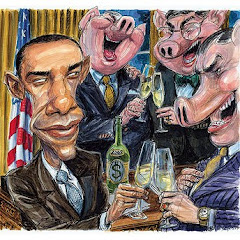
Ever heard of a guy named "Obama" and the "Progressives for Obama" who backed him?

Ironically, Both Hillary and Bernie have the same Obama hacks organizing their campaigns who worked on Obama's campaigns of "hope" and "change" and "give him four more years" to accomplish what he promised.

Mark Rudd: "Obama had to go along with Wall Street in his first term in order to deliver what he promised us in his second term."

Does anyone still believe this bullshit?

Of course they do... they are now working on Bernie's campaign as preparation to supporting Wall Street's darling, Hillary Clinton; who, while a member of Wall Street's board--- whoops, I mean Wal-mart's board, approved the policy of firing pregnant women "because they couldn't do their job efficiently--- too many rest breaks and bathroom breaks required.

Haven't we had enough of this crap already without listening to this nonsense about "progressives taking control of the Democratic Party?"

Oh, yes; and don't forget we must vote for Hillary Clinton because we must fear this fascist Donald Trump.

The Clintons are very shrewd... they are working us with two candidates they tossed into the three ring circus... there is one show going on in the circle on the left; another show going on in the ring on the right and there stands Hillary with her phony smile laughing as the main act.

Are you willing to pay the price of admission for this three ring circus?

Wednesday, February 10, 2016

John Dewy and his phony democratic socialism of pragmatism

What is "democratic socialism" and who conjured up this phony socialism?


John Dewey created an entire ideology around "democratic socialism" out of this kind of "pragmatic" approach to politics it has hobbled the working class ever since.


Dewey's thinking goes like this: It doesn't matter what Wall Street does to people anyplace else in the world as long as we get a few crumbs here.


This has been the outlook of the labor movement for over 100 years.


It seems most people are willing to not take notice that this small coterie Dewey's followers have quietly embedded themselves inside the Democratic Party taking on the moniker of "democratic socialist."


They have approved of every single imperialist war (with World War II they were objectors) and drilled it into us that we should be content with all kinds of minor "reforms" which they call "baby steps" that are supposedly part of this great big long road of "incremental reforms" that will some day--- in many generations to come--- result in their perverted sense of what socialism is coming into existence: kind capitalists they have educated who will look after the working class with our best interests at heart.


This is the heart of what Bernie Sanders and his little band of "democratic socialists" expect us to accept as "political revolution."


Just don't rock the boat talking about the need for a huge massive electoral all-people's united popular electoral front against monopoly and imperialism--- forget about peace (which is Hillary Clinton's Achilles' Heel) and you will get pie in the sky when you die.


Democratic socialism is neither democratic as we see from their deceitful dishonest trickery and chicanery and it is definitely not socialism.

Bernie, A Lifelong Crusade Against Wall Street & Wealth

Some questions for Darcy Richardson:

About your book on Bernie Sanders, Bernie, A Lifelong Crusade Against Wall Street & Wealth

Did you write the book about Bernie Sanders?

Assuming you did, I have a few questions:

Do you think it was right that you failed to define and clarify just who the "democratic socialists" are working in the Democratic Party who Bernie has aligned himself with as opposed to the use of the term "socialist" which he apparently was at one time before aligning himself with this grouping of "democratic socialists?

Also, didn't you kind of give him a free ride when it comes to the question of peace and anti-imperialism? Obviously, Debs took the question of the need for socialists to be anti-imperialists as well as being anti-monopoly.

And, isn't peace, opposing Wall Street's warmongering and all the ways Wall Street profits from wars as well as the untold misery and destruction created integral to any "lifelong crusade against Wall Street and wealth?" 

There are many distinguishing differences between Marcantonio and Bernie... first of all was Marcantonio's militant and persistent anti-imperialism which Bernie lacks.

There is also a failure to note Bernie's hypocrisy in casting a vote against the war in Iraq and then turning around and voting for every single vote to fund the war/s.

And he is let off the hook when it comes to this insane war against ISIS when he voted to fund its creation in the first place.

There were two solcialists Bernie wasn't compared to:

Elmer Benson who was a very principled socialist who served as a United States Senator from Minnesota who went on to become governor; and then there was John Bernard, the Communist who was elected to Congress--- both on the socialist Minnesota Farmer-Labor ticket.

I suppose an argument in not comparing Bernie Sanders to John Bernard was that Bernard was a Communist. But, Communists advocate socialism, right?

And if we are going to distinguish socialists from Communists, shouldn't we distinguish these self-serving, pragmatic (imperialism is acceptable) John Dewey-type "democratic socialists" from socialists like Debs and Elmer Benson?
Like Franklin D. Roosevelt Sanders is prone to bringing forward reform concepts that are far too little and far too late... evidenced in his continued talk about health care reform which would leave the profit motive in health care completely intact and his jobs program which is far too little and then his Minimum Wage proposal of $15.00 an hour which fails to take into account the actual cost of living and his talk about the need to act on climate change and global warming but touts the same hypocrisy of the foundation funded outfits bankrolled by the great Wall Street philanthropists who profit form the very Military-Industrial Complex which leaves in its wake the largest carbon footprint of any human endeavor, bar none.

You had the chance to cite the fact that Lyndon Johnson endorsed George McGovern and you didn't take it even though you mention Johnson's "Great Society" and you had the opportunity to introduce your readers to the accomplishments that can be made when liberals, progressives and leftists--- including Socialists and Communists--- work together by providing the example of the socialist Minnesota Farmer-Labor Party and its unifying influence the Minnesota Farmer-Labor Association which in effect created a type of "new broom" electoral coalition which was used to sweep the Minnesota Legislature clean of the corrupt Wall Street influences from the mining, forestry, banking, energy and big-agribusiness.

Most importantly, if reference to the socialist Minnesota Farmer-Labor Party would have been included in your book, this would have perhaps encouraged others to look into its history and draw the conclusion that this is the way to move forward. You bring forward Lafollette even though his great weakness was his anti-Communism which prevented greater unity.

Of course, during his long tenure in Washington, Bernie has made no attempt to stop the attacks by the United States Department of Justice, the FBI, NSA, Military Intelligence and the CIA on his fellow socialists, many of whom are Communists.

And, Bernie is not as pro-labor as you would lead people to believe--- he has voted for "Right-to-Work" by voting for the "Compacts" in the Indian Gaming Industry--- something not mentioned in your book in spite of the fact that around two-million American workers are now employed in this hideously racist industry where corrupt tribal officials front for a bunch of racist, wealthy white mobsters who own all the slot machines, table games, hotels, motels, golf courses amusement parks, restaurants, etc, leaving Native Americans holding nothing but poverty causing debt--- just look at the poverty on the Indian Reservations amidst trillions of dollars in casino driven wealth--- as workers (including Native Americans who are deprived of other employment because of severe racists discrimination who are used as a pool of cheap labor to work in the casinos) are forced to endure smoke-filled casinos at poverty wages and without any rights under state or federal labor laws. When I approached Bernie Sanders about this issue he treated me like dog shit on his shoe going so far as to lie to me about how he voted on these "Compacts" and he turned his back on me and walked away... just like he will do to the American people who are thoroughly fed up and had enough with Wall Street's dictate and poverty causing wars when he tosses his support to Hillary Clinton; all part of the plan from the very beginning.

With all of this said, if I happen to be in the vicinity of my Lake Township Democratic Party Precinct Caucus in Roseau County on March 1, 2016 I will cast my ballot for Bernie Sanders knowing that in return we will probably get nothing from Bernie Sanders--- or the Democrats he supports--- after that.

Maybe you should consider writing a book about the extremely successful socialist Minnesota Farmer-Labor Party.

To bad you didn't include this in the appendix to your book because it might have helped to clarify a lot of things creating such divisiveness among liberals, progressives and the left at a time when our historic unity is needed more than ever before:

http://collections.mnhs.org/MNHistoryMagazine/articles/47/v47i04p154-161.pdf

I would also call to your attention the "Full Employment Act of 1945" as initially introduced by populist liberal Texas Congressman Wright Patman. Notice that Bernie Sanders has made no attempt to declare that the president and Congress have the responsibility to attain and maintain full employment.

You might want to write another book detailing the lengthy discussion Lyndon B. Johnson and George McGovern had while sitting under the large oak tree on LBJ's ranch when Johnson made the historic decision to support George McGovern for the presidency after apparently coming to the conclusion that when a Nation's wealth is being pissed away on dirty imperialist wars you can't create a poverty free and racially just "Great Society"--- apparently a lesson Bernie Sanders has never learned.

Come on, Darcy; how does one fight Wall Street without fighting against Wall Street's dirty imperialist wars?


-- 
Alan L. Maki
 
58891 County Road 13
Warroad, Minnesota 56763

Cell: 651-587-5541

Wednesday, February 3, 2016

The Trouble with Iowa Corn, corruption, and the presidential caucuses

Food for thought:

http://harpers.org/archive/2016/02/the-trouble-with-iowa/?single=1

Big agri-businesses like Archer-Daniels-Midland and Cargill like to influence the elections from behind the scenes.

Where are the writers like Lem Harris and Fred Stover when we need them. Missing from this entire farm question, how our food is produced and who profits and who bribes the politicians is a Marxist analysis these two writers used to provide.

Big-agribusiness monopolies are reaping huge profits while exploiting farm labor as they feed us food at high prices--- both the food they feed us and the high prices are, quite literally, killing us and killing democracy.

How is it that Monsanto escaped scrutiny during the Iowa caucuses?

No discussion of the Iowa Beef Industry Council even though these bastards are killing us.

And what about how Occidental Petroleum owns IBP, Iowa Beef Packers now Tyson Fresh Meats. Also doing business as Tyson Foods.

No mention of the way leading Democrats were responsible for giving huge tax-breaks for the production of ethanol from corn which is depriving people of food while its production pollutes the waters.

How was so much missed during the Iowa primaries?

How could it be that the socialist Bernie Sanders missed so much about agriculture and state monopoly capitalism in Iowa?

The trouble with Iowa is that the huge monopolies own the state.

Tuesday, February 2, 2016

Surprise, surprise... the New York Times has been telling us lie after lie for decades...

Is anyone surprised?


America's "Paper of Record" admits past pro-Israel bias and will move to correct that. (raise your hand if you believe they Never "noticed" this before?!)


It has not been simply bias but outright lie after lie. One big lie on top of even bigger lies.


What can one expect from Wall Street's voice of imperialism?


"Principles?" "Fairness?"


Someone should give this editorial board a dictionary.


Source: http://www.newyorktimes-ip.com/…/our-new-editorial-policy-…/


Our New Editorial Policy: Rethinking


by THE EDITORIAL BOARD


Throughout its history, The New York Times has aimed to uphold the highest principles of fairness and accuracy in our news coverage. We take this very seriously. We now recognize this sense of fairness has been absent in our paper’s coverage of ongoing conditions in Israel and Palestine.


Having met for the past several months with leaders of Palestinian and Jewish peace organizations, our editorial staff recognizes that accusations of bias in our coverage have been well-founded. For example, it has come to our attention that, during the period of September-October 2015, eighteen headlines depicted Palestinians, while none depicted Israelis, as instigators of violence. Our news stories referred to Palestinian violence 36 times and Israeli violence only twice. We used the word “terrorist” to describe Palestinians 42 times, but only once to describe an Israeli.


In light of this reality, The Times editorial staff has decided to make several changes in our editorial policy with regard to coverage of events in Israel-Palestine. These changes are an attempt to address both realities on the ground and the concerns readers have expressed about fairness in our coverage. Some changes will regard substance.


We will also be attentive to distortions of style and attribution. When reporting views of government and security officials, we will be careful to indicate when something is alleged or attributed rather than to convey it as known fact.


In addition, we are aware that a disproportionate number of our news stories in the past year and a half have focused on Israeli government statements and positions or the views of Israeli Jewish citizens; only a small fraction have featured Palestinian speakers, whether officials and advocates or residents who experience the effects of Israeli policies in everyday life. When reporting on victims of violence, we have profiled and named Jewish Israelis more frequently than we have Palestinian victims.


Beginning now, we will attempt to redress this and other imbalances. To this end, one of our immediate goals is to add correspondents from the region who are Palestinian, and to include reporters and authors of opinion pieces who are reflective of the communities they are covering or writing about.

Tune in... spread the word. please share widely.

http://tobtr.com/8258131

Wednesday,
3 Feb.

---6 p.m. Eastern

---5 p.m. Central

---3 p.m. Pacific

"Campaign 2016 w/ Stewart Alexander"

Stewart Alexander is joined by Alan Maki, http://thepodunkblog.blogspot.com, social and political activist.

The topic is:

Is Election 2016 Just Another Myth About Change and Hope?

What does the 2016 election mean to working people?

Is it only a continuing cycle of 100 years of deja vu?

Are we getting rerun after rerun?

What are working people to do??

Wednesday, January 27, 2016

The Austin Chronicle publishes my review of: Trumbo... a fantastic movie that helps put anti-Communism and McCarthyism in perspective.


Get Talking

RECEIVED Thu., Jan. 14, 2016

See: http://www.austinchronicle.com/feedback/2016-01-14/1810252/


Dear Editor,


    I am visiting the Austin area.


    After reading the Chronicle's brief review of the movie Trumbo [Film Reviews, Nov. 20, 2015], I decided to see it at the Regal Arbor 8 at Great Hills. Apparently Trumbo isn't being shown too widely.


    I agree with your criticism that many personalities should not have been merged into one.


    However, many people after seeing the movie will not completely understand the times and circumstances beyond how Dalton Trumbo's own life was affected. Nor should we be lulled into believing that anti-Communism is something from a bygone era as the FBI and state and local police still clandestinely operate "Red Squads" intended to deprive people of their constitutionally protected rights of freedom of speech and freedom of association.


    Perhaps it is too much to expect from Hollywood to make a movie dealing with all facets of McCarthyism.


    How many people know that it was the great "liberal" Hubert H. Humphrey who authored the Communist Control Act? This history is omitted from Trumbo.


    Also, the producers of the movie took a lot for granted. Like in showing Trumbo's daughter reading the newspaper, The Daily Worker. How many people seeing the movie caught the name of the paper? How many of today's moviegoers will know that this was the Communist Party's publication put out of business as a very popular daily paper by the most aggressive government political repression?


    There is another story to be told, also. That of the thousands of workers who lost their jobs because they refused to buckle under to the anti-Communist witch hunts; workers who were deprived of jobs and their income who had nothing to fall back on as Trumbo did. These blacklisted workers, most quite poor to begin with, faced a lifetime of poverty; not just a few years of unemployment.


    One interesting topic the movie did not address is why Trumbo (and Howard Fast) left the Communist Party. Fast wrote two books on the subject; did Dalton Trumbo ever provide his reason/s?


    To be certain, Trumbo and his colleagues, the Hollywood Ten, were very courageous, and we appreciate them for their part in the struggle to defend democracy from Wall Street's anti-Communist attacks; the primary victim being the entire working class.


    Anti-Communism has always been the refuge of scoundrels, union busters, racists, and warmongers.


    All in all, I found Trumbo a fantastic movie. I would encourage others to see it; and talk about it – if they don't fear government repression here in the world's greatest bastion of democracy.

Alan L. Maki
Warroad, Minnesota


See trailer for Trumbo: https://www.google.com/search?q=trumbo+trailer&ie=utf-8&oe=utf-8


Viewing health care, child care and full employment as Human Rights.

Health care like Wall Street's warfare is a major issue in this campaign even though most politicians do everything possible to sow confusion about these two issues. In fact, we need to be funding health care instead of warfare just like many other things. But, keep in mind, just about everyone around the world views health care as a human right as well as peace being a human right. I also think most people in this country would agree with me that we need some kind of "Full Employment Act for Peace and Prosperity."


One thing to keep in mind when we talk about health care is the very long-term job creating opportunities, too.


Single-payer, at best, creates a couple million new jobs.


A National Public Health Care System providing health care in every single community through neighborhood centers would create over twelve-million new jobs with some 850 regional health care centers (about the same number of U.S. military bases around the world serving absolutely no purpose at all except protecting Wall Street's interests) with thousands of neighborhood primary and urgent care clinics.


I think we need an electoral coalition, some kind of "New Broom" coalition to sweep Washington clean of the Wall Street bribed politicians.


I was a big supporter of single-payer universal health care as a step towards a National Public Health Care System but not anymore since the Democrats sabotaged this movement which called for enacting H.R. 676--- a piece of legislation its own author, John Conyers, helped, in the end, to derail by pushing the national Democratic Party Platform to include "affordable" health care as a prelude to pave the way for the Affordable Care Act, Obamacare which should rightly be called: "The Health Insurance and Pharmaceutical Industry Bailout and Profit Maximization Act of 2010."


As a matter of fact, I authored and led the movement which resulted in the Minnesota Democratic Farmer-Labor Party's state convention passing the resolution for single-payer universal health care. A resolution that was later modified to insert ONE IMPORTANT WORD, "AFFORDABLE," which changed the entire meaning of the resolution without the same grassroots support the initial resolution had.


I was an elected delegate to that DFL State Convention and the big-shots, or big-shits as some may prefer, tried to prevent me from speaking on the convention floor by challenging my credentials--- a dirty trick that will for certain be used against many of Bernie's delegates across the country.


Also, the primary weakness of universal single-payer health care is that it enables most of the health care for profit crowd to remain happy as single-payer would be publicly financed, publicly administered and privately delivered contrasted with a National Public Health Care System which would be publicly financed, publicly administered and publicly delivered with doctors, nurses and all health care workers on the public payroll just like teachers.


Bernie Sanders' approach seems to be to keep all existing public services public but all new public services publicly funded, publicly administered and privately delivered. This to me seems very strange for a socialist to be taking this position which is not unlike that of the reactionary neo-liberal crowd which holds the right to profit off anything and everything as being very sacred.


With child care Sanders seems to favor mostly personal funding, some mixture of private/public administration and keeping it privately delivered. Like most of what he advocates in the way of reform the child care advocacy suffers from huge ambiguities.


Bernie Sanders' infrastructure job creation program would apparently leave the private engineering firms, private architects, private contractors and private construction firms in charge, instead of the government, to feed like pigs at the public trough.


Again. I invite those with documentation to prove me wrong since they say I am lying. I am not attacking Bernie Sanders I am challenging him to come clean with what his proposed reforms really are--- and aren't; isn't this why we have political campaigns in order to clarify where candidates stand and challenge them if we disagree?


But, don't we all know that ambiguity is the trade-mark of capitalist politics? Always "properly frame issues" with the intent of getting votes; never be specific because someone who disagrees is sure to vote against you.


Plus, ambiguity lets these corrupt politicians off the hook when it comes to assuring accountability.


Shouldn't these candidates participate in roundtable discussions? Not only to defend their positions but learn from voters what they are looking for in the way of solutions to their problems.


It doesn't do much good to attack Citizens United whose main problem is that it takes citizens out of the democratic decision-making process when all the Democrats and Republicans are so arrogant that they think they have the right to shove their thinking, and what they perceive to be solutions to our problems down our throats.


If Bernie and his campaign, an entourage of very narrow minded people, are not open to the people for this entire process then this makes a mockery of his opposition to Citizens United.


If we have enacted a "21st Century Full Employment Act for Peace and Prosperity" which would require the president and members of Congress to attain and then maintain full employment we would be assuring peace because no Nation can afford "guns and butter."

The establishment left out


By Mike Krauss

Washington just got clobbered by a gigantic winter storm. There is another one on the way. It’s going to hit Iowa and New Hampshire first. Donald Trump and Bernie Sanders are taking American politics by storm.

The GOP conservative establishment has emergency services out, trying desperately to clear out Trump after completely misreading the first storm warnings. The GOP moderate establishment likes the guy in second place, Ted Cruz, even less than Trump, and are going after him. Cruz looks to them like some kind of suicide bomber, throwing hand grenades in the Senate any chance he gets.

The jihadist from Texas.

On the Democratic side, the establishment watches in a kind of “déjà vu all over again” funk as Hillary gets overtaken by a candidate they dismissed, steadily gaining as Hillary’s “experience” comes back to haunt her: Iraq, Libya, Wall Street, Bill and a cynical disregard for the rules that apply to others.

Bernie Sanders’ language is more careful than Trump’s, but the appeal is the same: a promise to restore the stolen prosperity of the American people and take back control of their future from the same class of robber barons that Theodore Roosevelt confronted at the turn of the last century.

What is emerging was described in 1956 by the American sociologist, C. Wright Mills in his classic study, “The Power Elite.” Mills argument was that the United States is dominated by an interlocking political, military and economic elite. But he theorized that this elite can govern only so long as the elites and non-elites remain separate, and the elites are able to maintain power and position through an essentially controlled media and message.

The economist Michael Hudson recently compared this to how parasites work in nature; secreting an enzyme to convince the host being devoured that they — the parasites — are good for them. The media are the delivery system for the enzyme secreted by the economic parasites of today: propaganda.

Mills theorized that the control of the power elite would break down into what he called a “mass society,” if the one-way street of media access of elites to non-elites was matched by equal access of non-elites to elites: a two-way avenue of communication and information. The explosion of electronic media and the introduction of social media have created that two way street.

Something similar has happened before in American society and politics. As previously throughout history, it was a function of a great technological change in the means of communication. Trump gets this like no one else.

Just as Teddy Roosevelt understood and harnessed the growing power of an emerging mass print media at the turn of the last century, made possible by modern, high volume printing presses and the telegraph, Trump understands as no candidate before the uses of the many channeled electronic media and the emerging social media.

Communication is increasingly lateral and not vertical; collaborative and not hierarchical.

It is often said that “all politics is local,” but it is better said that all politics is personal. The new media are made for expressions of the personal. The authentic, like Trump and Sanders will rise.

The establishments are in a panic. They can’t control the front runners in either party. Enter former New York Mayor, Michael Bloomberg. He calls himself an “independent.” Nice try. He’s Wall Street’s fall back. Good old Joe Biden will be another.

Wall Street has had an ally in the White House for the past 24 years, if not longer — Clinton, Bush and Obama. They mean to keep it that way. Otherwise, Wall Street is left out. The political establishment is left out.

Most Americans will say, “Couldn’t happen to a nicer bunch of guys.” The Rolling Stones wrote their epitaph. It could be the Trump and Sanders theme song:

“You’re out of touch my baby
My poor discarded baby
I said baby, baby, baby you’re out of time…

“You are all left out
Out of there without a doubt
Cause baby, baby, baby you’re out of time…

“You’re obsolete my baby
My poor old fashioned baby
I said baby, baby, baby you’re out of time.”

Mike Krauss  is a thirty year senior executive in the international distribution and logistics industry andformerly an officer of Pennsylvania county and state government and ED of the PA Republican State Committee  / mikekrauss2016@gmail.com
Mike