Leave a twig for the birds to perch on... don't let the capitalists do your thinking for you... if you are in the neighborhood, stop on in; the coffee is always hot and the cookie jar is full... looking forward to the day when the real decisions in America are made by working class families gathered around the kitchen table... new postings daily...Yours in the struggle...Alan L. Maki
Texas Longhorns with newborn calf in Bluebonnets
Please note I have a new phone number...
512-517-2708
Alan Maki
Doing research at the LBJ Library in Austin, Texas
What we need is a "21st Century Full Employment Act for Peace and Prosperity" which would make it a mandatory requirement that the president and Congress attain and maintain full employment.
"Voting is easy and marginally useful, but it is a poor substitute for democracy, which requires direct action by concerned citizens"
I have a few new banners for promoting my blog... click to enlarge; watch for my displays at gatherings, demonstrations, forums--- when you see my displays stop to chat.
Here we go again; more confusion created using words and confusing "class."
Krugman http://krugman.blogs.nytimes.com/2013/01/02/that-bad-ceiling-feeling/ referring to forthcoming confrontations with the Repubs after his “fiscal cliff” cave:
“The only thing that might save this situation is the fact that Obama has to be aware just how much is now riding on his willingness to finally stand up for his side; if he doesn’t, nobody will ever trust him again, and he will go down in history as the wimp who threw it all away.”
Always the "hope" brought forward by these over-paid, well-heeled muddle-headed upper-middle class economists and intellectuals confusing which side Obama is on.
Here is how Krugman confuses "class"--- which side are you on?:
"...finally stand up for his side;..."
Obama was, and remains, on Wall Street's side. Obama never was, and isn't, and never will be, a "President of the people."
Krugman is a Nobel recipient just like Obama--- Paul Krugman awarded for economics; Barack Obama awarded for peace.
This entire gaggle of muddle-headed upper-middle class intellectuals intent is to provide us with nothing in the way of suggested legislation directed towards the urgency of solving the pressing problems being experienced by working people whose lives can only be characterized as a crisis of everyday living.
How convenient that these muddle-headed well-heeled middle class economists and intellectuals from Paul Krugman to Dean Baker to Joe Stiglitz to Robert Reich all guided in the language provided by George Lakoff would be the agents of confusion, a confusion whose intent is to prevent and disrupt any grassroots and rank-and-file initiatives to challenge Wall Street for power.
Let's be very clear on this point: We need to free ourselves from Wall Street's two-party trap not for the purpose of defeating the candidates like Obama brought forward; we need to understand that in creating alternatives to the Democrats and Republicans what we will be doing is challenging Wall Street for political and economic power.
In order to accomplish freeing ourselves from this two-party trap we will have to challenge the thinking of these apologists for the Democrats like Paul Krugman by being able to sort out the "kernels of truth" they use to package their deceit in.
Krugman even defines himself as being "The Conscience of A Liberal" when in fact his ideas serve the neo-liberal agenda packaged very deceptively to appear to be "liberal" so as to sow confusion.
Look at this article (Part 2) and Krugman's preceding article (Part 1):
Krugman is talking about the budget, deficits and debt--- BUT, what does he intentionally omit?
The huge portion of the budget directed towards militarism and wars.
How does any honest economists or intellectual omit any reference or discussion to what is more than half of the budget?
Also missing is any discussion of creating full employment.
If we want to get rid of "that bad ceiling feeling" we are going to have to fight for peace and full employment.
In order to guide our struggles we need working class ideas aware of "class" because when all is said and done, this is a class struggle in which we have to challenge Wall Street for political and economic power; otherwise we are in for endless imperialist wars paid for with our jobs, our lives, our rights and our livelihoods.
We now have over 50,000 closed mines, mills and factories and more jobs being moved to cheap labor markets daily with the only expanding industry being Goodwill Industries.
This is the hearing on the original Full Employment Act of 1945 which includes the actual act.
Wright Patman
John William Wright Patman was a U.S. Congressman from Texas in Texas's 1st congressional district and chair of the United States House Committee on Banking and Currency.
Born: August 6, 1893, Hughes Springs Died: March 7, 1976, Bethesda Party: Democratic Party
How come all you Obama supporters aren't pushing this legislation today?
"Jobs, Jobs, Jobs" but what happened to the idea that the United States
government is responsible for maintaining "full employment?"
This is from the Wall Street Journal:
"Prospects for a stronger upturn, at least in the first half of 2013, remain slim. Many economists worry about losing even more ground, especially as lawmakers launch a potentially risky political battle this winter over raising the federal debt ceiling.The U.S. economy grew at an average annual rate of 3.6% from 1950 through 1999 but has since slowed to less than 2%... Since the recession ended 3½ years ago, economists have been divided over long-run growth prospects after the downturn pushed millions of Americans out of the labor force. Looking forward five to 10 years, the argument goes, annual U.S. growth may reach a ceiling of 3% and unemployment could settle at a rate above the 5.7% annual average recorded during the last half of the 20th century."
--Wall Street Journal, Jan 4, 2013
Without the United States government becoming responsible for "full employment" in this country where does this leave working people? In poverty.
Robert Reich is wrong; our goal must be to get the United States government to assume its responsibility to the American people for maintaining a "full employment economy" just like United States Congressman from Texas, Wright Patman proposed.
The news today from the Bureau of Labor Statistics is that the U.S. job market is treading water. The number of new jobs created in December (155,000), and percent unemployment (7.8), were the same as the revised numbers for November.
Also, about the same number of people are looking for work (12.2 million), with additional millions too discouraged even to look.
Put simply, we're a very long way from the job growth we need to get out of the gravitational pull of the Great Recession. That would be at least 300,000 new jobs per month.
All of which means job growth and wage growth should be the central focus of economic policy, not deficit reduction.
Yet all we're hearing from Washington -- and all we're likely to hear as Republicans and Democrats negotiate over raising the debt ceiling -- is how to cut the deficit.
The typical American worker's paycheck will drop this week because his or her Social Security tax will rise, from 4.2 percent to 6.2 percent. That's nonsensical.
We need to put more money into the pockets of average workers, not less. The first $25,000 of income should be exempt from Social Security taxes altogether, and we should make up the difference by eliminating the ceiling on income subject to Social Security taxes. __________
Robert B. Reich, Chancellor's Professor of Public Policy at the University of California at Berkeley, was Secretary of Labor in the Clinton administration.
All these Democrats and Republicans keep talking about "jobs, jobs, jobs."
The more they talk about jobs the more unemployment we get.
With so much talk about "jobs, jobs, jobs" I find it impossible to understand why none of these politicians will talk about what is required to create a "full employment economy."
"Full employment"--- does anyone dare to talk about it lest they be called a "red?"
Check it out what happens in this country when any politician dares to talk about "full employment."
1945 was the very last time any politician in this country dared to advocate for a "full employment economy" talking about how a job is a right.
I suggest we need to begin a vigorous debate in this country about the need to mandate "full employment" through legislation.
Any form of government and/or economic system that can't assure "full employment" for its people doesn't deserve to exist. This is just plain old common sense.
Everyone seems to be commenting on this "deal" that "avoided the fiscal cliff." So I guess I will comment, too.
Well; it's a corrupt political system created by a rotten economic system with a bunch of Wall Street chosen politicians wheeling and dealing behind our backs. They are trying to save capitalism in its most barbaric and cannibalistic stage of imperialism and there is no light at the end of the tunnel because the cliff collapsed just as they made their way through the tunnel leaving everyone except the 1% behind to suffer the consequences of a system on the skids to oblivion; a system that should have been replaced years ago--- a system that survived only because McCarthyite political repression hammered Wall Street's opposition: we, the people.
It's the backroom wheeling and dealing we haven't heard about presenting the real danger because in our so-called "democracy" that is more myth than reality, the austerity measures Obama and the Republicans agreed to are coming down the pike from behind us as we are all looking the other way trying to see the light at the end of the tunnel.
A system broken beyond repair; a lousy deal for everyone except the Wall Street 1% and no end of wars financed with austerity in sight.
No need to worry though; the over-paid well-heeled upper middle class muddle-headed intellectuals pretending to be liberals, progressives and leftists are convincing everyone to go out into the streets--- not to protest like the Greeks--- but to celebrate Obama's re-election victory... and the cost of the shindig is being put on our tab.
And what do these over-paid well-heeled upper middle class muddle-headed intellectuals pretending to be liberals, progressives and leftists tell us hoping we won't spoil Obama's re-election "victory" celebration? The deal could have been worse.
"Worse" is what is coming as a result of this "deal."
A good deal for Wall Street; a bad deal for the rest of us.
The Wall Street bankers will smile as they take away your home and tell you to "have a good day."
I wonder why Cohen isn't bringing forward the demand for full employment in line with the "Full Employment Act of 1945?"
Larry
Cohen has been a big Obama booster and supporter. He and this coalition
of his which is mobilizing the "leadership" while leaving out the
memberships raises some important concerns.
Obviously if these 70
organizations mobilized their memberships around a real progressive
agenda with peace and full employment at the very top Obama's and the
Democrats' "feet would be held to the fire."
Has anyone noticed
all these preparations are being made for celebrations surrounding
Obama's second inauguration yet all of these "progressive for Obama" who
have chastised us for not building the movements required that would
supposedly "holdObama's feet to the fire" to force him to do what is
right and just by the American people; these people aren't doing
anything to make sure
these "celebrants" have to consider an
alternative to Obama's Wall Street agenda of wars abroad paid for with
austerity measures shoved down our throats?
These 'progressives for Obama" are not insisting these wars and occupations end so we can reap a "peace dividend."
These "progressives for Obama" are not organizing any kind of "people's
lobby" to insist on peace and full employment--- why aren't they
insisting Obama bring forward the "Full Employment Act of 1945" that was
never passed since this legislation contained what Franklin Roosevelt
was trying to achieve?
Here is a little history in a capsule as to what happened with "The Full Employment Act of 1945;"
The bill centered major powers and responsibilities in the presidency.
In cases where the private sector failed to provide full employment, the
bill directed the president to prepare a program of federal investment
and expenditures to close the gap. The president would review federal
programs on a quarterly basis and alter their rate as he considered
necessary to assure full employment. The Senate passed this bill in
September 1945 by an overwhelming vote of 71 to 10.
Critics in
the House charged that the bill contained within it the seeds of
paternalism, socialism, and even communism. They claimed that the bill jeopardized
the existence of free enterprise, individual initiative, and business
confidence by vesting of power in the federal government and the
president. It was predicted that the Full Employment Act would lead to
excessive government spending, a dangerous concentration of power in the
presidency, and crippling inflation.
This criticism led the
House to remove or dilute several substantive and forceful passages in
the Senate bill. For example, the basic commitment to employment as a
human right was taken out, two sections on presidential discretionary
powers were deleted, the original goal of full employment was whittled
down to "maximum employment," and, instead of the federal government
assuring government, it would only "promote" it. Moreover, the specific
reliance on public works and federal loans as instruments of economic
recovery was replaced by the noncommittal phrase "all practicable
means."
The resulting declaration of policy in the Employment
Act of 1946 stated that the federal government, assisted by industry,
labor, and state and local governments, was responsible for
coordinatingplans, functions, and resources for the purpose of creating
and maintaining conditions—consistent with the free enterprise
system—that would offer "useful employment opportunities, including
self-employment, for those able, willing, and seeking to work, and to
promote maximum employment, production, and purchasing power.
Reading the transcript of this hearing is a real eye-opener.
We need a "people's lobby" to push for peace and a full employment economy.
We need a new progressive working class based people's political party
backed up by a powerful "people's lobby" advocating full employment
through peace in order to challenge Wall Street for power.
By
advocating the creation of "an American spring," Larry Cohen does think
we should be challenging Wall Street for power; doesn't he?
Now is the time to break free from Wall Street's two-party trap.
What ever happened to the "Peace Dividend?"
Cohen doesn't even mention the word "peace" in conjunction with jobs just like he omits the need for full employment.
Cohen must understand the connection between unemployment, militarism and wars; doesn't he?
Did
this "coalition" discuss the need for peace in order to free the
resources of this country to create jobs and full employment?
Unemployment
suppresses wages; full employment pushes all wages up--- why aren't
Cohen and other union leaders pointing out that peace is the path to
full employment?
If Larry Cohen, Leo Gerard and Richard Trumka
could free themselves from "thinking Democratic" perhaps they could lead
the working class into the struggle for peace and full employment this
would put an end to all this "concession bargaining" and strengthen the
hand of labor. Probably add some numbers to labor's dwindling ranks,
too. And put an end to all this scabbing like we have here in the Red
River Valley where American Crystal Sugar Company has locked out 1,300
workers who refused "the final offer" and brought in scabs hired from
among the unemployed to take the jobs of these workers.
Peace and full employment should be labor's answer to Obama' wars and austerity measures.
Full
employment would solve any problems with Social Security, too---
everyone pays in; everyone gets what they are entitled to out.
Peace
and full employment are never mentioned by Larry Cohen--- what gives?
And since Cohen never mentioned peace and full employment; why didn't
Moberg ask?
Of course, nothing is preventing Larry Cohen from
speaking up by placing his comments on peace and full employment here.
This article is meant for stimulating dialog and discussion; is it not?
It
would also be interesting to hear Larry Cohen's and the AFL-CIO's
thoughts on "Idle No More;" the Canadian Labour Congress has provided
insight and solidarity in this struggle and so should U.S. unions---
including the AFL-CIO.
Interesting, also, David Moberg didn't ask
Cohen for his thoughts regarding the proposed merger between the
Canadian Auto Workers (CAW) and the CEP (Communications, Energy and
Paperworkers Union of Canada).
But, then again, Moberg didn't ask
Cohen if U.S. labor needs its own political party like labor in Canada
has with the socialist New Democratic Party.
Like myself, Larry
Cohen was one of the founders of U.S. Labor Against the War; one would
expect that Cohen would be able to articulate how peace and full
employment are inseparably connected.
If unemployed workers want jobs they are going to have to fight for a "peace dividend."
Has
anyone noticed that Barack Obama's proposed 2013 budget with massive
funding for wars and militarism is in direct opposition to what a
progressive agenda requires?
Some important observations here but I think Wallerstein is wrong in stating this (See Wallerstein's "Commentary" at the end below my comment:
"On the other side will be popular forces across the world who will seek to create a new kind of historical system, one that has never yet existed, one that is based on relative democracy and relative equality. What this means in terms of the institutions the world would create is almost impossible to foresee. We shall learn in the building of this system in the decades to come."
I think there is no choice except the socialist alternative to capitalism. The way to get on this socialist road to begin with is through the anti-monopoly struggle in challenging Wall Street, Bay Street, The Square Mile and the other centers of imperialism for power.
"The People's Front" strategy with revolutionary working class tactics provides the way forward.
There is no alternative or third or fourth or fifth way to power for the working class which has to fight to defend past gains and militantly struggle for new reforms in order to survive as we struggle for political and economic power.
I hope Professor Wallerstein's excellent "Commentary" will provoke further discussion on this most important issue.
It isn't like we don't have examples from the past and the more recent present providing us with a guide to action.
There was the example of the socialist Minnesota Farmer-Labor Party having elected two socialist governors--- Floyd Olson and Elmer Benson; there is the recent example of the socialist New Democratic Party in Manitoba controlling Manitoba politics for much of the past 50 years (see Howard Pawley's (former Manitoba NDP Premier) book, "Keep True; my life in politics" and Roland Penner's (Attorney General under Pawley) book "A Glowing Dream; a memoir" with the current example of the NDP on the verge of taking national political power.
Then there is the current struggle underway: Idle No More.
It is unfortunate Wallerstein has chosen to ignore commentary on these specific past, recent past and current struggles because his insight concerning these struggles would be a major contribution towards: "What needs to be done?"
Wallerstein consistently adds depth to our thinking through his analysis which is very insightful and accurate but like so many left intellectuals he doesn't seem to want to participate in the specifics of where we go from here and the specifics of what needs to be done. In my opinion this is kind of a cop out--- especially since he seems to be writing off socialism as an alternative to capitalism.
Wallerstein's outlook that the alternative to capitalism has yet to be found is, unfortunately, shared by many people--- intellectuals and activists.
The difference--- and the problem is: Wallerstein understand socialism and Marxism from having studied these ideas; whereas many who will read his commentaries have not and therefore are denying themselves knowledge that they reject without an understanding; knowledge of Marxism that if they would study Marxism they might find very useful in their day-to-day activities and movement building.
Check out all ideas and ideologies but don't exclude checking out Marxism which has been, and remains, the primary challenge to capitalist ideologies and ideas.
I am sending this to Professor Wallerstein because I think we need to draw him into a conversation about the socialist alternative to capitalism and the very important working class struggles--- past and present.
Socialism needs to be placed on the table for everyone to consider; even if there is some alternative to socialism as Professor Wallerstein is suggesting, a good healthy discussion about socialism can only hasten capitalism's much needed demise.
Alan L. Maki
Commentary No. 344, Jan. 1, 2013 "Global Turmoil in the Middle Run"
Making predictions in the short run (the coming year or two) is a fool's game. There are too many unpredictable twists and turns in the real political/economic/cultural world. But we can attempt to make plausible statements for the middle run (a decade or more) based on a workable theoretical framework combined with a solid empirical analysis of trends and constraints.
What do we know about the world-system in which we are living? First of all, we know that it is a capitalist world-economy, whose basic principle is the ceaseless accumulation of capital. Secondly, we know that it is an historical system, which like all systems (from the universe as a whole to the tiniest nano-systems) has a life. It comes into existence, it lives its "normal" life according to rules and structures it creates, and then at some point the system moves too far from equilibrium and enters into a structural crisis. Thirdly, we know that our present world-system has been a polarizing system, in which there has been a steadily increasing gap among states and within states.
We are in such a structural crisis right now, and have been for some forty years. We shall continue to be in it for another twenty to forty years. This is quite an average length of time for a structural crisis of a historical social system. What happens in a structural crisis is that the system bifurcates, which means essentially that there emerge two alternative ways of ending the structural crisis by "choosing" collectively one of the alternatives.
The principal characteristic of a structural crisis is a series of chaotic and wild fluctuations of everything - the markets, the geopolitical alliances, the stability of state boundaries, employment, debts, taxes. Uncertainty, even in the short run, becomes chronic. And uncertainty tends to freeze economic decision-making, which of course makes things worse.
Here are some of the things we can expect in the middle run. Most states are facing, and are going to continue to face, a squeeze between reduced income and increased expenditures. What most states have been doing is to reduce expenditures in two ways. One has been to cut into (even eliminate) a great many of the safety nets that have been constructed in the past to help ordinary people deal with the multiple contingencies they face. But there is a second way as well. Most states are cutting the money transfers to subordinate state entities - federated structures, if the state is a federation, and local governments. What this does is simply to transfer the need to increase taxes to these subordinate units. If they find this impossible, they can go bankrupt, which eliminates other parts of the safety nets (notably pensions).
This has an immediate impact on the states. On the one hand, it weakens them, as more and more units seek to secede if they think it economically advantageous. But on the other hand, the states are more important than ever, as the populations seek refuge in state protectionist policies (keep my jobs, not yours). State boundaries have always been changing. But they promise to change even more frequently now. At the same time, new regional structures linking together existing states (or their subunits) - such as the European Union (EU) and the new South American structure (UNASUR) - will continue to flourish and play an increasing geopolitical role.
The juggling between the multiple loci of geopolitical power will become ever more unstable in a situation in which none of these loci will be in a position to dictate the interstate rules. The United States is an erstwhile hegemonic power with feet of clay, but one still powerful enough to wreak damage by missteps. China seems to have the strongest emerging economic position, but it is less strong than it itself and others think. The degree to which western Europe and Russia will draw closer is still an open question, and is very much on the agenda of both sides. How India will play its cards is very much undecided by India. What this means for civil wars like that in Syria at the moment is that outside interveners cancel each other out and internal conflicts become ever more organized around fratricidal identity groups.
I shall reiterate my long-argued position. At the end of a decade, we shall see some major realignments. One is the creation of a confederal structure linking Japan, (a reunited) China, and (a reunited) Korea. The second is a geopolitical alliance between this confederal structure and the United States. A third is a de facto alliance between the EU and Russia. A fourth is nuclear proliferation on a significant scale. A fifth is generalized protectionism. The sixth is generalized world deflation, which can take one of two forms - either a nominal reduction in prices, or runaway inflations that have the same consequence.
Obviously, these are not happy outcomes for most people. World unemployment will rise, not fall. And ordinary people will feel the pinch very severely. They have already shown that they are ready to fight back in multiple forms, and this popular resistance will grow. We shall find ourselves in the midst of a vast political battle to determine the world's future.
Those who have wealth and privilege today will not sit idly by. However, it will become increasingly clear to them that they cannot secure their future through the existing capitalist system. They will seek to implement a system based not on a central role of the market but rather on a combination of brute force and deception. The key objective is to ensure that the new system would guarantee the continuation of three key features of the present system - hierarchy, exploitation, and polarization.
On the other side will be popular forces across the world who will seek to create a new kind of historical system, one that has never yet existed, one that is based on relative democracy and relative equality. What this means in terms of the institutions the world would create is almost impossible to foresee. We shall learn in the building of this system in the decades to come.
Who will win out in this battle? No-one can predict. It will be the result of an infinity of nano-actions by an infinity of nano-actors at an infinity of nano-moments. At some point, the tension between the two alternative solutions will tilt definitively in favor of one or the other. This is what gives us hope. What each of us does at each moment about each immediate issue matters. Some people call it the "butterfly effect." The fluttering of a butterfly’s wings affects the climate at the other end of the world. In that sense, we are all little butterflies today.
by Immanuel Wallerstein
-- Becky Dunlop Secretary, Fernand Braudel Center Binghamton University PO Box 6000 Binghamton NY 13902 http://www.binghamton.edu/fbc/
Taking my own advice that we need to intensify our struggles for peace, social and economic justice in the New Year, I sent out the following statement to fellow Justice Party members about the Idle No More movement now sweeping the continent and the world:
As a member of the National Steering Committee of the Justice Party I would like to share my concerns at this moment of a growing people's upsurge against racism and poverty.
The Justice Party and its members and friends should have a statement of solidarity for the Idle No More movement which started in Canada and has now spread across the border into the US.
It wouldn't hurt for Rocky Anderson and a delegation from the Justice Party and our friends to go meet with Chief Spence up in Canada.
We should be articulating a position that if poverty can't be addressed and solved on the Indian Reservations in Canada and the United States, poverty isn't going to be addressed or solved anyplace in Canada or the United States.
People without jobs are going to be poor, and as long as Bay Street and Wall Street are in power where their unlimited greed establishes their neo-liberal agenda of exploiting labor and raping Mother Nature, the only two sources of wealth this is not going to change.
Nations whose natural resources are continually stolen are going to be poor.
Nations whose waters, lands and air are continually polluted are going to be sick.
The phony liberals, progressives and leftists supporting Obama wanted us to ignore the fact Obama is a neo-liberal and have concocted the crazy idea that there are "high road" and "low road" capitalists (good and bad capitalists) with Obama representing the "high road capitalists" and now that this "thinking" has been exposed as being a warped way of thinking these phony liberals, progressives and leftists are pushing the idiotic concept and idea that Obama and his Wall Street entourage represent some kind of "left neo-liberalism;" a neo-liberalism that works for the common good.
All of this is done in the name of the imperialist ideology first advanced by John Dewey--- pragmatism--- which justified imperialist wars abroad accompanied by repression of the working class struggles here at home--- provided the Wall Street crowd scattered a few crumbs intended to silence the people when it came to these "dirty imperialist wars" as Mark Twain so aptly and appropriately labeled them.
These dirty imperialist wars are making us all poor with those already having been forced into racist poverty getting a double dose of poverty from these dirty wars.
Anyone with an ounce of common sense understands that poverty intentionally inflicted, pushed and forced on the Native peoples of Canada and the United States is made even worse when the wealth of our Nations is squandered on militarism and wars because it is that wealth which should be used to solve the problems of poverty on the Reservations and urban areas populated by Native peoples.
First Occupy Wall Street, and now, Idle No More, are challenging Wall Street's and Bay Street's neo-liberal agenda intended to reap huge super-profits from militarism and wars perpetrated in order to maximize and accumulate greater wealth all of which is created by labor with no small amount of help from Mother Nature; again, labor gets exploited as Mother Nature gets raped--- and what we, the people, reap is more poverty with the poorest of the poor suffering the worst consequences.
Wall Street and Bay Street must be challenged for power--- in the streets, at the ballot box, in our communities and where we work and go to school; all across Canada and the United States.
The racism of poverty must be exposed and addressed.
Will Occupy Wall Street and Idle No More find a voice reflecting and representing their movements at the ballot box which they feel comfortable becoming a part of? Only if we are among them in their struggles--- both movements should be able to find a political home in the Justice Party just as the most forward thinking activists among these movements find a political home in the New Democratic Party (NDP) in Canada.
The NDP was the first political party to reach out to Chief Spence in support and solidarity; the Justice Party should follow this example.
Why not consider a Justice Party initiated car caravan across the United States going into Canada through International Falls, Minnesota or Sault Ste. Marie, Michigan to meet with Chief Spence?
Perhaps request the Green Party, Socialist Party and others join with us?
If the Justice Party doesn't take the lead as a political party in this country in solidarity with Idle No More; who will?
I would point out that neither the Democratic Party nor its partners in the leadership of organized labor have taken the kind of active role in supporting Idle No More as the Canadian Labour Congress and the New Democratic Party in Canada have done.
Even here in Minnesota where the Minnesota Democratic Farmer-Labor Party has a new super majority--- a Democratic Governor along with solid majorities in the Minnesota State House and Minnesota State Senate (all claiming the "progressive" label);brought to power largely using the campaign profits derived from Indian Gaming; even with this super majority we don't hear these Democrats placing ending racism and poverty on their legislative agenda as the new legislative session convenes on January 8, 2013. Shouldn't a united Idle No More/Occupy Wall Street action be considered for this opening session of the Minnesota State Legislature with the demand for the eradication of poverty and racism be placed at the very top of their legislative agenda?
Politicians in both Canada and the United States--- like here in Minnesota--- have taken hundreds of millions of dollars in campaign contributions from Indian Gaming and then turned their backs in racist indifference to the racist poverty they have been imposing on the Native Peoples.
The Democrats pushed Occupy Wall Street into actions "leading" away from the seats of political power; the Justice Party should be seeking alliances with Idle No More and Occupy Wall Street along with rank-and-file working class activists in order to achieve political power; to bring the people to political power--- and ultimately economic power.
Politicians from around the world met twelve years ago at the turn of the Century to issue the "Millennium Declaration" which was supposed to be a call for the elimination of poverty by 2020; does anyone believe these politicians with their dirty imperialist wars carrying out Wall Street's and Bay Street's neo-liberal agenda will do anything except make poverty worse?
Occupy Wall Street opened the door to challenge Wall Street and Bay Street for power; Idle No More has pushed that door open even wider. Wall Street and Bay Street are pushing back from the other side of the door trying to prevent the people from coming to power.
Let's help Chief Theresa Spence and Idle No More kick open wide the doors of the Canadian Parliament and crush the reactionary Conservatives led by the racist neo-liberal Stephen Harper so the voices of the First Nation's Peoples will be heard and acted upon--- justice requires we do no less; in the process of struggle and solidarity with the Indigenous Peoples of Canada we help open the doors to political and economic power for working people in both Canada and the United States.
Bay Street and Wall Street are our common enemies; let's unite to drive these greedy racists from political and economic power. People and the environment must come before the profits of Bay Street and Wall Street.
-- Alan L. Maki Director of Organizing, Midwest Casino Workers Organizing Council
The status quo is not working for working people. Unions need to
seriously overhaul the way they operate if they are to remain relevant.
One key example that reveals the directionlessness and impotence of
contemporary unions is the perennial convention charade where the
organized labour movement convenes with the professed aims of advancing
the interests of workers and improving society as a whole. If only this
were the case.
With few exceptions, a recurring drama plays out at conventions on
the backs of working people, “full of sound and fury; signifying
nothing” (to quote Macbeth.) Here are some of those recurring acts that paralyze a movement.
Every convention begins with some kind of rhetoric about “democracy”
and the importance of the labour movement coming together to debate and
participate with a view to social progress. Seriously, who are we
kidding with this pretend democracy? Labour conventions are typically
contrived. Everyone knows the fix is in – but no one wants to say it out
loud. In some cases the problem goes as far as paid staffers attempting
to influence the proceedings in the backrooms or even acting as
delegates, when for all intents and purposes they are actually
representing their employers, the top elected officers.
Limited debate
During these precarious times, one would think this coming together
every three years would lead to deep and fiery discussions on where our
labour movement is headed and what it will take to develop an effective
resistance. Just the opposite is true. For example, during the 2011
Canadian Labour Congress (CLC) convention,
debate was limited to approximately nine hours for an entire week. This
script ensures that workers, representing their unions as delegates,
will have precious little time to debate the issues. Further, the show
is always conducted by those orchestrating the front stage at the
expense of the delegates who become mere spectators of the labour scene.
Speaking out in the context of a union convention feels much like
speaking out of turn in church. You know how far you can go and where to
stop. Some topics, like any critical reflection on the relationship to
the New Democratic Party (NDP), capitalism, class, strategy, and especially direct action, are mostly off limits and treated as unmentionable.
Time is typically stuffed with uninspiring speakers – very few could
be described as especially challenging or insightful. Given that some
unions hold seminars for the purpose of educating members, this is
highly disappointing. Another problem is that some speakers from the
floor have more rights than others, which is reflected in the amount of
time allocated to delegates to speak.
The CLC achieved a new low at the last convention when space was taken up by CBC
personalities Ian Hanomansing and Wendy Mesley. Hanomansing, serving as
a moderator, voiced his disapproval with the claim that a corporate
bias exists in mainstream reporting. The problem, according to
Hanomansing, is that the left fails at both making their stories sexy
enough and packaging their message as well as the right, thus confirming
that journalism in today’s mainstream media is more of a public
relations exercise than about finding and reporting the news. I guess
Hanomansing means that journalists shouldn’t be doing the work of
putting stories together and that in essence everyone is on the same
playing field with equal resources to have our stories told. Migrant
farm workers, for example, then must be assumed to be in the same
position to tell their story as Jason Kenney, the Minister of
Citizenship, Immigration and Multiculturalism. To further demonstrate
the disingenuous nature of union convention debates, questions for
panellists had to be submitted in writing, thus ensuring no challenging
or embarrassing moments for invited guests. A debate that is scripted is
in fact not a debate at all.
Rhetoric no substitute for action
Labour conventions are long on rhetoric but short on substance. The
process is predictable and repetitious. Speaking to the converted, the
right is assailed and the NDP lionized.
Meanwhile, labour leaders – except during the occasional election – prop
each other up, slap one another on the back and avoid discussing the
systemic problems plaguing workers or naming the elephants in the room
all the while preferring instead to heap on personal accolades.
Personality politics, not discussions of political systems, fill the
space and agendas. So-and-so is a “great guy,” a fighter for their
members, a hero in the fight against Prime Minister Harper, or whichever
non-NDP leader is in office. Delegates cheer.
Little happens. But in those moments, under the lights in the house of
labour, we sure do feel good about ourselves. There is a fetish about
leadership and playing follow-the-leader, but nothing comparably
passionate about the significance of struggle and the necessity of
resistance. It’s easier for the union aristocracy that way. No one need
feel uncomfortable.
I wonder if anyone was listening when the Manitoba Federation of Labour (MFL)
convention guest speaker, Canadian Union of Postal Workers President
Denis Lemelin, broke the mould somewhat by calling on labour to develop
our own “social project”? Lemelin explains that sectoral divisions and
defensiveness can be replaced by a basis of unity with a clear long-term
strategic plan to gain public support and fight for all of society.
Silencing dissidents
It is noteworthy to see who gets in and who doesn’t at labour conventions. At the Montreal 2005 CLC
Convention anti-poverty activists from the Belleville Tenant Action
Group, fundraising in the main lobby of the convention center, were
threatened with expulsion until delegates passing by came to their
defence using a little direct action of their own.
While labour conventions are a place to pick up information, finding
a table of radical or challenging literature may be difficult. There is
limited space, and the organizers have final say over who is invited
and who isn’t. A number of spaces were taken up by insurance companies
at the recent MFL convention held in June 2012. Regrettably, challenging or critical materials were in much shorter supply.
Backroom mechanisms, never out in the open, are used to keep
resolutions that may not be palatable to the leaders from ever making it
to the floor. It matters not where the resolution came from (a local
union, workers from the shop floor). If it seems “controversial” or
doesn’t fit the pre-structured schemes of leadership it may magically
disappear in spite of “process.” A case in point is the recent MFL resolution on Boycott, Divestment and Sanctions (BDS) directed at Israeli Apartheid. While the resolutions committee recommended concurrence unanimously, behind the scenes the MFL
executive asked the committee to reconsider its decision. Concurrence
was pulled under the guise that the resolution did not reflect CLC
policy. This raises the question of who gets to decide policy for
organized workers in Manitoba. It does not appear to be a bottom-up
process, but instead, a top-down corporate model. After some wrangling,
face-saving, and negotiation, the resolution received again the desired
concurrence only to have the motion tabled on the floor after a number
of delegates spoke in its favour. To add further insult, activists were
prevented from distributing information on BDS and the situation of Palestinians to delegates, even though that literature was produced in a unionized print shop.
Manitoba requires 65 per cent sign-up to certify a union. Two bold
activists held a silent protest during Premier Greg Selinger’s speech to
convention delegates by holding up signs pointing out that a government
majority can be achieved with much less than 50 per cent of the votes
but for workers in Manitoba, the bar is set at 65 per cent, the highest
in the country. They were told to sit down. Silence and politeness
remain the order of the day, thus making any criticism of the NDP off limits. The Manitoba NDP
have been in power for 13 years and did not deliver on anti-scab
legislation (now called “replacement workers” by organized labour, an
example of neoliberal Newspeak that incorporates the language of the
right). While perhaps an NDP government is not
quite as hostile as a Tory one, can a “lesser of the evils” really be
considered enough of a victory? Neither the NDP
nor organized labour challenge the neoliberal capitalist system; in
fact, neither can even bring themselves to utter the words to address
its very existence.
Toothless resolutions
Resolutions have become a kind of shopping list without any pith or
substance. Mostly toothless, they allow us to feel good about ourselves,
as if we crossed another one off the list of things that need doing
without the slightest mention of how we are going to do them. At the MFL
convention 172 non-administrative resolutions were submitted. Of these
the resolved action called on lobbying the provincial government 110
times. Sometimes the resolution stated the MFL
will “continue to lobby” on an issue indicating that this is not the
first time the issue was raised. The word “urge” is used 12 times,
“encourage” five times, and “call on” three times. Stronger words like
“demand” and “insist” were used four and two times respectively. This
begs the question, what do we mean by lobby, urge, and encourage
exactly? Does it mean beg, plead, take a minister to dinner, or mobilize
a movement that can ensure the stated goals are met? Why do union
conventions spend so much time, effort, and expense to make empty pleas
and to obediently prop up governments and their agendas that clearly
work against workers’ interests?
When potentially popular and effective resolutions appear, they are
frequently watered down inside policy papers to give the appearance of
democratic process while keeping the lid on things.
Waste of scarce resources
Conventions are financially costly. For a CLC
convention, delegates fly in from across the country and typically book
one delegate per costly hotel room and receive generous per diems for
meals. Imagine what kind of organizing and support for real struggle and
change there could be were we a little more frugal, creative, and
long-sighted. Meanwhile, labour organizers in the Global South often
seem to be able to consistently do more with less, while producing far
more effective results.
According to David Camfield, associate professor in labour studies at the University of Manitoba and author of Canadian Labour in Crisis,
“it’s worth noting that in many cases the people who attend as
delegates aren’t the best activists, the ones who are troublemakers on
the job, supporters of community struggles, and critics of complacency
in the unions. Such activists often aren’t delegates, either because
they don’t get elected or – in unions where delegates are selected, not
elected – because officials deny them delegate credentials. Some people
on the left think conventions are the most important moments in the life
of a union. I disagree, for two reasons. First, conventions often don’t
have that much impact on what happens in the union. For example, if a
resolution gets passed that the top brass don’t like, they can often
find a way to ensure it never gets acted on. Second, unions matter most
when ‘union’ means workers taking action together in the workplace or on
the streets.”
What now?
What is the purpose of a labour convention? I would argue that it is
to challenge the growing capitalist disaster with a strong and vibrant
force of organized workers, both unionized and non-unionized, including
the unemployed and underemployed.
Labour centrals and organizations need to stop spending significant
amounts of members’ dues money to stage events that maintain the status
quo and privilege a few at the expense of the many. The International
Trade Union Confederation, CLC and provincial
federations of labour have proven themselves to be lacking vision, which
robs workers while reproducing a labour aristocracy void of ideas for
these times. It is time for critical questions and tough
self-reflection.
What is unclear is how trade unions intend to challenge the
austerity agenda. Merely coping, hanging on, and focusing a great deal
of energy on electoral politics at the expense of other forms of
struggle will not be enough to overcome the challenges that lay before
us. Given the state of the current economic arrangements, it’s probably
safe to say that it won’t serve future generations well either.
What is to be learned from our history? Labour movements and the
victories gained from them were not built by “urging” and “lobbying.”
They were created by the collective dignity and expression of human
beings who took risks and action against capital. What can be learned
and applied from autonomous, anti-capitalist, anti-colonial, migrant,
Indigenous, student, and social movements that might shift this theatre
of empty rhetoric and surrender to create a coordinated body of workers
prepared to take the offensive, not just in the present, but for future
generations?
The questions to be asked are not about Harper and the corporations. The questions to be asked are of us.
Dave Bleakney is a member of the
Canadian Union of Postal Workers and the national union representative
for education (Anglophone). On matters of anti-capitalism, the dude
abides.
The question now is where to go from here. All workers and most
people are now expendable waste in the global corporate market. We feel
demoralized and defensive and are picked off one by one. We face
"austerity" as the banks earn record profits. We compete to death while
trillions are shored up in offshore bank accounts. Some of that loot was
robbed from us after the 2008 failure of the banking system for which
our children and their children and likely their children will be paying
for their lifetimes as the planet screams for relief. Is it fair that
someone that hasn't been born yet should be paying banks money after
they have already robbed and pillaged billions in profit? Apparently,
yes. There does not appear to be much understanding of system failure by
most workers and their leaders.
We keep puttering on, looking for someone to blame, a name we can
hang our hat on while systems of destruction rise around us. We use the
bosses' courts in vain attempts to settle scores with an occasional
victory. We keep running on someone else's treadmill while they control
the wheel. This system cares not about our bodies, our histories, our
cultures or our dignity. At one time, it was Indigenous peoples in this
position. Now it is all of us, everything, every country, every town,
every workplace, every street, and every body. The Indigenous
territories continue to be colonized. And we of the settler class have
self-colonized ourselves along the way and behave by cue in this absurd
trap. Even with resistance rising all around us, we go shopping and hope
for the best, like compliant little victims programmed by the system as
Rome burns, or more aptly, as the Earth screams.
Unions are woefully self-immobilized; seemingly unable or unwilling
to explore the processes to shift the terrain or acknowledge that one
might exist. That is left to the youth, the defenders of the land, the
frontline and marginalized peoples who are the most penalized fallout of
capitalism and a colonial mess that remains unresolved. We play by the
rules; the same rules made to penalize resistance and silence opposition
to corporatism (some would say it has the hallmarks of soft fascism).
We play the game on their field in an unsustainable order based on greed
and destruction and then predictably complain about it.
Are you as tired of being a victim as I am? We blame corporations for
what they were designed to do, blaming politicians for what they can't,
or won't, do, and living in the shadows of denial or fear or both. We
tolerate a system controlled by others that is based on an alleged
"lesser of evils," where no matter who is elected they will be hamstrung
by a global corporate initiative of investors and bankers that can
bring a country to its knees. It is the system which promotes a corrupt
nature of relations that robs workers, punishes the poor and destroys
the land. It is a place of record profits and jobless recoveries. The
"economy" as they call it, is spoken of with reverence and scared
fervour as if we exist and are designed only for it.
But like Patti Smith sang, "people have the power," more power than
they know, "the power to dream, to rule, to wrestle the earth from
fools." We have the strength in numbers that can occupy and blockade and
the power to withdraw our labour and bring the production of goods and
services to a halt. We have the power to write the script any time of
our choosing. How many of us are afraid of that power in the hour it is
needed most? Many working-class people participate in this surrender
whether they know it or not. They would rather talk about Christmas
turkey or the latest abuse by their bosses rather than joining or
creating spaces of resistance while staid, ineffective institutions rule
us. A lack of creative power, and spaces to find it, is a course
designed by the enemy that we travel day after day. It continues to rob
us, with our compliance, silence and ineffectiveness.
If you think there is something more, something greater and something
better, then we need to find a way out. This system is broken. Let's
get over it and plan for real. What is the old adage: don't get mad, get
even. Better yet, make our opponents irrelevant; perhaps not an easy
task, but certainly a noble and desired one. Never has this been so
vital to so many people. We face more than getting even: it is the
survival of our species and all living things with a little human
dignity in the here and now.
So what to do? I certainly can't claim to have the answer, and I
would be suspicious of anyone who claims they have them all. We are made
of many answers, many voices and all we lack is the space to find and
articulate them in a world that has been designed for us; a kind of
corporate matrix that leaves us feeling powerless, helpless or just
plain angry with nowhere to go.
If you step outside for a moment, leave the box, as Idle No More has
done, and just for an instant consider all things possible and that
maybe our biggest enemy has not been those that rob us and fill their
pockets, but rather ourselves. It is our compliance, our blind faith,
our system of acceptance, as if chained to an illusion that we can
really change things with a ballot while the strings are pulled
inevitably by invisible puppeteers. This farce which is now global no
longer has meaning or vision. We are atomized, broken up into
disconnected parts, right down to the neighbourhood and even family
level. We have been taught suspicion and that we live in "democracies"
and have special "Canadian values" in a land based on theft of
Indigenous territories and a culture of war. We see invisible enemies
everywhere. Up is down and down is up. So we look for refuge in a pile
of distractions and circuses. Time is almost up. And so we avoid. We are
the sheep, making it possible for the ruse to continue.
So what processes will we unleash? Will we remain a bunch of hopeless
victims satisfied with an absence of ideas about resistance? Will our
spaces be denied by well-meaning "leaders" hamstrung by processes from
another era that don't work? Or shall we mould ourselves into something
else, something fit for the times, something that leaves a legacy to be
enjoyed by those who follow us to build on; organized collectives of
workers that seize opportunity and turn disadvantage into advantage to
join with defenders of these lands and waters around us? Will we become a
movement defined by us and not our opponents? Will we become real
allies and join the resistance rising up all around us? Will we nurture a
wiry resistance that is always moving, strategizing and inviting
processes that are participatory and feed on the collective power we
carry together?
Our governments (and unions) are "pretend" or "part-time"
democracies. The backrooms, the hidden and the unseen, fear, and a lack
of ideas dot the terrain. Thus defeatism and social management of
struggle have become our practice, part of our nature. We have a poor
understanding of participatory democracy because we have not been given a
chance, nor do we claim it. It is too easy to blame "mis-leaders" or
general incompetence on others. That is unfair, though in some cases
quite true. We have allowed ourselves to be locked into processes with
little wiggle room. That means changing the terrain, and creating new
rules. We have the right to dream and create. Let us never forget that.
That project deepens now which leaves us with choices.
I don't need to list all the things that strangle our hope. We live
them everyday. And making more lists of our misery and what the
corporatocracy is doing to us is no longer on. Righteous victims don't
change anything. But new structures and spaces of possibility can lend
themselves to something vital. This is not a game. We can no longer
tippy-toe with a paralyzing fear that creates no victories and waits for
others to find them for us and merely complain and blame when they
don't.
Workers, and the increased destruction of rights, are not inevitable.
It is only inevitable if we allow ourselves to be "managed" under rules
and practices designed to rob and destroy us that we reproduce. So
instead of playing on their field, chasing paper thrown at us by
employers, filing grievances that go nowhere, and tying up unions in
bureaucratic processes, why not unleash another kind of unionism. One
grounded in the power of our work and dignity and in harmony with the
thousands of years of Indigenous wisdom placed on these lands that was
never extinguished, even in the darkest of times.
We don't lack resistance; we lack places to nurture it. Active
unionism would require that every worker contribute time and effort to
developing spaces and processes for resistance and acknowledge these
destructive systems of control rather than "manage" what we all agree is
a woeful decline in union power. A real struggle involves the personal,
the emotional, the direct contact, not hollow proclamations posted on
bulletin boards in the hopeless drudgery of workplaces. What we lack are
the assemblies and places to tap into our unity and power.
As the resistance rises around us, let us not be cautious and afraid
anymore. The politics of blame are over. None of us are alone. People do
have the power; they just struggle to realize it. Consider it an
invitation.
Dave Bleakney is the national union representative for education for the Canadian Union of Postal Workers and has written
and published in numerous publications on resistance, neoliberal
globalization and adult education pedagogy.
The "Idle No More" movement is picking up support.
We should all learn the simple fact that politicians don't care about phone calls, letters or petitions UNLESS they are part of movement building initiatives.
This is a letter I sent to the Frances Perkins Center in response to a newsletter I received from them:
Season's Greetings;
A couple points about the current Frances Perkins Center newsletter.
I have never been to the Center; but hope to visit it soon.
You state the Center is on the "shores" of the river; I am wondering if "shores" is the correct term because usually people refer to the "shores" of rivers as "banks." A minor point.
However, a more important point is this: You keep failing to mention the tremendous people's movement that Perkins and FDR were "partnered" with in pushing through Social Security. In fact, Perkins was FDR's liaison of sorts to these powerful movements more properly called "The People's Front;" without all three, I doubt we would have Social Security today.
You also state:
"We are one of over three hundred organizations participating in the national Strengthen Social Security coalition; we have sponsored a number of educational forums, published a collection of essays on the history, financing and challenges of administering Social Security; and we continue to advocate for measures that will ensure that the “promise to all generations” made by Frances Perkins and Franklin D. Roosevelt will be kept."
This coalition really concerns me because it seems like many of your "coalition partners" have already stated their intent is to back whatever President Barack Obama does with the intent to protect Obama's political butt rather than defend Social Security from Obama's and the Democrat's initiated attacks on it.
As part of your "educational forums" on Social Security I hope you are pointing out that most Democrats in Congress and the existing labor federation, the AFL, did not support, but opposed Social Security.
I, and am sure many others, would be very disappointed with the Frances Perkins Center should you go along with ANY cuts at all to Social Security or its associated programs--- in fact, I think Frances Perkins would be insisting Social Security should be strengthened and expanded--- both its benefits and programs.
The only real way to put Social Security on a firm financial basis is:
1. Prevent the government from delving into the Social Security Trust Fund diverting these revenues to the general fund which is mostly used for militarism and wars, which Frances Perkins abhorred; and,
2. A full-employment economy where everyone pays in and everyone gets something out.
Full-employment could be created if the National Public Health Care System Frances Perkins advocated for were brought into existence--- this would create some 12 to fifteen million new jobs.
Frances Perkins was also a tremendous and untiring advocate for children. If we created a National Public Child Care System for working class families we would be creating some three to five million new jobs.
In addition; if we brought back the WPA and CCC, more of Frances Perkins' favorite public works projects, another 6 million or so jobs would be created.
All of this could be paid for through the kind of sensible budgets Frances Perkins advocated; budgets which would entail drastic cuts for militarism and wars resulting in a huge "peace dividend" to fund these human needs programs putting people to work solving some of our most complex social problems.
If a "peace dividend" wouldn't be plenty to pay for such a human needs centered budget then we simply would have to tax the rich, tax corporate profits and place a tax on all Wall Street transactions.
It is my hope you will share these thoughts with your coalition partners who should be gearing up for a powerful "people's front/people's lobby" if we are going to save Social Security and secure real living income benefits for Social Security recipients.
The age for receiving Social Security benefits should be reduced to age 55 and not increased.
The national Strengthen Social Security coalition [ http://strengthensocialsecurity.org/ ] the Center is a member of should be much more than a public relations gimmick; either bring the grassroots of America out in force in a massive mobilization to protect, defend and expand Social Security or state up front this is not the coalitions intent so others will know this has to be done.
I would note that in the past, many of the participants in this coalition [ http://strengthensocialsecurity.org/about/coalition ] have done little more than hold a few press conferences voicing concerns then doing nothing which would include Richard Trumka and the AFL-CIO which is on your coalition's Steering Committee.
A powerful movement won Social Security. That movement has friends of Social Security in the White House and Frances Perkins. Today, Social Security has no friend in the White House, no friends in the Obama Administration and very few real friends in Congress. In addition, And Social Security lacks the kind of grassroots people's movement required to defend it like the powerful movement that won Social Security even though it is quite obvious the movement to defend Social Security will have to be even more powerful because the Wall Street crowd which opposed Social Security in the beginning is even stronger today.
I would point out that Richard Trumka and the AFL-CIO has already sent out signals he is willing to accept cuts to Social Security even though he goes through his usual moans, groans and vulgarities lamenting concessions.
I would further point out that this coalition has no authorization from Social Security recipients or the American people to accept any kind of cuts to Social Security.
A list of members of this coalition is not enough; the members of these organizations have to be brought into the battle and struggle to defend Social Security.
Appreciative of the work the Frances Perkins Center does,
Alan L. Maki Director of Organizing, Midwest Casino Workers Organizing Council
The
article suggests the Lesser Evil, just re-elected with massive union
support, may follow Bush’s 2002 example and invoke Taft-Hartley (T-H) to
force the ILWU to keep working grain ships. T-H was the savage post war
(1947) counter-attack on labor’s New Deal gains. Vetoed by Truman as a
“slave-labor bill,” 20 Dems joined Senate Repubs to override his veto.
Two
of three fully-crewed non-union tugboats wait on the Willamette River
in Portland to dock ships in case of a lockout of longshoremen at
Northwest grain terminals. Strikebreakers dispatched by J.R. Gettier
& Associates are also standing by on high alert.
Scores
of out-of-state strikebreakers wait on high alert in Northwest hotel
rooms, ready to replace longshoremen in case of a lockout at grain
terminals. Three
fully crewed, non-union tugboats protected by armed guards stand by,
prepared to keep grain ships docking. In a provocative move, a
California company has moored the tugs on the Willamette River near
longshore Local 8's Northwest Portland union hall.
Quietly,
owners of Portland, Vancouver and Puget Sound terminals have spent
months preparing for a battle royal on the waterfront, lining up troops
and assets like chess pieces. The agribusiness giants have laid legal
groundwork for a lockout, which could occur anytime after a Monday noon
deadline.
If
Columbia Grain Inc., United Grain Corp. and Louis Dreyfus Commodities
lock out dockworkers, Portland will become the new front line in a war
between unions and a shadowy industry of strikebreaking companies that
send tough guys across picket lines.
Confrontations can last months and turn violent.
But
with billions of dollars of grain exports at stake, President Barack
Obama could intervene, as President George W. Bush did in 2002, when he
invoked the Taft-Hartley law to send West Coast longshoremen back to
work.
One
thing that probably won't happen, according to a national expert on
lockouts and strikes, is permanent replacement of dockworkers, given
labor laws and the tightknit, tenacious nature of the San
Francisco-based International Longshore and Warehouse Union.
"The
companies would be subject to picketing constantly, and these folks
would never go away," said Michael LeRoy, a University of Illinois labor
law professor. Longshore workers, he said, "can be aggressive about
asserting their rights."
Longshoremen
displayed that resolve last year when some were arrested for trying to
block a train from entering a grain terminal in Longview, Wash. They
showed it last summer, slowing Port of Portland operations in pursuit of
jobs, and again in Portland and Los Angeles by making employers provide
job security for guards and clerks.
Before
dawn Friday, longshoremen began pulling up in large pickups at
Portland's Local 8, and at other union halls in Vancouver, Seattle and
Tacoma, to vote on the companies' "last, best and final" contract offer.
The
companies want concessions similar to those the union made at a
competing Longview grain terminal, saving the elevator millions of
dollars in labor costs. But a "no" vote is all but certain, given the
union bargaining team's unanimous thumbs-down recommendation.
"The
vote is in the hands of nearly 3,000 men and women who have made these
elevators successful by working in conditions that are not only
strenuous, but also hazardous," Jennifer Sargent, a longshore union
spokeswoman, said in a news release. "These members are exercising their
democratic union right to decide whether the industry's proposal is
positive or negative for their families, as well as for Northwest jobs
and communities." If
a lockout ensues, picketers will face a familiar adversary: J.R.
Gettier & Associates, a Delaware company that serves employers.
Gettier is one of several strikebreaking companies nationwide.
The
strike companies deploy hardened workers derided by union members as
scabs, mercenaries and worse. Strikebreakers often leave home abruptly
without knowing their destinations until a boss hands them plane
tickets.
Once
there, they hang out in hotel rooms until a work stoppage begins.
They're bundled into vans and driven past protesters furious at
outsiders for undercutting their cause.
Union members try to videotape strikebreakers and post images online. Strikebreakers do the same to union members.
Encounters
can be dangerous. Ten years ago at 39, Canadian tool-and-die-maker Don
Milner joined a picket line to support fellow union members striking at a
Navistar truck plant in Windsor, Ontario.
A
van driver working for a strikebreaking company ran over Milner and
other protesters. The vehicle split his pelvis bone, broke an arm,
shattered his bladder and kidneys and damaged his lungs.
Milner
spent almost two months in a coma. He has spent almost two of the past
10 years in the hospital. But he disproved doctors who told him he'd
never walk again.
"I
just think scab workers are not seeing the whole picture," said Milner,
who forgave the driver and declined to prosecute. "If they work for a
plant for less money, they're taking all that away from a town."
Managers
at Gettier and competitors Strom Engineering and Special Response Corp.
declined to comment. Company web sites say they conduct pre-strike
property surveys, develop strategies, post guards, replace workers and
videotape picketers.
A
strikebreaker who has crossed more than 20 picket lines said he's
become accustomed to running the gauntlet, which initially spooked him.
He spoke on condition of anonymity for fear of retribution and because
strike companies prohibit interviews.
The
strikebreaker said he gains satisfaction from learning to operate
equipment and beating union production rates. He knows union members
hate him. But he believes he actually helps them by keeping employers
operating until they reach agreement.
That
sort of logic disgusts Brenda Wiest, contact campaign coordinator for
Teamsters Local 117 in Tukwila, Wash. She's helping strikers nearby at
United Natural Foods Inc., a Rhode Island-based food distributor that
has hired replacement workers.
"They
come out here and try to intimidate and threaten workers who are
standing up for their rights," Wiest said. "They film you constantly.
They're the lowest form of humanity." Strike
companies, let alone tugboat operators such as California's Greger
Pacific Marine Inc., charge employers handsomely. The mere presence of
replacement workers waiting in hotels boosts employers' leverage.
Not
all staffing companies will do that sort of work. In Portland, Maine,
temp firm Rock Coast Personnel declined last month when Twinkies maker
Hostess Brands called for replacement workers. "We didn't want to be a
part of busting good well-paying jobs for hardworking Mainers," said
Bill DiGiulio, vice president of operations.
In
Portland, Oregon, the Pacific Northwest Grain Handlers Association has
given longshore leaders until noon Christmas Eve to say whether or not
the union will accept the contract offer. The employers -- minus one,
Temco, a Cargill venture that defected without explanation -- won't say
what they'll do if the union turns it down.
The
terminal owners have taken pains to prove talks reached an impasse,
which would allow them invite back locked-out workers only on the final
offer's employer-friendly terms. The Union could strike, and may well do
so in the event of a lockout, saying the talks hadn't reached impasse
and accusing the employers of unfair labor practices.
As
the lockout looms, a separate union that represents longshore workers
along the East and Gulf coasts is threatening its first Maine-to-Texas
dock strike since 1977. The International Longshoremen's Association
strike expected Dec. 30 would affect container cargo, as opposed to
grain and automobiles.
Both
there and in the Northwest, Obama could issue a back-to-work order
under the Taft-Hartley act. The act empowers the president to seek a
court injunction that imposes an 80-day cooling-off period while federal
mediators seek a settlement.
A number of people have asked me to expand my thoughts about "Letters to the Editor" and how to use them more effectively... do you have additional ideas?
Write, and write often.
Be sure to include your name, address and phone number where you can be reached for verification that you wrote the letter.
If one newspaper won't publish your letter send it on to the next newspaper.
At a recent forum in Thief River Falls, Minnesota where I was on a panel discussing Minnesota's financial woes, I was asked what I would do if I was governor.
This is a fair question.
This was my answer:
Please keep in mind as I proceed with my thoughts that there is a "fare" and a "fair." One is spelled "f-a-r-e" and means something completely different from "fair" spelled "f-a-i-r."
If I were elected governor of Minnesota the very first reforms I would implement to solve the state's budget problems would be:
1. A hefty tax on the rich like Mark Dayton promised as he campaigned for election but reneged on once elected.
2. Substantially increase the taconite tax; the mining companies are robbing us blind leaving us with poverty and pits filled with pollution while they abscond with the profits. This has to end.
3. Place a really hefty tax on the forestry industry in the form of stumpage fees; cut down any tree and you pay what the tree is really worth.
4. I would place toll booths at the entrances to each and every casino in Minnesota charging the exact same fee Minnesotans are charged to enter our State Parks. Anyone who can afford to gamble can afford such a fee. I would also initiate a "gambling license" on all gamblers. Just like a fishing license
Like most of you, I am fed up with this "circus in the Cities." Democrats and Republicans don't know the difference between the words "f-a-r-e" and "f-a-i-r;" we should give them all a dictionary not our votes.
I think most Minnesotans would agree with these four solutions. So, what kind of democracy do we have where politicians won't do what people want and expect?
It's just like the priorities at the national level... like they say in the Navy--- it's a SNAFU. If you don't know what a S-N-A-F-U stands for, look it up in the Urban Dictionary on your computer when you get home.
If the United States government would stop spending our tax dollars on this insane militarism and all these dirty imperialist wars we would have the money to put people to work solving the problems of the people.
I recently read this little book by former Democratic Vice-president under FDR, Henry Wallace, "Sixty Million Jobs." I would encourage everyone to read this book because it was in 1945 when this book was published to support the Full Employment Act of 1945 when Democrats and Republicans--- at Wall Street's insistence--- decided not to take Henry Wallace's advice provided in this book that our country began going way off track.
Henry Wallace pointed out that Peace will put everyone to work which will solve just about every major problem we have in this country.
Who gave their consent to make this a "two-party system" where only one class gets representation?
How capitalism works...
How capitalism works explained from a worker's perspective...
Abba Ramos, a veteran organizer in the International Longshore and Warehouse Union:
"If they can get a trained monkey to unload that boxcar tomorrow morning, rest assured, they'll have them over there and they'll have some bananas for lunch, and you'll be out on the street looking for work. Simple as that. You've got to remember, they follow only one rule of economic law, and that's that maximum production-minimum cost yields the greatest amount of profit. They don't deviate from that."
Helpful tip
Notice: You can make the picture or writing on my blog bigger or smaller on your monitor simply holding down your "Ctrl" key while hitting your "+" key to enlarge size or your "-" key to reduce size.
A new banner to promote my blog
My computer; a billboard for peace that travels with me
Howard managed a nice big fake smile after I asked him: As you travel around the country are you asking people how Barack Obama's Wall Street war economy is working out for them?
Keep True, a life in politics by Howard Pawley
A most important book for progressives
Check out what others are saying about "Keep True"
* Peace--- end the wars in Iraq, Afghanistan and Libya and shutdown the 800 U.S. military bases on foreign soil.
* A National Public Health Care System - ten million new jobs.
* A National Public Child Care System - three to five million new jobs.
* WPA - three million new jobs.
* CCC - two million new jobs.
* Tax the hell out of the rich and cut the military budget by ending the wars to pay for it all which will create full employment.
* Enforce Affirmative Action; end discrimination.
* Raise the minimum wage to a real living wage
* What tax-payers subsidize in the way of businesses, tax-payers should own and reap the profits from.
* Moratorium on home foreclosures and evictions.
* Defend democracy by defending workers' rights including the right to collective bargaining for improving the lives and livelihoods of working people.
* Roll-back and freeze the price of food, electricity, gas and heating fuels; not wages, benefits or pensions.
* Wall Street is our enemy.
Let's talk about the politics and economics of livelihood for a real change.
Search This Blog
Follow and support the important working class' victory at the polls in Canada
Canadian workers and their New Democratic Party are blazing the path of independence from the big-business controlled political parties. Manitoba will be having elections in the fall. Workers here in the United States should be paying attention to Canadian politics as there is a lot to learn. Ask your union to link its websites to the Canadian Labour Congress, New Democratic Party and Manitoba NDP.
Also, I would encourage you to paste this into your own personal blogs, web sites and FaceBook and other social netwoking sites.
I have been involved in the peace, labor, civil rights, and environmental movements for over 30 years, and I am a socialist. I would encourage everyone to get involved in promoting the United Nations' Universal Declaration of Human Rights, which came into existence on December 10, 1948; we should strive to use the yearly anniversary of this document to popularize it. We need to struggle to create a more progressive, socially just society where all working people receive real living wages and have a voice at work, and in their communities. I have worked with casino workers across Minnesota who are trying to organize a union. I have worked with people in northern Minnesota struggling to save the Big Bog, the primary freshwater aquifer--- this bog is being mined for peat. In my spare time during the spring and fall you can find me fly fishing on the Dark River, a pristine designated trout stream;in the winter ice fishing on Lake-of-the-Woods.
I look forward to hearing from you. Nothing human is alien to me.
Any lessons from this picture for liberals, progressives and leftists today?
My dog Fred...
My dog Fred understands the way the system works better than labor "leaders" like Leo Gerard or Richard Trumka... at least my dog knows to keep barking UNTIL he gets his bone.
Vote for Mark Dayton to "tax the rich" and enforce affirmative action
Unfortunately, Mark Dayton as Governor has renegged on both of these promises even though he has a Democratic super-majority here in Minnesota. So much for being able to trust the Democrats.
General McCrystal... please don't leave me alone like a Rolling Stone with no way home...
Good articles to read about the healthcare legislation
Barack Obama and the greedy Wall Street pigs he represents
A note from Governor Pawlenty
"Alan, ...active and thoughtful citizens like you make Minnesota a great state in which to live."
This blog is proud to be a part of the ever growing and expanding People Before Profit network.
Question...
Could Minnesota's debt be eliminated by modestly taxing the Indian Gaming Industry in Minnesota?
If, so, why haven't any of the Minnesota Democratic Farmer-Labor Party candidates for governor brought this idea forward as part of their campaigns?
Other businesses and industries are faced with a myriad of taxes... shouldn't there be a level playing field in taxation?
Wouldn't such a tax on gaming revenues amounting to tens of billions of dollars provide working people and small business owners and the middle class with a little much needed tax relief?
Suggestion:
Ask this question at a "meet the candidates forum;" no one else will ask this question if you don't.
Comment:
We have toll booths at the entrances to all Minnesota State Parks; put up toll booths on the public roads going into all casinos--- budget problems solved.
Real health care reform creates jobs
-
Our organization is distributing this in union circles and beyond in
preparation for the AFL-CIO's National Convention in September:
Sisters and Brothers, ...
Due to recent budget cuts and the cost of electricity, gas and oil, as well as current market conditions and the continued decline of the economy, The Light at the End of the Tunnel has been turned off.
-
Two views. Which way for organized labor and the working class.
Listen to this. Richard Trumka's main speech to the AFL-CIO's National
Convention: http://ww...
The United States has 800 military bases on foreign soil...What we need--- instead--- is 800 public health care centers spread out across the United States where people can universally access, for free, all their health care needs from pre-natal care, to general health care to eye, dental and mental care right through to burial.
Instead of moving in this progressive direction, President Barack Obama and the United States Congress are moving in a most reactionary direction towards establishing military bases in outer space as they seek to insure the profits of both the merchants of death and destruction and the profit-driven health care industries... talk about skewed priorities and your wacky ideas which will execerbate the problems surrounding the failing capitalist economy, and ideas devoid of common sense.
In addition to these 800 U.S. military bases on foreign soil, Barack Obama and the United States Congress continue funding--- with our tax-dollars--- the Israeli killing machine to the tune of tens of billions of dollars. Where is the "change?"
This is the change Americans want, and the change we need:
A network of 800 public health care centers spread out across the United States would create over four-million good-paying, decent jobs--- talk about your "economic stimulus" package!
We would be redistributing the wealth as we are planting the seeds of socialism while helping to eradicate poverty by keeping people healthy and getting them well when sick.
Think about this kind of solution in relation to what Barack Obama, the U.S. Congress and the Wall Street bankers and coupon clippers are offering the American people, and the peoples of the world... just what is the reason for bailing out the banks and AIG and maintaining more than 800 expensive U.S. military bases of foreign soil?
The Mt. Carmel Clinic in Winnipeg, Manitoba, Canada offers us a glimpse at what militarization and wars continue to rob us of.
The problems created by Wall Street will not be solved as long as the military-financial-industrial complex is allowed to squander human and natural resources on militarism and wars... we might just as well be dumping these resources out into the ocean... at least no one would die in wars.
These merchants of death and destruction must be stopped if humanity is to survive in a livable world.
The time has come to talk about working class Marxist politics and the economics of livelihood... capitalism has failed humanity miserably and left us a real mess to clean up.
Capitalism is on the skids to oblivion and unless we take a "left turn" we will continue down this road to perdition.
Something for working people to think about and discuss around the dinner table... the capitalist sooth-Sayers certainly are not going to broach such solutions to the problems of working people as they hide behind the skirt of Rosy Scenario as this global capitalist economic depression intensifies while wars rage on.
The times and conditions call for "building a new era of justice and peace;" this is one step in that direction; this is the change the American people voted for.
Alan L. Maki
Founder,
Frank Marshall Davis Roundtable for Change
A gift returned...
Dear Mr. Ambassador,
Thank you for the 3 bottles of wine that you sent me as season’s greetings. I wish to you, your family and everybody in the Embassy a happy new year. Good health and progress to you all.
Unhappily, I noticed that the wine you have sent me has been produced in the Golan Heights. I have been taught since I was very young not to steal and not to accept products of theft. So I cannot possibly accept this gift and I must return it back to you.
As you know, your country occupies illegally the Golan Heights which belongs to Syria, according to the International Law and numerous decisions of the International Community.
I take the opportunity to express my hope that Israel will find security within its internationally recognized borders and the terrorist activities against Israel territory by Hamas or anybody else will be contained and made impossible, but I also hope that your government will cease practicing the policy of collective punishment which was applied on a mass scale by Hitler and his armies.
Actions such as those of these days of the Israel military in Gaza remind the Greek people of holocausts such as in Kalavrita or Doxato or Distomo and certainly in the ghetto of Warsaw.
With these thoughts allow me to express to you my best wishes for you, the Israeli people and all the people of our region of the world.
Athens, 30/12/2008
Theodoros Pangalos, Member of Parliament (Greece)
Auto workers fight for union recognition 1930's
This demonstration was organized by the Trade Union Unity League under the leadership of Phil Raymond who was an organizer of the auto workers
Coleman Young... a politician who brought forward real solutions to the problems of working people
Union organizer, civil rights activist, peace activist, working class politician, victim of "red squads" & McCarthyite political repression
Coleman Young testifies before House Un-American Activities Committee
1952: Coleman Young, center, testifies before the House Un-American Activities Committee. A future House member, George Crockett Jr., right, accompanied him.
A great YouTube video from Virginia Beach... Karl Rove on Trial
Everybody knows the boat is leaking. Everybody knows the captain lied.... Everybody knows the plague is coming. Everybody knows it’s moving fast. Everybody knows ...
— Leonard Cohen
Historic victory
Communist Elected President of Cyprus
AKEL anti-fascist, anti-imperialist elected
Congratulations to AKEL and Dimitris Christofias.... GC of AKEL and President of the House of Representatives comrade Dimitris Christofias and GC of KKE (Communist Party Of Greece) comrade Aleca Papariga at the rally against the war in Iraq a few hundred meters towards the USA Embassy in Nicosia
Michigan poet--- The poetry of Ann Holdreith merges the mystical with the everyday. A chapter of her work is included in "Beyond the Lines", an anthology of Michigan authors published by Plainview Press. Her publishing credits also include: Wayne State University, Gravity Presses, Dixie Phoenix, Poetry Motel, Free Fall, Snakeskin, Gravity Webzine, Stirring (Best Love Poems), Aether, Friction Magazine and a Pushcart Prize nomination. Ann has taught for the Detroit Writer's Voice and is a Magna Cum Laude graduate in Fine Art and Literature from the University of Detroit. She has featured at the Michigan Opera Theatre, The Detroit Festival for the Arts and Spring Fed Arts of Detroit. Her riveting performance style synthesizes her background as an actress, vocalist, dancer and performance artist. Ann has been teaching her Fire Seed workshop, designed to free the authentic self, since 1987. Her work is dedicated to the full expression and elevation of the human spirit.
Autumn Sky
By: Ann Holdreith
On the ride home from Toledo, from a worn out school resurrected for good honest men, for men with kids and grandkids, guys who eat sugar doughnuts and wink while they hammer-out fenders and hurl the carcasses of metal beasts, against autumn’s haunted sky, I wonder if they remember the grip of thighs around engine-less muscle and sweat, ragged dirty hair assaulting the wind, buttocks and back pounding with hooves that know exactly where they belong on this earth.
On the way from Toledo, a pulsing cloud of blackbirds hurls its wings against the dying blue; dark umbrellas opening to summer’s last ride.
Carlton, Minnesota
Help Stop Sulfide Mining in Michigan's Upper Peninsula... urgent action needed
Democratic majority in the Michigan House abandons casino workers...
Wednesday, August 8, 2007--- Lansing, Michigan. By a shameful vote of 63 to 41... not a single Michigan Legislator--- with the exception of one lone Republican--- would take a stand in defense of the rights of casino workers to be employed in a workplace free of second-hand smoke. Not one single Michigan Legislator would take a stand for casino workers being paid real living wages protected by state and federal labor laws along with the right to organize for collective bargaining. House Democratic Floor Leader Steve Tobacman and Democratic Representative Barbara Farrah did this dirty work for the Fertitta Family and the Kansas City mob which will "skim" the profits from the Gun Lake Casino like they have done in all the other casinos managed by the Fertitta Family. The United Auto Workers union leadership, fearing estrangement and being shunned by the Democratic Party, dropped its feeble opposition to this legislation giving a hint as to how they intend to abandon autoworkers in the present contract negotiations with the "Big Three."
Minnesotans give Bush a piece of their mind...
Lake Michigan
Northern shore in the Upper Peninsula
Michigan: Gun Lake Casino venture... workers' rights and health are the issues
Communist singers and songwriters in the struggle for peace and socialism
This Land Is Your Land
Words and Music by Woody Guthrie, one of America's outstanding working class Communists
Chorus:
This land is your land, this land is my land From California, to the New York Island From the redwood forest, to the gulf stream waters This land was made for you and me
As I was walking a ribbon of highway I saw above me an endless skyway I saw below me a golden valley This land was made for you and me
Chorus
I've roamed and rambled and I've followed my footsteps To the sparkling sands of her diamond deserts And all around me a voice was sounding This land was made for you and me
Chorus
The sun comes shining as I was strolling The wheat fields waving and the dust clouds rolling The fog was lifting a voice come chanting This land was made for you and me
Chorus
As I was walkin' - I saw a sign there And that sign said - no tress passin' But on the other side .... it didn't say nothin! Now that side was made for you and me!
Chorus
In the squares of the city - In the shadow of the steeple Near the relief office - I see my people And some are grumblin' and some are wonderin' If this land's still made for you and me.
Mitch Berg interviews Alan Maki, union organizer and socialist.
Length: 00:48:55
AM 1280 The Patriot; Right-wing talk radio with Mitch Berg
Maki calls for:
* health care not warfare
* smoke-free casinos to protect worker health
Super Profits and Crises; Modern U.S. Capitalism by Victor Perlo
This is a must read book for anyone wanting to fully understand the present economic crisis.
Victor Perlo was a noted researcher and economist in the Franklin D. Roosevelt and Truman Administrations.
Perlo has made economics easy to understand for everyone.
Did anyone notice former President Jimmy Carter did not address the Democratic National Convention?
Former President Jimmy Carter speaks about his controversial book 'Palestine Peace Not Apartheid' at Jewish-founded Brandeis University in Waltham, Massachusetts January 23, 2007. [Reuters]
Owl on cold winter day
near Jacobson, Minnesota
Minnesotans give United States Senator Norm Coleman a piece of their mind about the Iraq War...
The protest was organized by the Twin Cities Peace Campaign--Focus on Iraq and WAMM (Women Against Military Madness)
As these Minnesotans protested outside Coleman's office...
Others went inside to write their statements calling for an end to this dirty war in Iraq
These protests at Coleman's local office will continue as long as he continues to support the war
Among the concerned citizens opposed to the war in Iraq were members of many church groups, the Iraq Peace Action Coalition, Veterans for Peace, the Minneapolis Club of the Communist Party USA and members of the Minnesota Democratic Farmer-Labor Party, Military Families Speak Out... the diversity of the demonstrators reflected a broad cross-section of the Minnesota public.
He could get it fixed on Wall St. create real jobs on Main St. and select a better crew, He'd end blank checks to Israel and bring some peace to that hell -- if he only had a clue
He could make the Congress line up if he pressed them all to sign on but instead he tries to woo the right-wing crooks who hate him and will still block and berate him -- if he only had a clue
He could deal with all the Repugs imprisoning the worst thugs and save the constitution too but instead he will continue their imperialist venue, -- if he only had a clue
He could close down all our gulags and end so-called "renditions" but this he will not do-- He could bring the world together and address the changing weather -- if he only had a clue
posted by Jaded Prole
Destroying a people, their homeland, their right to survive...
I offer guided tours of Northern Minnesota that include visits to historic Mesaba Co-op Park, historic buildings and cemetaries on the Iron Range, the Wellstone Memorial, "Mine View," United States Steel's Minntac operation, the Big Bog, Red Lake.
A great opportunity for photographers.
Individual, family, small or large groups. Meals and overnight accomodations can be arranged.
Let's really explore Northern Minnesota.
Drive Easy... Conserve
For stickers and more info, contact: Fulton Hanson 320-384-9967; e-mail: fultonhanson@yahoo.com








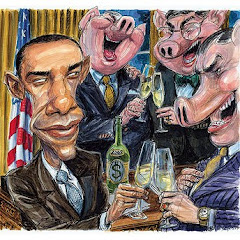


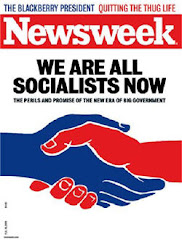
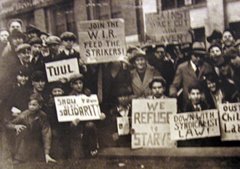












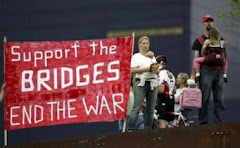





 Length: 00:48:55