Saturday, April 11, 2009
Rosy Scenario forgot to mention...
1. GDP growth turns negative: In the fourth quarter of 2008, GDP declined at an annual rate of 6.3 percent, the largest decline since the first quarter of 1982. The drop in growth reflected a 4.3% decline in consumer spending, a 22.8% fall in spending on homes, a 21.7% decrease in business investment spending, and a 23.6% drop in exports.
2. Job losses accelerate: The U.S. economy shed 663,000 jobs in March 2009. Since the recession began in December 2007, the economy has lost 5.1 million jobs, 2.7 million of them-or 53.35 of the total-in just the last four months.
3. Broad rise in unemployment rates: In March 2009, the unemployment rate was 8.5%-the highest level since October 1983. The African-American unemployment rate stood at 13.3%, the Hispanic unemployment rate at 11.4%, and the unemployment rate for whites at 7.9% in January 2009. Youth unemployment has soared to 21.7%; meanwhile, the unemployment rate for people without a high school diploma grew to 13.3%, compared to 9.0% for those with a high school degree and 4.3% for those with a college degree.
4. Hours at work at historic low: Average weekly hours amounted for production workers-the vast majority of the American workforce-fell to 33.2 hours in March. This was the lowest level since the Bureau of Labor Statistics started to calculate these data.
5. Wages still up due to low inflation: In February 2009, inflation adjusted weekly earnings were 2.5% higher and hourly earnings were 4.1% higher than a year earlier, largely because of low inflation in recent months. This is unlikely to last. Inflation adjusted weekly and hourly wages have already decreased in January and February 2009.
6. Benefits decreased before the crisis: The share of private sector workers with a pension dropped from 50.3% in 2000 to 45.1% in 2007, and the share of people with employer-provided health insurance dropped from 64.2% in 2000 to 59.3% in 2007.
7. Family wealth disappears at record pace: From June 2007-the last peak of family wealth-to December 2008, total family wealth decreased by $15 trillion in 2008 dollars. This reflects a drop of 22.8% during these 18 months, the fastest decline in any 18-month period since the Federal Reserve started to collect these data in 1952. Total family wealth stood at 483.3% of after-tax income-the lowest level since March 1995.
8. The housing market stalls: New home sales in January 2009 amounted to an annualized, seasonally adjusted rate of 337,000, 41.1% lower than a year earlier, despite a year-over-year drop in median new home prices of 18.1%. At the current rate of new home sales, it will still take 12.2 months to sell all new houses on the market. Existing home sales were 4.6% lower and their median sales price 15.5% less than a year earlier.
9. Homeowners' wealth losses mount: The values of all homes fell by $3.9 trillion from December 2006-the last peak of housing wealth-to December 2008. Home equity to after-tax income has dropped to 74.0%, the lowest level since September 1967, and home equity as share of home values dropped to record low of 44.7% by December 2008.
10. Mortgage troubles mount: One in nine mortgages is delinquent or in foreclosure. In the fourth quarter of 2008, the share of mortgages that were delinquent was 7.9% and the share of mortgages that were in foreclosure was 3.3%. The share of new mortgages going into foreclosure stayed at its record high of 1.1%.
11. Families feel the pressure: Credit card defaults rose to 6.3% of all credit card debt by the fourth quarter of 2008, an increase of 52.4% from the fourth quarter of 2007.
2. Job losses accelerate: The U.S. economy shed 663,000 jobs in March 2009. Since the recession began in December 2007, the economy has lost 5.1 million jobs, 2.7 million of them-or 53.35 of the total-in just the last four months.
3. Broad rise in unemployment rates: In March 2009, the unemployment rate was 8.5%-the highest level since October 1983. The African-American unemployment rate stood at 13.3%, the Hispanic unemployment rate at 11.4%, and the unemployment rate for whites at 7.9% in January 2009. Youth unemployment has soared to 21.7%; meanwhile, the unemployment rate for people without a high school diploma grew to 13.3%, compared to 9.0% for those with a high school degree and 4.3% for those with a college degree.
4. Hours at work at historic low: Average weekly hours amounted for production workers-the vast majority of the American workforce-fell to 33.2 hours in March. This was the lowest level since the Bureau of Labor Statistics started to calculate these data.
5. Wages still up due to low inflation: In February 2009, inflation adjusted weekly earnings were 2.5% higher and hourly earnings were 4.1% higher than a year earlier, largely because of low inflation in recent months. This is unlikely to last. Inflation adjusted weekly and hourly wages have already decreased in January and February 2009.
6. Benefits decreased before the crisis: The share of private sector workers with a pension dropped from 50.3% in 2000 to 45.1% in 2007, and the share of people with employer-provided health insurance dropped from 64.2% in 2000 to 59.3% in 2007.
7. Family wealth disappears at record pace: From June 2007-the last peak of family wealth-to December 2008, total family wealth decreased by $15 trillion in 2008 dollars. This reflects a drop of 22.8% during these 18 months, the fastest decline in any 18-month period since the Federal Reserve started to collect these data in 1952. Total family wealth stood at 483.3% of after-tax income-the lowest level since March 1995.
8. The housing market stalls: New home sales in January 2009 amounted to an annualized, seasonally adjusted rate of 337,000, 41.1% lower than a year earlier, despite a year-over-year drop in median new home prices of 18.1%. At the current rate of new home sales, it will still take 12.2 months to sell all new houses on the market. Existing home sales were 4.6% lower and their median sales price 15.5% less than a year earlier.
9. Homeowners' wealth losses mount: The values of all homes fell by $3.9 trillion from December 2006-the last peak of housing wealth-to December 2008. Home equity to after-tax income has dropped to 74.0%, the lowest level since September 1967, and home equity as share of home values dropped to record low of 44.7% by December 2008.
10. Mortgage troubles mount: One in nine mortgages is delinquent or in foreclosure. In the fourth quarter of 2008, the share of mortgages that were delinquent was 7.9% and the share of mortgages that were in foreclosure was 3.3%. The share of new mortgages going into foreclosure stayed at its record high of 1.1%.
11. Families feel the pressure: Credit card defaults rose to 6.3% of all credit card debt by the fourth quarter of 2008, an increase of 52.4% from the fourth quarter of 2007.
Thursday, April 9, 2009
Why liberals, progressives and the left need to break free of the Democratic Party and how we might accomplish this...
Two articles (read them below or click on their links) more than any others I have read recently--- one in the Christian Science Monitor, the other in the New York Times--- clearly demonstrate the need to initiate and organize a working class based labor party in the United States which will take on the thoroughly reactionary, warmongering and anti-labor policies of Barack Obama, the Democrats and the thoroughly corrupt and incompetent "leaders" of organized labor who are content holding up the tails of a bunch of dumb donkeys.
Failing to seek solutions outside of the Democratic Party will continue to result in the only opposition to Obama coming from the Republicans and other right-wing groups when a full and complete criticism from the left is fully warranted and required.
There is no problem making the needed criticisms from inside the Democratic Party but this isn't being done.
Moves are underway to build the Peace and Freedom Party into a national political party.
In my opinion, this initiative to build the Peace and Freedom Party--- presently based in California--- deserves a good hard look by liberals, progressives and the left.
A very good and viable third party alternative capable of seriously challenging the Democrats and Republicans could result if this national effort is based upon a firm progressive foundation like what we had here in Minnesota with the Minnesota Farmer-Labor Party that elected two socialist Governors (Floyd B. Olson and Elmer Benson) and Communist John Bernard to the U.S. Congress along with many Minnesota Farmer-Labor Party candidates being elected to the Minnesota State House and Senate and many local offices... from township and county public officials to city councils... with Floyd B. Olson having been given serious consideration as a possible socialist candidate to challenge Franklin Roosevelt for the presidency(unfortunately Olson suffered an untimely death in succumbing to cancer).
Should the Peace and Freedom Party take up the working class struggle along the lines of the highly successful Minnesota Farmer-Labor Party--- liberals, progressives and the left along with the working class could very well find a permanent political home once and for all in the United States.
In my opinion, liberals, progressives and the left--- especially the working class--- should be looking to creating some kind of political "form" to challenge Obama and the Democrats from the left in state houses and in Congress by insisting on changing the priorities in this country to focusing on the needs of people instead of wars and Wall Street profits.
One organizational form we might want to explore using to challenge Barack Obama and his Wall Street crowd is some kind of "people's lobby."
Building a strong "people's lobby" to challenge Obama and the power of Wall Street by demanding an end to the imperialist wars in Iraq, Afghanistan and Pakistan and insisting on the complete reordering of this country's priorities, away from war and military spending and redirected toward meeting the needs of the people.
For instance, we need to be asking why the United States needs over 800 military bases on foreign soil; when, what we really need is 800 public health care centers spread out across the United States providing free comprehensive and basic universal health care to everyone.
A "people's lobby" could challenge the power of the corporations in the streets and in the state houses and in Congress as we put together and build a real progressive alternative to this two-party trap we are stuck in as the Wall Street parasites and vultures pick us clean.
The two articles below clearly demonstrate why we can't trust Obama and the Democrats or their accomplices in organized labor and the Democratic Party controlled and manipulated segment of the anti-war movement.
Most working people and the majority of the American people hold views completely at odds with the Democratic Party and Obama (and these people have clearly rejected the Republicans); the problem is we are not organized to make our voices heard let alone make decisions.
How is it that living in a democracy the majority of the people have no voice and are without any political power capable of making decisions? Lack of organization. Needless fighting amongst ourselves. We can no longer afford the "luxury" of disunity based upon petty differences because the problems we confront are far to severe.
Building an alternative political party, be it the Peace and Freedom Party or some other formation, will require uniting all those who are suffering problems; problems first inflicted by the Republicans and now exacerbated by Barack Obama and the Democrats who have been chosen by Wall Street to implement Wall Street's dirty agenda of wars and poverty from which the coupon clippers of the military-financial-industrial complex profit.
Without organizational forms that have as their purposes to educate and unite people in bringing us all into militant struggle against the power of Wall Street, we are will remain trapped as our standard of living quickly erodes and people die in senseless wars.
We need to challenge these imperialist wars along with the increasing military madness and insanity that robs humanity of the wealth we need to create a society where people live in harmony with nature--- our first priority needs to be taking us off the road to perdition as capitalism crashes; capitalism is on the skids to oblivion... socialism is the only alternative.
We need to be clear that peace is not the same thing as Obama's distorted and perverted view of "peace" which consists of the United States military's successful ending the opposition to occupation; this is not justice--- and the successful occupation of a sovereign nation is in no way the equivalent of peace. Killing and beating down the opposition to the imperialist war in Iraq is not peace.
It is time to part company with those who view the wars in Afghanistan and Pakistan as appropriate and just. These are imperialist wars that are no more just than the war in Iraq or Israel's attempt to grab through illegal settlements all the land it can steal from the Palestinian people.
U.S. financial and other assistance to the Israeli killing machine is just as wrong as the wars in Iraq, Afghanistan and Pakistan. We can put the resources to much better use solving the problems of working people right here in the United States.
There are many issues which bring honest and sincere liberals, progressives and the left together and if we put our heads together taking into consideration all the problems we have to resolve we should be able to challenge the Democrats and Republicans along with any other reactionary, pro-war racist parties coming along.
Allowing those pro-war "liberals" and class collaborationist, non-struggle union "leaders" to dominate our movements and politics in this country under the guise that Barack Obama "deserves a chance" or that "we need to be careful in how we approach Obama if we want to work with him" is ridiculous... the guy is nothing but a flim-flam man chosen by Wall Street in an effort to thwart the development of a people's challenge to Wall Street's power and control.
The success of the Minnesota Farmer-Labor Party was achieved when working people with liberal, progressive and left ideas came together to try to solve the problems created as a direct result of Wall Street's greedy drive for profits--- Like now, Wall Street made the economic mess of the 1930's and expected working people to suffer as problems were resolved at the expense of working people--- today, in the same way and progressive traditions of the Minnesota Farmer-Labor Party, we must tell Wall Street things are not going to work the way these greedy vultures and parasites intend.
Let's consider pulling together some kind of "people's lobby" as part or our effort to form and organize a political party capable of challenging the wealthy few for power.
Working people create all wealth; as a result, working people are entitled to establish a political agenda aimed at making the world a better place for everyone to live.
Wars and profits for the few are not the way to go; we are now at war and in this economic mess because for too long we have not challenged the present way of doing things.
These pro-war "liberals" do not represent us; they are not the voices of the legitimate peace movement--- neither do these labor fakers who fear to struggle for justice represent most working people.
We need to build the organizations required to give our voices for peace and social & economic justice a real hearing and we shouldn't be afraid of offending a creep like Barack Obama who sits in silence as the Israeli killing machine piles dead Palestinian children like cord wood and does nothing to stop foreclosures and evictions as a bunch of crooks are allowed to profit from the problems they created.
Let's "bundle" our problems together along with a package of solutions and come together in some kind of "people's lobby" which will serve as a solid base from which to build a real people's alternative to this two-party fiasco passing itself off as the world's greatest bastion of democracy when nothing of the kind is true.
Education. Organization. Unity. Action.
Something to think about...
Alan L. Maki
Antiwar activists split over Obama's Afghanistan policy
Lawmakers and others who were against the Iraq war generally support the president. But they worry about another 'quagmire.'
http://www.csmonitor.com/2009/0404/p99s07-usgn.html
By Gail Russell Chaddock | Staff writer of The Christian Science Monitor
from the April 4, 2009 edition
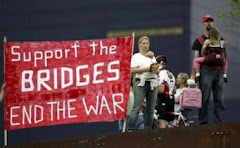
Washington - The anti-war movement that helped elect Candidate Obama is in the early throes of a debate over whether to ramp up again – this time, over President Obama's plans to step up US engagement in Afghanistan.
For many activists – on and off Capitol Hill – it's a tough call. It's early in a new administration, they say. Even opponents of the troop buildup in Afghanistan say that they like and still trust this president. They want to give him time.
They also like much of what they're hearing from the Obama White House.
Instead of the go-it-alone, "cowboy diplomacy" of the Bush years, Obama pushes concepts like "shared responsibility" and "civilian effort," they say.
But Obama's decision to send another 21,000 troops to Afghanistan to help stabilize "the most dangerous place in the world," as he calls it, is shifting some anti-war activists into (reluctant) opposition. It's also forcing some members of Congress to explain to voters why they opposed a troop buildup in Iraq but now support one in Afghanistan.
"This could be a one-way ticket to a quagmire," says former US Rep. Tom Andrews (D) of Maine, national director of the Win Without War coalition.
"Sometimes less is more. In the case of Afghanistan and Pakistan, the deployment of US troops can be a source of instability, not stability," he says. "These are very real concerns that we have, and we want to articulate them in a respectful way."
Since President Obama's announcement of a new strategy in Afghanistan last month, Win Without War and other groups have been trying to revive a dialogue on the war. They're especially urging members of Congress and the news media to get back to the business of vigorous criticism and oversight.
The anti-war movement shifted into low gear after Obama's election. Funding and staffing for most groups dropped, in some cases precipitously. Code Pink activists – a highly visible presence at war hearings and protests in the Bush years – have shifted their target from war to Wall Street.
Some elements of the anti-Iraq War coalition think that the buildup in Afghanistan is warranted, even essential.
"Americans have more business in Afghanistan than they ever did in Iraq, Bosnia, Lebanon, Somalia, Panama, or Grenada," says Jon Soltz, chairman and cofounder of VoteVets.org, which rallied veterans against the war in Iraq in the Bush years.
The reason the US is in Afghanistan is that we were attacked, he adds. "As someone who fought in Iraq, I don't think people are as ready to give up on President Obama as they were on George Bush. I'm biased to think that we give this president a chance."
On Capitol Hill, the once-robust Out of Iraq Caucus has also been largely silent on the troop buildup in Afghanistan. Members say they're still working to find common ground.
"We're not there yet," says Rep. Lynn Woolsey (D) of California, a cofounder together with Reps. Barbara Lee (D) and Maxine Waters (D), both of California.
Meanwhile, the Out of Iraq Caucus will be sponsoring forums to help educate members. "History makes it clear that the Afghan people do not look kindly on foreign armies," Rep. Woolsey said in a floor speech on March 30.
"I am also concerned about the cost of sending more troops, the cost in both lives and treasure. It will require a 60 percent increase in military spending at a time when our economy right here at home is suffering so badly," she said. "Now is the time to pause to consider whether there are other alternatives to sending our troops to Afghanistan."
United in opposition to the war in Iraq, liberal Democrats – many of whom have yet to state publicly their view on the buildup – are breaking out more nuanced positions on the war in Afghanistan. Some favor it; some oppose it. All want the president to be successful, and they say it's too early for a confrontation on the policy.
"He's moving away from a military-only protocol that was the hallmark of the Bush years – to the degree that Bush and Cheney were interested in Afghanistan at all – in favor of a community-based, civilian-based, civil society-based policy," says Rep. Neil Abercrombie (D) of Hawaii, a member of the Out of Iraq Caucus.
"Whether or not that succeeds obviously is something that is still open, but it won't be from lack of effort on the president's part," he says.
Another caucus member, Rep. Jim McDermott (D) of Washington, who opposes the buildup, worries that the president may yet be drawn into a mainly military approach to the conflict.
"Those of us who lived through Vietnam are very upset with what's going on [in Afghanistan]," he says. "All of us want him to succeed, desperately want him to succeed. But we worry that as John Kennedy got wrapped up by those guys that sent him to the Bay of Pigs, he'll listen to the guys who say: 'Mr. President, you want to look good, don't you? You don't want to look like a quitter or a loser or weak?'"
But even before they confront the president, Democrats are confronting concerns at home about the new direction of the war in Afghanistan.
Rep. Paul Hodes (D) of New Hampshire, who campaigned against the war in Iraq, saw the first anti-war protests of the Obama administration last month in his hometown of Concord. Even though the protests are small, he says he needs to explain his stance to voters, and the situation is "difficult and complex."
"I opposed the war in Iraq because it was not merely a diversion from the effort that we need to make to battle terrorism, not merely because it was sold on false premises, but because it made us less safe and secure as a country and a world," he says.
"I have long believed that our efforts needed to be directed to Pakistan and Afghanistan in a coherent way with a comprehensive strategy that does not rely on military force alone," he adds.
New Hampshire peace activists planning vigils in Nashua, Concord, and Durham next week to protest the buildup in Afghanistan say they expect to meet with their congressional delegation on the issue.
"We're very concerned that the president announced the increase in troops even before having a coherent plan in place," says Anne Miller, executive director of Peace Action of New Hampshire, which claims some 3,000 members statewide.
"We're still not clear what this plan will accomplish, what benchmarks are, what a win would look like," she adds. "We have colleagues that just got back from Kabul and not one Afghani they spoke to thought that having more troops there would make a difference."
For the most part, Americans aren't focused on the war in Afghanistan, pollsters say. Wall Street and the economy are much bigger concerns, but that's beginning to shift, too.
"There's polling data showing a higher percentage of those saying that the war in Afghanistan has not been worth it," says pollster John Zogby of Zogby International.
"Americans like their wars to be won and short. But President Obama is still getting some slack, as far as the public is concerned," he adds.
As candidate, Obama clearly signaled his intent as president to withdraw US forces from Iraq to refocus energies on the war in Afghanistan. That clarity helps give credibility to the steps he's taking now, say Congress watchers.
"You've got a lot of antiwar liberals who said he didn't really mean that – that he's just talking that way to look tough. What we're learning is that, like many things he's doing on the domestic front, he's doing what he said," says Norman Ornstein a senior fellow at the American Enterprise Institute.
"He's got a year – and the protests will start before that," he adds. "If it looks like we're bogged down and lot of Americans are dying, we're in a different situation."
In America, Labor Has an Unusually Long Fuse
http://www.nytimes.com/2009/04/05/weekinreview/05greenhouse.html?_r=1
By STEVEN GREENHOUSE
Published: April 4, 2009
The workers and other protesters who gathered en masse at the Group of 20 summit meeting last week in London were continuing a time-honored European tradition of taking their grievances into the streets.
Two weeks earlier, more than a million workers in France demonstrated against layoffs and the government’s handling of the economic crisis, and in the last month alone, French workers took their bosses hostage four times in various labor disputes. When General Motors recently announced huge job cuts worldwide, 15,000 workers demonstrated at the company’s German headquarters.
But in the United States, where G.M. plans its biggest layoffs, union members have seemed passive in comparison. They may yell at the television news, but that’s about all. Unlike their European counterparts, American workers have largely stayed off the streets, even as unemployment soars and companies cut wages and benefits.
The country of Mother Jones, John L. Lewis and Walter Reuther certainly has had a rich and sometimes militant history of labor protest — from the Homestead Steel Works strike against Andrew Carnegie in 1892 to the auto workers’ sit-down strikes of the 1930s and the 67-day walkout by 400,000 G.M. workers in 1970.
But in recent decades, American workers have increasingly steered clear of such militancy, for reasons that range from fear of having their jobs shipped overseas to their self-image as full-fledged members of the middle class, with all its trappings and aspirations.
David Kennedy, a Stanford historian and author of “Freedom From Fear: The American People in Depression and War, 1929-1945,” says that America’s individualist streak is a major reason for this reluctance to take to the streets. Citing a 1940 study by the social psychologist Mirra Komarovsky, he said her interviews of the Depression-era unemployed found “the psychological reaction was to feel guilty and ashamed, that they had failed personally.”
Taken together, guilt, shame and individualism undercut any impulse to collective action, then as now, Professor Kennedy said. Noting that Americans felt stunned and desperately insecure during the Depression’s early years, he wrote: “What struck most observers, and mystified them, was the eerie docility of the American people, their stoic passivity as the Depression grindstone rolled over them.”
By the mid-1930s, though, worker protests increased in number and militancy. They were fueled by the then-powerful Communist and Socialist Parties and frustrations over continuing deprivation. Workers also felt that they had President Roosevelt’s blessing for collective action because he signed the Wagner Act in 1935, giving workers the right to unionize.
“Remember, at that time, you had Hoovervilles and 25 percent unemployment,” said Daniel Bell, a professor emeritus of sociology at Harvard. “Many people felt that capitalism was finished.”
General strikes paralyzed San Francisco and Minneapolis, and a six-week sit-down strike at a G.M. plant in Flint, Mich., pressured the company into recognizing the United Automobile Workers. In the decade’s ugliest showdown, a 1937 strike against Republic Steel in Chicago, 10 protesters were shot to death. That militancy helped build a powerful labor movement, which represented 35 percent of the nation’s workers by the 1950s and helped create the world’s largest and richest middle class.
Today, American workers, even those earning $20,000 a year, tend to view themselves as part of an upwardly mobile middle class. In contrast, European workers often still see themselves as proletarians in an enduring class struggle.
And American labor leaders, once up-from-the-street rabble-rousers, now often work hand-in-hand with C.E.O.’s to improve corporate competitiveness to protect jobs and pensions, and try to sideline activists who support a hard line.
“You have a general diminution of union leadership that was focused on defending workers by any means necessary,” said Jerry Tucker, a longtime U.A.W. militant. “The message from the union leadership nowadays often is, ‘We don’t have any choice, we have to go down this concessionary road to see if we can do damage control,’ ” he said.
In the case of the Detroit automakers, a strike might not only hasten their demise but infuriate many Americans who already view auto workers as overpaid. It might also make Washington less receptive to a bailout.
Labor’s aggressiveness has also been sapped by its declining numbers. Unions represent just 7.4 percent of private-sector workers today.
Unions have also grown more cautious as management has become more aggressive. A watershed came in 1981 when the nation’s air traffic controllers engaged in an illegal strike. President Reagan quickly fired the 11,500 striking traffic controllers, hired replacements and soon got the airports running. After that confrontation, labor’s willingness to strike shrank markedly.
American workers still occasionally vent their anger in protests and strikes. There were demonstrations against the A.I.G. bonuses, for instance, and workers staged a sit-down strike in December when their factory in Chicago was closed. But the numbers tell the story: Last year, American unions engaged in 159 work stoppages, down from 1,352 in 1981, according to the Bureau of National Affairs, a publisher of legal and regulatory news.
Michael Kazin, a historian at Georgetown University, said that while demonstrations remain a vital outlet for the European left, for Americans “the Internet now somehow serves as the main outlet” with angry blogs and mass e-mailing.
Left-leaning workers and unions that might be most prone to stage protests during today’s economic crisis are often the ones most enthusiastic about President Obama and his efforts to revive the economy, help unions and enact universal health coverage. Instead of taking to the streets last fall to protest the gathering economic crisis under President Bush, many workers and unions campaigned for Mr. Obama.
Leo Gerard, president of the United Steelworkers, said there were smarter things to do than demonstrating against layoffs — for instance, pushing Congress and the states to make sure the stimulus plan creates the maximum number of jobs in the United States.
“I actually believe that Americans believe in their political system more than workers do in other parts of the world,” Mr. Gerard said. He said large labor demonstrations are often warranted in Canada and European countries to pressure parliamentary leaders. Demonstrations are less needed in the United States, he said, because often all that is needed is some expert lobbying in Washington to line up the support of a half-dozen senators.
Professor Kennedy saw another reason that today’s young workers and young people were protesting less than in decades past. “This generation,” he said, has “ found more effective ways to change the world. It’s signed up for political campaigns, and it’s not waiting for things to get so desperate that they feel forced to take to the streets.”
Obviously, the New York Times is trying to establish a position for labor which fits in well with Wall Street's plans to squeeze everything out of the working class. Workers should read what Steven Greenhouse has been writing and will continue to write aimed at establishing a thoroughly docile and class collaborationist position for labor writing under the guise of "objectivity:"
http://topics.nytimes.com/top/reference/timestopics/people/g/steven_greenhouse/index.html
Failing to seek solutions outside of the Democratic Party will continue to result in the only opposition to Obama coming from the Republicans and other right-wing groups when a full and complete criticism from the left is fully warranted and required.
There is no problem making the needed criticisms from inside the Democratic Party but this isn't being done.
Moves are underway to build the Peace and Freedom Party into a national political party.
In my opinion, this initiative to build the Peace and Freedom Party--- presently based in California--- deserves a good hard look by liberals, progressives and the left.
A very good and viable third party alternative capable of seriously challenging the Democrats and Republicans could result if this national effort is based upon a firm progressive foundation like what we had here in Minnesota with the Minnesota Farmer-Labor Party that elected two socialist Governors (Floyd B. Olson and Elmer Benson) and Communist John Bernard to the U.S. Congress along with many Minnesota Farmer-Labor Party candidates being elected to the Minnesota State House and Senate and many local offices... from township and county public officials to city councils... with Floyd B. Olson having been given serious consideration as a possible socialist candidate to challenge Franklin Roosevelt for the presidency(unfortunately Olson suffered an untimely death in succumbing to cancer).
Should the Peace and Freedom Party take up the working class struggle along the lines of the highly successful Minnesota Farmer-Labor Party--- liberals, progressives and the left along with the working class could very well find a permanent political home once and for all in the United States.
In my opinion, liberals, progressives and the left--- especially the working class--- should be looking to creating some kind of political "form" to challenge Obama and the Democrats from the left in state houses and in Congress by insisting on changing the priorities in this country to focusing on the needs of people instead of wars and Wall Street profits.
One organizational form we might want to explore using to challenge Barack Obama and his Wall Street crowd is some kind of "people's lobby."
Building a strong "people's lobby" to challenge Obama and the power of Wall Street by demanding an end to the imperialist wars in Iraq, Afghanistan and Pakistan and insisting on the complete reordering of this country's priorities, away from war and military spending and redirected toward meeting the needs of the people.
For instance, we need to be asking why the United States needs over 800 military bases on foreign soil; when, what we really need is 800 public health care centers spread out across the United States providing free comprehensive and basic universal health care to everyone.
A "people's lobby" could challenge the power of the corporations in the streets and in the state houses and in Congress as we put together and build a real progressive alternative to this two-party trap we are stuck in as the Wall Street parasites and vultures pick us clean.
The two articles below clearly demonstrate why we can't trust Obama and the Democrats or their accomplices in organized labor and the Democratic Party controlled and manipulated segment of the anti-war movement.
Most working people and the majority of the American people hold views completely at odds with the Democratic Party and Obama (and these people have clearly rejected the Republicans); the problem is we are not organized to make our voices heard let alone make decisions.
How is it that living in a democracy the majority of the people have no voice and are without any political power capable of making decisions? Lack of organization. Needless fighting amongst ourselves. We can no longer afford the "luxury" of disunity based upon petty differences because the problems we confront are far to severe.
Building an alternative political party, be it the Peace and Freedom Party or some other formation, will require uniting all those who are suffering problems; problems first inflicted by the Republicans and now exacerbated by Barack Obama and the Democrats who have been chosen by Wall Street to implement Wall Street's dirty agenda of wars and poverty from which the coupon clippers of the military-financial-industrial complex profit.
Without organizational forms that have as their purposes to educate and unite people in bringing us all into militant struggle against the power of Wall Street, we are will remain trapped as our standard of living quickly erodes and people die in senseless wars.
We need to challenge these imperialist wars along with the increasing military madness and insanity that robs humanity of the wealth we need to create a society where people live in harmony with nature--- our first priority needs to be taking us off the road to perdition as capitalism crashes; capitalism is on the skids to oblivion... socialism is the only alternative.
We need to be clear that peace is not the same thing as Obama's distorted and perverted view of "peace" which consists of the United States military's successful ending the opposition to occupation; this is not justice--- and the successful occupation of a sovereign nation is in no way the equivalent of peace. Killing and beating down the opposition to the imperialist war in Iraq is not peace.
It is time to part company with those who view the wars in Afghanistan and Pakistan as appropriate and just. These are imperialist wars that are no more just than the war in Iraq or Israel's attempt to grab through illegal settlements all the land it can steal from the Palestinian people.
U.S. financial and other assistance to the Israeli killing machine is just as wrong as the wars in Iraq, Afghanistan and Pakistan. We can put the resources to much better use solving the problems of working people right here in the United States.
There are many issues which bring honest and sincere liberals, progressives and the left together and if we put our heads together taking into consideration all the problems we have to resolve we should be able to challenge the Democrats and Republicans along with any other reactionary, pro-war racist parties coming along.
Allowing those pro-war "liberals" and class collaborationist, non-struggle union "leaders" to dominate our movements and politics in this country under the guise that Barack Obama "deserves a chance" or that "we need to be careful in how we approach Obama if we want to work with him" is ridiculous... the guy is nothing but a flim-flam man chosen by Wall Street in an effort to thwart the development of a people's challenge to Wall Street's power and control.
The success of the Minnesota Farmer-Labor Party was achieved when working people with liberal, progressive and left ideas came together to try to solve the problems created as a direct result of Wall Street's greedy drive for profits--- Like now, Wall Street made the economic mess of the 1930's and expected working people to suffer as problems were resolved at the expense of working people--- today, in the same way and progressive traditions of the Minnesota Farmer-Labor Party, we must tell Wall Street things are not going to work the way these greedy vultures and parasites intend.
Let's consider pulling together some kind of "people's lobby" as part or our effort to form and organize a political party capable of challenging the wealthy few for power.
Working people create all wealth; as a result, working people are entitled to establish a political agenda aimed at making the world a better place for everyone to live.
Wars and profits for the few are not the way to go; we are now at war and in this economic mess because for too long we have not challenged the present way of doing things.
These pro-war "liberals" do not represent us; they are not the voices of the legitimate peace movement--- neither do these labor fakers who fear to struggle for justice represent most working people.
We need to build the organizations required to give our voices for peace and social & economic justice a real hearing and we shouldn't be afraid of offending a creep like Barack Obama who sits in silence as the Israeli killing machine piles dead Palestinian children like cord wood and does nothing to stop foreclosures and evictions as a bunch of crooks are allowed to profit from the problems they created.
Let's "bundle" our problems together along with a package of solutions and come together in some kind of "people's lobby" which will serve as a solid base from which to build a real people's alternative to this two-party fiasco passing itself off as the world's greatest bastion of democracy when nothing of the kind is true.
Education. Organization. Unity. Action.
Something to think about...
Alan L. Maki
Antiwar activists split over Obama's Afghanistan policy
Lawmakers and others who were against the Iraq war generally support the president. But they worry about another 'quagmire.'
http://www.csmonitor.com/2009/0404/p99s07-usgn.html
By Gail Russell Chaddock | Staff writer of The Christian Science Monitor
from the April 4, 2009 edition
Washington - The anti-war movement that helped elect Candidate Obama is in the early throes of a debate over whether to ramp up again – this time, over President Obama's plans to step up US engagement in Afghanistan.
For many activists – on and off Capitol Hill – it's a tough call. It's early in a new administration, they say. Even opponents of the troop buildup in Afghanistan say that they like and still trust this president. They want to give him time.
They also like much of what they're hearing from the Obama White House.
Instead of the go-it-alone, "cowboy diplomacy" of the Bush years, Obama pushes concepts like "shared responsibility" and "civilian effort," they say.
But Obama's decision to send another 21,000 troops to Afghanistan to help stabilize "the most dangerous place in the world," as he calls it, is shifting some anti-war activists into (reluctant) opposition. It's also forcing some members of Congress to explain to voters why they opposed a troop buildup in Iraq but now support one in Afghanistan.
"This could be a one-way ticket to a quagmire," says former US Rep. Tom Andrews (D) of Maine, national director of the Win Without War coalition.
"Sometimes less is more. In the case of Afghanistan and Pakistan, the deployment of US troops can be a source of instability, not stability," he says. "These are very real concerns that we have, and we want to articulate them in a respectful way."
Since President Obama's announcement of a new strategy in Afghanistan last month, Win Without War and other groups have been trying to revive a dialogue on the war. They're especially urging members of Congress and the news media to get back to the business of vigorous criticism and oversight.
The anti-war movement shifted into low gear after Obama's election. Funding and staffing for most groups dropped, in some cases precipitously. Code Pink activists – a highly visible presence at war hearings and protests in the Bush years – have shifted their target from war to Wall Street.
Some elements of the anti-Iraq War coalition think that the buildup in Afghanistan is warranted, even essential.
"Americans have more business in Afghanistan than they ever did in Iraq, Bosnia, Lebanon, Somalia, Panama, or Grenada," says Jon Soltz, chairman and cofounder of VoteVets.org, which rallied veterans against the war in Iraq in the Bush years.
The reason the US is in Afghanistan is that we were attacked, he adds. "As someone who fought in Iraq, I don't think people are as ready to give up on President Obama as they were on George Bush. I'm biased to think that we give this president a chance."
On Capitol Hill, the once-robust Out of Iraq Caucus has also been largely silent on the troop buildup in Afghanistan. Members say they're still working to find common ground.
"We're not there yet," says Rep. Lynn Woolsey (D) of California, a cofounder together with Reps. Barbara Lee (D) and Maxine Waters (D), both of California.
Meanwhile, the Out of Iraq Caucus will be sponsoring forums to help educate members. "History makes it clear that the Afghan people do not look kindly on foreign armies," Rep. Woolsey said in a floor speech on March 30.
"I am also concerned about the cost of sending more troops, the cost in both lives and treasure. It will require a 60 percent increase in military spending at a time when our economy right here at home is suffering so badly," she said. "Now is the time to pause to consider whether there are other alternatives to sending our troops to Afghanistan."
United in opposition to the war in Iraq, liberal Democrats – many of whom have yet to state publicly their view on the buildup – are breaking out more nuanced positions on the war in Afghanistan. Some favor it; some oppose it. All want the president to be successful, and they say it's too early for a confrontation on the policy.
"He's moving away from a military-only protocol that was the hallmark of the Bush years – to the degree that Bush and Cheney were interested in Afghanistan at all – in favor of a community-based, civilian-based, civil society-based policy," says Rep. Neil Abercrombie (D) of Hawaii, a member of the Out of Iraq Caucus.
"Whether or not that succeeds obviously is something that is still open, but it won't be from lack of effort on the president's part," he says.
Another caucus member, Rep. Jim McDermott (D) of Washington, who opposes the buildup, worries that the president may yet be drawn into a mainly military approach to the conflict.
"Those of us who lived through Vietnam are very upset with what's going on [in Afghanistan]," he says. "All of us want him to succeed, desperately want him to succeed. But we worry that as John Kennedy got wrapped up by those guys that sent him to the Bay of Pigs, he'll listen to the guys who say: 'Mr. President, you want to look good, don't you? You don't want to look like a quitter or a loser or weak?'"
But even before they confront the president, Democrats are confronting concerns at home about the new direction of the war in Afghanistan.
Rep. Paul Hodes (D) of New Hampshire, who campaigned against the war in Iraq, saw the first anti-war protests of the Obama administration last month in his hometown of Concord. Even though the protests are small, he says he needs to explain his stance to voters, and the situation is "difficult and complex."
"I opposed the war in Iraq because it was not merely a diversion from the effort that we need to make to battle terrorism, not merely because it was sold on false premises, but because it made us less safe and secure as a country and a world," he says.
"I have long believed that our efforts needed to be directed to Pakistan and Afghanistan in a coherent way with a comprehensive strategy that does not rely on military force alone," he adds.
New Hampshire peace activists planning vigils in Nashua, Concord, and Durham next week to protest the buildup in Afghanistan say they expect to meet with their congressional delegation on the issue.
"We're very concerned that the president announced the increase in troops even before having a coherent plan in place," says Anne Miller, executive director of Peace Action of New Hampshire, which claims some 3,000 members statewide.
"We're still not clear what this plan will accomplish, what benchmarks are, what a win would look like," she adds. "We have colleagues that just got back from Kabul and not one Afghani they spoke to thought that having more troops there would make a difference."
For the most part, Americans aren't focused on the war in Afghanistan, pollsters say. Wall Street and the economy are much bigger concerns, but that's beginning to shift, too.
"There's polling data showing a higher percentage of those saying that the war in Afghanistan has not been worth it," says pollster John Zogby of Zogby International.
"Americans like their wars to be won and short. But President Obama is still getting some slack, as far as the public is concerned," he adds.
As candidate, Obama clearly signaled his intent as president to withdraw US forces from Iraq to refocus energies on the war in Afghanistan. That clarity helps give credibility to the steps he's taking now, say Congress watchers.
"You've got a lot of antiwar liberals who said he didn't really mean that – that he's just talking that way to look tough. What we're learning is that, like many things he's doing on the domestic front, he's doing what he said," says Norman Ornstein a senior fellow at the American Enterprise Institute.
"He's got a year – and the protests will start before that," he adds. "If it looks like we're bogged down and lot of Americans are dying, we're in a different situation."
In America, Labor Has an Unusually Long Fuse
http://www.nytimes.com/2009/04/05/weekinreview/05greenhouse.html?_r=1
By STEVEN GREENHOUSE
Published: April 4, 2009
The workers and other protesters who gathered en masse at the Group of 20 summit meeting last week in London were continuing a time-honored European tradition of taking their grievances into the streets.
Two weeks earlier, more than a million workers in France demonstrated against layoffs and the government’s handling of the economic crisis, and in the last month alone, French workers took their bosses hostage four times in various labor disputes. When General Motors recently announced huge job cuts worldwide, 15,000 workers demonstrated at the company’s German headquarters.
But in the United States, where G.M. plans its biggest layoffs, union members have seemed passive in comparison. They may yell at the television news, but that’s about all. Unlike their European counterparts, American workers have largely stayed off the streets, even as unemployment soars and companies cut wages and benefits.
The country of Mother Jones, John L. Lewis and Walter Reuther certainly has had a rich and sometimes militant history of labor protest — from the Homestead Steel Works strike against Andrew Carnegie in 1892 to the auto workers’ sit-down strikes of the 1930s and the 67-day walkout by 400,000 G.M. workers in 1970.
But in recent decades, American workers have increasingly steered clear of such militancy, for reasons that range from fear of having their jobs shipped overseas to their self-image as full-fledged members of the middle class, with all its trappings and aspirations.
David Kennedy, a Stanford historian and author of “Freedom From Fear: The American People in Depression and War, 1929-1945,” says that America’s individualist streak is a major reason for this reluctance to take to the streets. Citing a 1940 study by the social psychologist Mirra Komarovsky, he said her interviews of the Depression-era unemployed found “the psychological reaction was to feel guilty and ashamed, that they had failed personally.”
Taken together, guilt, shame and individualism undercut any impulse to collective action, then as now, Professor Kennedy said. Noting that Americans felt stunned and desperately insecure during the Depression’s early years, he wrote: “What struck most observers, and mystified them, was the eerie docility of the American people, their stoic passivity as the Depression grindstone rolled over them.”
By the mid-1930s, though, worker protests increased in number and militancy. They were fueled by the then-powerful Communist and Socialist Parties and frustrations over continuing deprivation. Workers also felt that they had President Roosevelt’s blessing for collective action because he signed the Wagner Act in 1935, giving workers the right to unionize.
“Remember, at that time, you had Hoovervilles and 25 percent unemployment,” said Daniel Bell, a professor emeritus of sociology at Harvard. “Many people felt that capitalism was finished.”
General strikes paralyzed San Francisco and Minneapolis, and a six-week sit-down strike at a G.M. plant in Flint, Mich., pressured the company into recognizing the United Automobile Workers. In the decade’s ugliest showdown, a 1937 strike against Republic Steel in Chicago, 10 protesters were shot to death. That militancy helped build a powerful labor movement, which represented 35 percent of the nation’s workers by the 1950s and helped create the world’s largest and richest middle class.
Today, American workers, even those earning $20,000 a year, tend to view themselves as part of an upwardly mobile middle class. In contrast, European workers often still see themselves as proletarians in an enduring class struggle.
And American labor leaders, once up-from-the-street rabble-rousers, now often work hand-in-hand with C.E.O.’s to improve corporate competitiveness to protect jobs and pensions, and try to sideline activists who support a hard line.
“You have a general diminution of union leadership that was focused on defending workers by any means necessary,” said Jerry Tucker, a longtime U.A.W. militant. “The message from the union leadership nowadays often is, ‘We don’t have any choice, we have to go down this concessionary road to see if we can do damage control,’ ” he said.
In the case of the Detroit automakers, a strike might not only hasten their demise but infuriate many Americans who already view auto workers as overpaid. It might also make Washington less receptive to a bailout.
Labor’s aggressiveness has also been sapped by its declining numbers. Unions represent just 7.4 percent of private-sector workers today.
Unions have also grown more cautious as management has become more aggressive. A watershed came in 1981 when the nation’s air traffic controllers engaged in an illegal strike. President Reagan quickly fired the 11,500 striking traffic controllers, hired replacements and soon got the airports running. After that confrontation, labor’s willingness to strike shrank markedly.
American workers still occasionally vent their anger in protests and strikes. There were demonstrations against the A.I.G. bonuses, for instance, and workers staged a sit-down strike in December when their factory in Chicago was closed. But the numbers tell the story: Last year, American unions engaged in 159 work stoppages, down from 1,352 in 1981, according to the Bureau of National Affairs, a publisher of legal and regulatory news.
Michael Kazin, a historian at Georgetown University, said that while demonstrations remain a vital outlet for the European left, for Americans “the Internet now somehow serves as the main outlet” with angry blogs and mass e-mailing.
Left-leaning workers and unions that might be most prone to stage protests during today’s economic crisis are often the ones most enthusiastic about President Obama and his efforts to revive the economy, help unions and enact universal health coverage. Instead of taking to the streets last fall to protest the gathering economic crisis under President Bush, many workers and unions campaigned for Mr. Obama.
Leo Gerard, president of the United Steelworkers, said there were smarter things to do than demonstrating against layoffs — for instance, pushing Congress and the states to make sure the stimulus plan creates the maximum number of jobs in the United States.
“I actually believe that Americans believe in their political system more than workers do in other parts of the world,” Mr. Gerard said. He said large labor demonstrations are often warranted in Canada and European countries to pressure parliamentary leaders. Demonstrations are less needed in the United States, he said, because often all that is needed is some expert lobbying in Washington to line up the support of a half-dozen senators.
Professor Kennedy saw another reason that today’s young workers and young people were protesting less than in decades past. “This generation,” he said, has “ found more effective ways to change the world. It’s signed up for political campaigns, and it’s not waiting for things to get so desperate that they feel forced to take to the streets.”
Obviously, the New York Times is trying to establish a position for labor which fits in well with Wall Street's plans to squeeze everything out of the working class. Workers should read what Steven Greenhouse has been writing and will continue to write aimed at establishing a thoroughly docile and class collaborationist position for labor writing under the guise of "objectivity:"
http://topics.nytimes.com/top/reference/timestopics/people/g/steven_greenhouse/index.html
Friday, April 3, 2009
Jobless rate bolts to 8.5 percent, 663K jobs lost
This article from the Associated Press has the headline:
Even the over-paid capitalist sooth-Sayers pretending to be economists now hiding behind Rosy Scenario's short skirt are admitting there is no end in sight... the bottom has not been reached... worse yet, no one has any idea how long we will remain at the bottom when we hit bottom... if there is a bottom... for the working class, there may in fact be no bottom but just a continual fall; deeper and deeper into a bottomless pit because the "experts" are claiming most people may not even know there has been a "recovery" when the "recovery" occurs.
Professor Sidney Gluck has offered people some excellent advice about understanding the crises we are in.
Professor Gluck recommends we read Chapter 26 of Capital by Karl Marx.
Here is Chapter 26 of Capital by Karl Marx:
Now read this article from the Associated Press... and when you are done reading this article re-read Chapter 26 from Capital again and you will see why "Capital" is becoming one of the most sought after books today being widely discussed by working people around the world...
If you would like to explore the ideas put forward by Karl Marx further in Volume One of Capital, I would encourage you to check out this web site of Professor David Harvey where he reads and explains Volume One of "Capital" in thirteen free on-line lessons:
http://davidharvey.org/reading-capital/
Check it out, its a free college education from a leading Marxist educator.
I will be posting all three volumes of Marx' Capital as a blog in the next few weeks which you will be able to get to through my blog:
Socialism: Theory and Practice
Working people need to get up to speed quickly in understanding what is going on in this country.
Consider inviting a few friends over to gather around your computer to watch and listen to the excellent free on-line course being offered on "Capital" by David Harvey... such a gathering could become a "club" where you and your friends gather on a regular basis to discuss and think about problems working people are experiencing and talk about what kind of solutions to your collective problems are possible... and, you might even come up with a course of action.
In addition to Professor Harvey's thirteen part series studying Volume One of "Capital," you might want to read Albert Einstein's brilliant and easy to understand essay: "Why Socialism?"
Something to think about around the kitchen table,
Alan L. Maki
Jobless rate bolts to 8.5 percent, 663,000 jobs lost in one month
Even the over-paid capitalist sooth-Sayers pretending to be economists now hiding behind Rosy Scenario's short skirt are admitting there is no end in sight... the bottom has not been reached... worse yet, no one has any idea how long we will remain at the bottom when we hit bottom... if there is a bottom... for the working class, there may in fact be no bottom but just a continual fall; deeper and deeper into a bottomless pit because the "experts" are claiming most people may not even know there has been a "recovery" when the "recovery" occurs.
Professor Sidney Gluck has offered people some excellent advice about understanding the crises we are in.
Professor Gluck recommends we read Chapter 26 of Capital by Karl Marx.
Here is Chapter 26 of Capital by Karl Marx:
Karl Marx
Capital Volume One
--------------------------------------------------------------------------------
Part VIII:
Primative Accumulation
--------------------------------------------------------------------------------
CHAPTER TWENTY-SIX:
THE SECRET OF PRIMATIVE ACCUMULATION
--------------------------------------------------------------------------------
We have seen how money is changed into capital; how through capital surplus-value is made, and from surplus-value more capital. But the accumulation of capital pre-supposes surplus-value; surplus-value pre-supposes capitalistic production; capitalistic production presupposes the pre-existence of considerable masses of capital and of labor-power in the hands of producers of commodities. The whole movement, therefore, seems to turn in a vicious circle, out of which we can only get by supposing a primitive accumulation (previous accumulation of Adam Smith) preceding capitalistic accumulation; an accumulation not the result of the capitalistic mode of production, but its starting point.
This primitive accumulation plays in Political Economy about the same part as original sin in theology. Adam bit the apple, and thereupon sin fell on the human race. Its origin is supposed to be explained when it is told as an anecdote of the past. In times long gone-by there were two sorts of people; one, the diligent, intelligent, and, above all, frugal elite; the other, lazy rascals, spending their substance, and more, in riotous living. The legend of theological original sin tells us certainly how man came to be condemned to eat his bread in the sweat of his brow; but the history of economic original sin reveals to us that there are people to whom this is be no means essential. Never mind! Thus it came to pass that the former sort accumulated wealth, and the latter sort had at last nothing to sell except their own skins. And from this original sin dates the poverty of the great majority that, despite all its labor, has up to now nothing to sell but itself, and the wealth of the few that increases constantly although they have long ceased to work. Such insipid childishness is every day preached to us in the defence of property. M. Thiers, e.g., had the assurance to repeat it with all the solemnity of a statesman to the French people, once so spirituel. But as soon as the question of property crops up, it becomes a sacred duty to proclaim the intellectual food of the infant as the one thing fit for all ages and for all tages of development. In actual history it is notorious that conquest, enslavement, robbery, murder, briefly force, play the great part. In the tender annals of Political Economy, the idyllic reigns from time immemorial. Right and "labor" were from all time the sole means of enrichment, the present year of course always excepted. As a matter of fact, the methods of primitive accumulation are anything but idyllic.
In themselves money and commodities are no more capital than are the means of production and of subsistence. They want transforming into capital. But this transformation itself can only take place under certain circumstances that centre in this, viz., that two very different kinds of commodity-possessors must come face to face and into contact, on the one hand, the owners of money, means of production, means of subsistence, who are eager to increase the sum of values they possess, by buying other people's labor-power; on the other hand, free laborers, the sellers of their own labor-power, and therefore the sellers of labor. Free laborers, in the double sense that neither they themselves form part and parcel of the means of production, as in the case of slaves, bondsmen, &c., nor do the means of production belong to them, as in the case of peasant-proprietors; they are, therefore, free from, unencumbered by, any means of production of their own. With this polarization of th e market for commodities, the fundamental conditions of capitalist production are given. The capitalist system pre-supposes the complete separation of the laborers from all property in the means by which they can realize their labor. As soon as capitalist production is once on its own legs, it not only maintains this separation, but reproduces it on a continually extending scale. The process, therefore, that clears the way for the capitalist system, can be none other than the process which takes away from the laborer the possession of his means of production; a process that transforms, on the one hand, the social means of subsistence and of production into capital, on the other, the immediate producers into wage-laborers. The so-called primitive accumulation, therefore, is nothing else than the historical process of divorcing the producer from the means of production. It appears as primitive, because it forms the pre-historic stage of capital and of the mode of production corresponding with it.
The economic structure of capitalist society has grown out of the economic structure of feudal society. The dissolution of the latter set free the elements of the former.
The immediate producer, the laborer, could only dispose of his own person after he had ceased to be attached to the soil and ceased to be the slaver, serf, or bondsman of another. To become a free seller of labor-power, who carries his commodity wherever he finds a market, he must further have escaped from the regime of the guilds, their rules for apprentices and journeymen, and the impediments of their labor regulations. Hence, the historical movement which changes the producers into wage-workers, appears, on the one hand, as their emancipation from serfdom and from the fetters of the guilds, and this side alone exists for our bourgeois historians. But, on the other hand, these new freedmen became sellers of themselves only after they had been robbed of all their own means of production, and of all the guarantees of existence afforded by the old feudal arrangements. And the history of this, their expropriation, is written in the annals of mankind in letters of blood and fire.
The industrial capitalists, these new potentates, had on their part not only to disgrace the guild maters of handicrafts, but also the feudal lords,the possessors of the sources of wealth. In this respect, their conquest of social power appears as the fruit of a victorious struggle both against feudal lordship and its revolting prerogatives, and against the guilds and the fetters they laid on the free development of production and the free exploitation of man by man. The chevaliers d'industrie, however, only succeeded in supplanting the chevaliers of the sword by making use of events of which they themselves were wholly innocent. They have risen by means as vile as those by which the Roman freedman once on a time made himself the master of his patronus.
The starting-point of the development that gave rise to the wage-laborer as well as to the capitalist, was the servitude of the laborer. The advance consisted in a change of form of this servitude, in the transformation of feudal exploitation into capitalist exploitation. To understand its march, we need not go back very far. Although we come across the first beginnings of capitalist production as early as the 14th or 15th century, sporadically, in certain towns of the Mediterranean, the capitalistic era dates from the 16th century. Wherever it appears, the abolition of serfdom has been long effected, and the highest development of the middle ages, the existence of sovereign towns, has been long on the wane.
In the history of primitive accumulation, all revolutions are epoch-making that act as levers for the capital class in course of formation; but, above all, those moments when great masses of men are suddenly and forcibly torn from their means of subsistence, and hurled as free and "unattached" proletarians on the labor market. The expropriation of the agricultural producer, of the peasant, from the soil, is the basis of the whole process. The history of this expropriation, in different countries, assumes different aspects, and runs through its various phases in different orders of succession, nd at different periods. In England alone, which we take as our example, has it the classic form. [1]
--------------------------------------------------------------------------------
Footnotes
[1] In Italy, where capitalistic production developed earliest, the dissolution of serfdom also took place earlier than elsewhere. The serf was emancipated in that country before he had acquired any prescriptive right to the soil. His emancipation at once transformed him into a free proletarian, who, moreover, found his master ready and waiting for him in the towns, for the most part handed down as legacies from the Roman time. When the revolution of the world-market, about the end of the 15th century, annihilated Northern Italy's commercial supremacy, a movement in the reverse direction set in. The laborers of the towns were driven en masse into the country, and gave an impulse, never before seen, to the petite culture, carried on in the form of gardening.
Now read this article from the Associated Press... and when you are done reading this article re-read Chapter 26 from Capital again and you will see why "Capital" is becoming one of the most sought after books today being widely discussed by working people around the world...
If you would like to explore the ideas put forward by Karl Marx further in Volume One of Capital, I would encourage you to check out this web site of Professor David Harvey where he reads and explains Volume One of "Capital" in thirteen free on-line lessons:
http://davidharvey.org/reading-capital/
Check it out, its a free college education from a leading Marxist educator.
I will be posting all three volumes of Marx' Capital as a blog in the next few weeks which you will be able to get to through my blog:
Socialism: Theory and Practice
Working people need to get up to speed quickly in understanding what is going on in this country.
Consider inviting a few friends over to gather around your computer to watch and listen to the excellent free on-line course being offered on "Capital" by David Harvey... such a gathering could become a "club" where you and your friends gather on a regular basis to discuss and think about problems working people are experiencing and talk about what kind of solutions to your collective problems are possible... and, you might even come up with a course of action.
In addition to Professor Harvey's thirteen part series studying Volume One of "Capital," you might want to read Albert Einstein's brilliant and easy to understand essay: "Why Socialism?"
Something to think about around the kitchen table,
Alan L. Maki
Jobless rate bolts to 8.5 percent, 663K jobs lost
Apr 3, 9:43 AM (ET)
By JEANNINE AVERSA
http://apnews.myway.com//article/20090403/D97B14OG0.html
WASHINGTON (AP) - The nation's unemployment rate jumped to 8.5 percent in March, the highest since late 1983, as a wide swath of employers eliminated 663,000 jobs. It's fresh evidence of the toll the recession has inflicted on America's workers, and economists say there's no relief in sight.
If part-time and discouraged workers are factored in, the unemployment rate would have been 15.6 percent in March, the highest on records dating to 1994, according to Labor Department data released Friday.
The average work week in March dropped to 33.2 hours, a new record low.
"It's an ugly report and April is going to be equally as bad," predicted Mark Zandi, chief economist at Moody's Economy.com.
Last month's tally of job losses was slightly higher than the 654,000 that economists expected. The rise in the unemployment rate matched expectations.
Employers cut 651,000 jobs in February when the jobless rate was 8.1 percent, the same as initially estimated. January's job losses, however, were revised much higher, to 741,000 from 655,000.
Since the recession began in December 2007, the economy has lost a net total of 5.1 million jobs, with almost two-thirds of the losses occurring in the last five months.
The number of unemployed people climbed to 13.2 million in March. In addition, the number of people forced to work part time for "economic reasons" rose by 423,000 to 9 million. Those are people who would like to work full time but whose hours were cut back or were unable to find full-time work.
Looking forward, economists expect monthly job losses continuing for most - if not all of - this year.
However, they are hoping that payroll reductions in the current quarter won't be as deep as the roughly 685,000 average monthly job losses in the January-March period.
In the best-case scenario, employment losses in the present quarter would be about half that pace, some economists said. That scenario partly assumes the economy won't be shrinking nearly as much in the present quarter.
The deterioration in the jobs market comes despite a few hopeful signs recently that the recession - now the longest since World War II - could be easing.
Orders placed with U.S. factories actually rose in February, ending a six straight months of declines, the government reported Thursday. Earlier in the week, there was better-than-expected reports on construction spending and pending home sales. And last week a report showed that consumer spending - an engine of the economy - rose in February for the second month in a row - after a half-year of declines.
But as the economic downturn eats into their sales and profits, companies are laying off workers and resorting to other cost-saving measures. Those include holding down hours, and freezing or cutting pay, to survive the storm.
Job losses were widespread last month. Construction companies cut 126,000 jobs. Factories axed 161,000. Retailers got rid of nearly 50,000. Professional and business services eliminated 133,000. Leisure and hospitality reduced employment by 40,000. Even the government cut jobs - 5,000 of them.
Education and health care were the few industries showing any job gains.
Federal Reserve Chairman Ben Bernanke said the recession could end later this year, setting the stage for a recovery next year, if the government is successful in bolstering the banking system. Banks have been clobbered by the worst housing, credit and financial crises to hit the country since the 1930s.
Even if the recession ends this year, the economy will remain frail, analysts said. Companies will have little appetite to ramp up hiring until they feel the economy is truly out of the woods and any recovery has staying power.
Given that, many economists predict the unemployment rate will hit 10 percent at the end of this year. The Fed says unemployment will remain elevated into 2011.
Economists say the job market may not get back to normal - meaning a 5 percent unemployment rate - until 2013.
"There's going to quite a long haul before you see the jobless rate head down," said Bill Cheney, chief economist at John Hancock Financial Services.
To brace the economy, the Fed has slashed a key bank lending rate to an all-time low and has embarked on a series of radical programs to inject billions of dollars into the financial system.
And the Obama administration had launched a multi-pronged strategy to turn the economy around. Its $787 billion stimulus package includes money that will flow to states for public works projects, help them defray budget cuts, extend unemployment benefits and boost food stamp benefits.
The administration also is counting on programs to prop up financial companies and reduce home foreclosures to help turn the economy around.
Still, skittish employers announced more job layoffs this week.
3M Co. (MMM), the maker of Scotch tape, Post-It Notes and other products, said it's cutting another 1,200 jobs, or 1.5 percent of its work force, because of the global economic slump. Fewer than half the jobs will be in the U.S., but include hundreds in its home state of Minnesota. The 1,200 figure includes cuts made earlier in the first quarter.
Elsewhere, healthcare products distributor Cardinal Health Inc. (CAH) said it would eliminate 1,300 positions, or about 3 percent of its work force, and semiconductor equipment maker KLA-Tencor Corp. said it will cut about 600 jobs, or 10 percent of its employees.
Tuesday, March 31, 2009
An Open Letter to President Barack Obama from Sidney J. Gluck

Professor Sidney J Gluck
Honorary Director and Advisor
Professor Emeritus
New School for Social Research
Co-President
US-China People's Friendship Association
President
Sholom Aleichem Memorial Foundation
Dear Colleagues,
Attached is an open letter to President Barack Obama.
I don't know whether you agree with my point of view or not; but I am functioning out of the feeling that the negative aspects of capitalism are becoming obvious to people all around the world regardless of class positions, that understanding its avaricious nature brings them closer to Marx's analysis of the system which all of you can read his seminal word on "Capital." Chapter 26 which deals with the law of capitalist accumulation will give you the prototype of which the USA's capitalism is the arch example of its worst (together with the British who started out but are following along with the USA).
Globalization is a mess and everyone knows that the USA has created more poverty with its capital investments than existed before the global expansion. We know that formal colonial countries are seeing through this domination and are moving in directions which reject the control of foreign capital in their own developments. WE ARE LIVING IN A CENTURY OF EPOCHAL CHANGE. Our hope is that the change which is now developing in the form of a bipolar economic structure will continue to redevelop economies technologically and sustainably. We hope too that the ultimate resolution of differences between the double-structured world economic system will not be resolved by warfare. That is the most important struggle we must be involved with. A peaceful acceptance of epochal change and the survival of all in a better world.
Sincerely,
Sidney J. Gluck
Dear President Obama,
The world economic crisis sparked by the financial sector of our country has put the capitalist system on a defensive more openly than any other time in history. I am one of many who strongly supported your candidacy based on your vocalization of much of what we felt had to be changed in our country to make it more livable for those of us who produce the wealth and intellectual atmosphere.
You are facing the sharpest attack from the ranks of the Republican Party. We all admire your diplomatic ability to deal with those who disagree with you; but, the time has come when you must take an ideological position in order to clarify the issues involved in building a new type of economic structure in the country. This means that the dominance of the financial institutions in the political decisions affecting the majority must be defended openly against misrepresentations and manipulations which we all now know come from the unsupported defense of government that gives primacy to capital accumulation whether it be finance capital or industrial capital.
You do not have to embrace socialism. That is not the ideological position that put you in power. You were put in the White House with a promise to govern in the name of the working majority. True, you would like to have support from all sections of political and economic forces, but YOU WILL NOT GET IT.
If you continue to move along supporting the program of the financial circles in our country, your presidency is DOOMED. Listen to the needs of the majority and cater to it.
You can announce openly that you are not for socialism but you are for correcting the ills of the capitalist system and to relinquish domination of other countries allowing them to move independently as their people desire.
The Republican Party is pressing for the continuation of the kind of economic distortions that has dragged the world down. Openly facing this fact will help you reshape our country’s goals.
We are in an epoch of change. We must remove barriers and encourage each nation to resolve their day to day problems created by greed and distorted wealth accumulation. It does not make you a socialist to talk for Main Street but they need a spokesman in high places that will act for them.
You are in an enviable yet complicated position. Exposing the negative effect of unregulated finance capital which dominates humanity today would memorialize you for the next thousand years. The Bush Administration preempted the first move to deal with the economic crisis by bailing out the perpetrators who squandered every cent in bonuses and bashes. You are now faced with additional steps to bail out the industrial capitalists who have the responsibility of reshaping these enterprises into a new technological and green economy whose purpose is to raise the living standards of all.
The fulfillment of your promises requires that you take an ideological position. You will go down in history as having broken the racial barrier but it will end at that if you continue to be consumed by the economic crisis. OUR SYSTEM NEEDS CHANGE. Do what you can within that system. This means openly opposing the Republican Party’s program already on the road to capturing the presidency and congress in 2010 before they bring us further down. Don’t let them bully you with the “socialist” label.
The ball is in your court to change the situation. In your most diplomatic way you must take an ideological position to correct the problems of the system as you promised and restore true democracy which favors the needs of the majority.
Sincerely,
Sidney J. Gluck
Sunday, March 29, 2009
Philippine Extra-Judicial Killings Continue, Obama's Response In Question
Guest Blog
Brian McAfee
2838 Mason Blvd.
Muskegon Heights, MI 49444
USA
Tel: (231) 737-8726
brimac6@hotmail.com
--------------------------------------------------------------------------------
Philippine Extra-Judicial Killings Continue, Obama's Response In Question
by Brian McAfee
On March 23rd, Sabina Ariola, the leader of "Citizens for Excellence, Progress, Peace towards the Country's Great Future," was gunned down. She is the 992nd civilian to be killed in the ongoing spree of extra-judicial killings that have been occurring since 2001, when Gloria Macapagal Arroyo assumed the presidency. Another particularly despicable killing that occurred in March was that of Rebelyn Pitao, a 20 year old teacher in Davao, southern Philippines. She was tortured, raped, strangled and stabbed according to Alan Davis of the Philippine Human Rights Recording Project.
The apparent reason was "guilt" by association as her father is Leoncio Pitao, a leader in the local New Peoples Army contingent in Mindanao. All of these murders demand justice, but the Rebelyn Pitao case screams it. At the same time, Kaeapatan, the Philippines leading human rights organization, reports that politically motivated killings are up during the first three months of this year. Two in January, seven in February and seven more in March have occurred.
Aside from the 992 extra-judicial killings, there are 193 people who have disappeared under the Arroyo administration. In observing and following news out of the Philippines, one cannot help but be reminded of Pinochet's Chile due to the overall situation.
Amongst the targets for the slaughter, journalists and media people have been a constant target, along with clergy people, labor leaders, advocates for the poor, those challenging foreign ownership and control of Philippine mines, farmers and fishermen. Under the Arroyo administration (since 2001), a number of children have also been killed, as well as 64 journalists or media people, both men and women.
This noted, the Committee to Protect Journalists, A New York based advocate organization, ranks the Philippines 6th amongst the 14 most dangerous countries for journalists. (The rankings are 1-Iraq, 2-Sierra Leone, 3-Somalia, 4-Sri Lanka, 5-Columbia ,6-Philippines, 7-Afghanistan, 8-Nepal, 9-Russia ,10-Pakistan, 11-Mexico ,12-Bangladesh, 13-Brazil and 14-India.)
Meanwhile, the U.S. has controlled Philippine politics, its military and most of its resources since Theodore Roosevelt's presidency. At the same time, many of the individuals targeted for assassination, disappearance or harassment have been victimized solely for openly speaking out against colonialism and exploitation.
Moreover, the U.S. has indirect influence and a significant amount of control over Filipino affairs through its funding, arming and training of the Philippine military and its national police. Indeed, the U.S. has been training the Philippine military (AFP) for decades through its International Military Education and Training program or IMET and its Joint Combined Exchange Training program or JCET.
These programs have been used with some success in the "war on terror." Yet as I wrote in a report a couple of years ago [1], the U.S. war on terror in the Philippines has become a war of terror against the Philippine people. On account, I encourage Americans, Filipinos and all others of good will to voice their opinions and concerns about this grave matter. Similarly, I recommend that they demand a cessation of all military aid, training and funding by the U.S. government until Philippine and U.S. government representatives, along with independent human rights observers, can verify that Philippine civilians, all of them, are safe, free to pursue their dreams and have justice without the sorts of outrageous assaults that they, currently, confront.
Please contact:
1. President Gloria Macapagal-Arroyo
Malacanang Palace
JP Laurel Street, San Miguel
Manila 1005
corres@op.gov.ph
2. President Barack Obama
The White House
1600 Pennsylvania Avenue NW
Washington DC 20500
comments-202-456-1111
electronic comments http://www.whitehouse.gov/contact/
References:
[1] "The Philippines: Where the "War on Terror" has become the War of Terror" at http://www.politicalaffairs.net/article/articleview/5230/.
Brian McAfee
2838 Mason Blvd.
Muskegon Heights, MI 49444
USA
Tel: (231) 737-8726
brimac6@hotmail.com
--------------------------------------------------------------------------------
Philippine Extra-Judicial Killings Continue, Obama's Response In Question
by Brian McAfee
On March 23rd, Sabina Ariola, the leader of "Citizens for Excellence, Progress, Peace towards the Country's Great Future," was gunned down. She is the 992nd civilian to be killed in the ongoing spree of extra-judicial killings that have been occurring since 2001, when Gloria Macapagal Arroyo assumed the presidency. Another particularly despicable killing that occurred in March was that of Rebelyn Pitao, a 20 year old teacher in Davao, southern Philippines. She was tortured, raped, strangled and stabbed according to Alan Davis of the Philippine Human Rights Recording Project.
The apparent reason was "guilt" by association as her father is Leoncio Pitao, a leader in the local New Peoples Army contingent in Mindanao. All of these murders demand justice, but the Rebelyn Pitao case screams it. At the same time, Kaeapatan, the Philippines leading human rights organization, reports that politically motivated killings are up during the first three months of this year. Two in January, seven in February and seven more in March have occurred.
Aside from the 992 extra-judicial killings, there are 193 people who have disappeared under the Arroyo administration. In observing and following news out of the Philippines, one cannot help but be reminded of Pinochet's Chile due to the overall situation.
Amongst the targets for the slaughter, journalists and media people have been a constant target, along with clergy people, labor leaders, advocates for the poor, those challenging foreign ownership and control of Philippine mines, farmers and fishermen. Under the Arroyo administration (since 2001), a number of children have also been killed, as well as 64 journalists or media people, both men and women.
This noted, the Committee to Protect Journalists, A New York based advocate organization, ranks the Philippines 6th amongst the 14 most dangerous countries for journalists. (The rankings are 1-Iraq, 2-Sierra Leone, 3-Somalia, 4-Sri Lanka, 5-Columbia ,6-Philippines, 7-Afghanistan, 8-Nepal, 9-Russia ,10-Pakistan, 11-Mexico ,12-Bangladesh, 13-Brazil and 14-India.)
Meanwhile, the U.S. has controlled Philippine politics, its military and most of its resources since Theodore Roosevelt's presidency. At the same time, many of the individuals targeted for assassination, disappearance or harassment have been victimized solely for openly speaking out against colonialism and exploitation.
Moreover, the U.S. has indirect influence and a significant amount of control over Filipino affairs through its funding, arming and training of the Philippine military and its national police. Indeed, the U.S. has been training the Philippine military (AFP) for decades through its International Military Education and Training program or IMET and its Joint Combined Exchange Training program or JCET.
These programs have been used with some success in the "war on terror." Yet as I wrote in a report a couple of years ago [1], the U.S. war on terror in the Philippines has become a war of terror against the Philippine people. On account, I encourage Americans, Filipinos and all others of good will to voice their opinions and concerns about this grave matter. Similarly, I recommend that they demand a cessation of all military aid, training and funding by the U.S. government until Philippine and U.S. government representatives, along with independent human rights observers, can verify that Philippine civilians, all of them, are safe, free to pursue their dreams and have justice without the sorts of outrageous assaults that they, currently, confront.
Please contact:
1. President Gloria Macapagal-Arroyo
Malacanang Palace
JP Laurel Street, San Miguel
Manila 1005
corres@op.gov.ph
2. President Barack Obama
The White House
1600 Pennsylvania Avenue NW
Washington DC 20500
comments-202-456-1111
electronic comments http://www.whitehouse.gov/contact/
References:
[1] "The Philippines: Where the "War on Terror" has become the War of Terror" at http://www.politicalaffairs.net/article/articleview/5230/.
Friday, March 27, 2009
Obama seeks input of bank CEOs on recovery plans
Today the headlines are:
Obama seeks input of bank CEOs on recovery plans...
What is needed is a massive and comprehensive "people's bailout" based on the legislation drafted by a small group of progressive Minnesota State Legislators which must become the template for national legislation.
Wall Street bankers and coupon clippers are the ones who profit from this rotten capitalist system... a system in which economic depressions are an inherent feature which cannot be avoided.
The capitalist system is a dog-eat-dog system where those at the top get richer and richer as the meanest dogs grab the most and horde the wealth created by the working class leaving us with their shit to clean up.
Big-business and the bankers created this entire mess and now the politicians they have purchased are using our tax-dollars to clean up the mess so working people are getting royally shafted with a rough, un-greased telephone pole full of slivers over and over again.
Obama says the "country 'can't afford to demonize' every profit-seeking investor or entrepreneur because that is what fuels prosperity, and is what will get banks lending and the economy moving again."
Wrong. Dead wrong. And this is why everything Obama and the Democrats are doing will make life more miserable for working people.
"Profit-seeking" does not fuel prosperity. This "profit-seeking" creates problems for working people as it robs society of the wealth needed to provide a quality life for all.
Labor creates all wealth with some very significant help from Mother Nature.
Priorities in this country under the capitalist system are all screwed up.
Obama talks about "profit-seeking" as if it is some noble endeavor; it is nothing of the kind; it is thievery plain and simple.
Any school child understands that labor cannot be continually robbed of the wealth it creates as we stand by and watch Mother Nature get raped over and over again without some very serious problems developing.
It is this insatiable greedy drive for maximum profits by these same "profit-seeking investors and entrepreneurs" who Obama places on a pedestal to worship that are the underlying source of each and every problem we are experiencing.
What we need to do as a people is move on to stage two.
Stage one was dumping the Republicans.
Stage two... we need to move on to consolidating the movement which drove the Republicans out to driving these "profit-seeking investors and entrepreneurs" from power.
Obviously, Obama and the Democrats are seeking to protect these "profit-seeking investors and entrepreneurs" who are not entitled to any such protection from government.
These are very greedy people who would deny hungry school children free meals.
These are the "merchants of death and destruction" who profit from wars.
These are the greedy who profit from health care.
These "profit-seeking investors and entrepreneurs" are the very ones who have driven the auto industry into the ground.
These "profit-seeking investors and entrepreneurs" are the ones who want to turn every single human endeavor into a source of greater profits... they will even destroy our public school system in quest of profits if given the opportunity.
These "profit-seeking investors and entrepreneurs" are the military-financial-industrial complex which has spun this web of state-monopoly capitalism that is nothing more than a scheme to extract maximum super-profits.
These "profit-seeking investors and entrepreneurs" have demonized themselves.
The time has come to bring the working class to power in this country, this is long overdue.
We need to completely reorder the priorities of this country so we get off this track that the drive for profits is the be all and end all of everything. We need to get our country off this insane war binge that is bleeding our country dry and begin directing the resources of our country toward meeting human needs--- Profits before people must be replaced with People before profits.
Barack Obama is part of the problem of what is wrong with this country. This pompous, arrogant, self-promoting, self-serving, flim-flam man and con-artist has risen to power under the guise of claiming to be for "change" without ever being forced to say what kind of change he had in mind.
Did anyone ever want or even anticipate the kind of "change" we see in this country today? No.
These problems did not develop overnight.
The capitalist sooth-Sayers tried to keep the economic problems hidden from the people until the floor fell out from under them. And now they come along with this crap, don't demonize "profit-seeking investors and entrepreneurs."
Obama might have tricked some people but most of those who voted for him did so because he was the only alternative to John McCain. The election results were no mandate for this Wall Street profit orgy, nor were the election results a mandate to ramp up the drive to more wars.
Where is the democracy? We are getting neither peace nor health care.
What Barack Obama has done is help Wall Street bankers and coupon clippers to consolidate their power and the strangle-hold they had on our country at a time when the rising anger of working people was prying loose their grip, and they now are using this economic mess as a chance to re-gain a better, firmer grip around our necks--- squeezing even harder.
These "profit-seeking investors and entrepreneurs" of Wall Street won't be satisfied until they have squeezed the last drop of blood from our veins.
We have a choice: the undertaker can bury these "profit-seeking investors and entrepreneurs" along with their decaying capitalist system now nothing more than a parasitic, cannibalistic beast preying on anything in its path; or, the undertaker will bury us.
The time has come for the working class to carry out its historic task of burying this rotten capitalist system.
A cooperative socialist system free from these parasitical "profit-seeking investors and entrepreneurs" is the only remedy.
Capitalism is on the skids to oblivion placing us on the road to perdition... the time has come to take the first left turn off this dangerous road.
This is not about "business practices" as Barack Obama and the Democrats would like us to believe... this is about a system based upon profits derived from the exploitation of labor and the rape of Mother Nature.
No matter how you view the problem, the capitalist system comes out the culprit.
We can do better... with socialism.
The real trick here is to build the kind of movement which can get back the wealth these "profit-seeking investors and entrepreneurs" have already stolen, prevent them from stealing even more and put that wealth towards universal social programs designed to improve the standard of living for everyone.
The foreclosures and evictions must be halted.
All student debts should be forgiven--- this will release immense purchasing power for people to begin buying what they need putting people back to work.
Massive public works programs must be undertaken to get people back to work at jobs paying real living wages creating programs of lasting value for the American people. We can do this by closing down the more than 800 U.S. foreign military bases which only serve to keep people in other countries under the thumbs of "profit-seeking investors and entrepreneurs" and redirect the resources towards creating 800 public health care centers spread out across this country to keep people healthy and get them well when sick--- no fees, no premiums.
We can bring the failing steel and auto industries under public ownership through democratic nationalization and put people to work creating what we need for an environmentally friendly and green socialist economy.
As Minnesota State Senator David J. Tomassoni has so astutely observed as he brought forward the "Minnesota People's Bailout:" We need to work our way out of his economic mess not try to buy or spend our way out.
Very good advice for getting our country on the high road to a bright socialist future as the dark grey clouds of capitalism threaten to plunge our country--- and the world--- into deathly darkness.
It is now obvious that if working people do not act quickly there are some very powerful, extreme right-wing forces in this country just eagerly waiting to make their play for power and if they are allowed to make this grab for power we will not recognize our country the day after.
This is class war.
Working people are going to have to engage in some very quick self-educating to get up to speed on what is going down... the bankers and the bosses have been doing our thinking for us for far too long making all the decisions behind the closed doors of corporate boardrooms, and that is a big part of our problems today.
There are those who would twist the present circumstances to mean that we have some kind of duty to support Barack Obama and all these schemes he is bringing forward at Wall Street's behest in the guise of "economic stimulus" and even a perverted concept of peace that we are supposed to support that is nothing more then an acceptance of a successful imperialist occupation of another country to rob a sovereign nation and a people of their oil; nothing could be further from the truth... this is a perverted view of what democracy and government is supposed to be about.
The politicians are supposed to work for us, not the other way around.
If ever there has been a time in history for working people to take to the streets to reclaim our country and our democracy behind the calls of "power to the people," that time is now!
Alan L. Maki
Obama seeks input of bank CEOs on recovery plans...
...But when is Obama going to seek input from working people who are suffering the brunt of this depression?
What is needed is a massive and comprehensive "people's bailout" based on the legislation drafted by a small group of progressive Minnesota State Legislators which must become the template for national legislation.
Wall Street bankers and coupon clippers are the ones who profit from this rotten capitalist system... a system in which economic depressions are an inherent feature which cannot be avoided.
The capitalist system is a dog-eat-dog system where those at the top get richer and richer as the meanest dogs grab the most and horde the wealth created by the working class leaving us with their shit to clean up.
Big-business and the bankers created this entire mess and now the politicians they have purchased are using our tax-dollars to clean up the mess so working people are getting royally shafted with a rough, un-greased telephone pole full of slivers over and over again.
Obama says the "country 'can't afford to demonize' every profit-seeking investor or entrepreneur because that is what fuels prosperity, and is what will get banks lending and the economy moving again."
Wrong. Dead wrong. And this is why everything Obama and the Democrats are doing will make life more miserable for working people.
"Profit-seeking" does not fuel prosperity. This "profit-seeking" creates problems for working people as it robs society of the wealth needed to provide a quality life for all.
Labor creates all wealth with some very significant help from Mother Nature.
Priorities in this country under the capitalist system are all screwed up.
Obama talks about "profit-seeking" as if it is some noble endeavor; it is nothing of the kind; it is thievery plain and simple.
Any school child understands that labor cannot be continually robbed of the wealth it creates as we stand by and watch Mother Nature get raped over and over again without some very serious problems developing.
It is this insatiable greedy drive for maximum profits by these same "profit-seeking investors and entrepreneurs" who Obama places on a pedestal to worship that are the underlying source of each and every problem we are experiencing.
What we need to do as a people is move on to stage two.
Stage one was dumping the Republicans.
Stage two... we need to move on to consolidating the movement which drove the Republicans out to driving these "profit-seeking investors and entrepreneurs" from power.
Obviously, Obama and the Democrats are seeking to protect these "profit-seeking investors and entrepreneurs" who are not entitled to any such protection from government.
These are very greedy people who would deny hungry school children free meals.
These are the "merchants of death and destruction" who profit from wars.
These are the greedy who profit from health care.
These "profit-seeking investors and entrepreneurs" are the very ones who have driven the auto industry into the ground.
These "profit-seeking investors and entrepreneurs" are the ones who want to turn every single human endeavor into a source of greater profits... they will even destroy our public school system in quest of profits if given the opportunity.
These "profit-seeking investors and entrepreneurs" are the military-financial-industrial complex which has spun this web of state-monopoly capitalism that is nothing more than a scheme to extract maximum super-profits.
These "profit-seeking investors and entrepreneurs" have demonized themselves.
The time has come to bring the working class to power in this country, this is long overdue.
We need to completely reorder the priorities of this country so we get off this track that the drive for profits is the be all and end all of everything. We need to get our country off this insane war binge that is bleeding our country dry and begin directing the resources of our country toward meeting human needs--- Profits before people must be replaced with People before profits.
Barack Obama is part of the problem of what is wrong with this country. This pompous, arrogant, self-promoting, self-serving, flim-flam man and con-artist has risen to power under the guise of claiming to be for "change" without ever being forced to say what kind of change he had in mind.
Did anyone ever want or even anticipate the kind of "change" we see in this country today? No.
These problems did not develop overnight.
The capitalist sooth-Sayers tried to keep the economic problems hidden from the people until the floor fell out from under them. And now they come along with this crap, don't demonize "profit-seeking investors and entrepreneurs."
If "profit-seeking investors and entrepreneurs" are not responsible for the dire economic straits we are in today; who is?
Obama might have tricked some people but most of those who voted for him did so because he was the only alternative to John McCain. The election results were no mandate for this Wall Street profit orgy, nor were the election results a mandate to ramp up the drive to more wars.
If there are any two things the American people wanted from the election it was:
1. An end to these insane imperialist wars.
2. A no-fee/no-premium, not-for-profit comprehensive public health care system.
Where is the democracy? We are getting neither peace nor health care.
What Barack Obama has done is help Wall Street bankers and coupon clippers to consolidate their power and the strangle-hold they had on our country at a time when the rising anger of working people was prying loose their grip, and they now are using this economic mess as a chance to re-gain a better, firmer grip around our necks--- squeezing even harder.
These "profit-seeking investors and entrepreneurs" of Wall Street won't be satisfied until they have squeezed the last drop of blood from our veins.
We have a choice: the undertaker can bury these "profit-seeking investors and entrepreneurs" along with their decaying capitalist system now nothing more than a parasitic, cannibalistic beast preying on anything in its path; or, the undertaker will bury us.
The time has come for the working class to carry out its historic task of burying this rotten capitalist system.
A cooperative socialist system free from these parasitical "profit-seeking investors and entrepreneurs" is the only remedy.
Capitalism is on the skids to oblivion placing us on the road to perdition... the time has come to take the first left turn off this dangerous road.
This is not about "business practices" as Barack Obama and the Democrats would like us to believe... this is about a system based upon profits derived from the exploitation of labor and the rape of Mother Nature.
No matter how you view the problem, the capitalist system comes out the culprit.
We can do better... with socialism.
The real trick here is to build the kind of movement which can get back the wealth these "profit-seeking investors and entrepreneurs" have already stolen, prevent them from stealing even more and put that wealth towards universal social programs designed to improve the standard of living for everyone.
The foreclosures and evictions must be halted.
All student debts should be forgiven--- this will release immense purchasing power for people to begin buying what they need putting people back to work.
Massive public works programs must be undertaken to get people back to work at jobs paying real living wages creating programs of lasting value for the American people. We can do this by closing down the more than 800 U.S. foreign military bases which only serve to keep people in other countries under the thumbs of "profit-seeking investors and entrepreneurs" and redirect the resources towards creating 800 public health care centers spread out across this country to keep people healthy and get them well when sick--- no fees, no premiums.
We can bring the failing steel and auto industries under public ownership through democratic nationalization and put people to work creating what we need for an environmentally friendly and green socialist economy.
As Minnesota State Senator David J. Tomassoni has so astutely observed as he brought forward the "Minnesota People's Bailout:" We need to work our way out of his economic mess not try to buy or spend our way out.
Very good advice for getting our country on the high road to a bright socialist future as the dark grey clouds of capitalism threaten to plunge our country--- and the world--- into deathly darkness.
It is now obvious that if working people do not act quickly there are some very powerful, extreme right-wing forces in this country just eagerly waiting to make their play for power and if they are allowed to make this grab for power we will not recognize our country the day after.
This is class war.
Working people are going to have to engage in some very quick self-educating to get up to speed on what is going down... the bankers and the bosses have been doing our thinking for us for far too long making all the decisions behind the closed doors of corporate boardrooms, and that is a big part of our problems today.
There are those who would twist the present circumstances to mean that we have some kind of duty to support Barack Obama and all these schemes he is bringing forward at Wall Street's behest in the guise of "economic stimulus" and even a perverted concept of peace that we are supposed to support that is nothing more then an acceptance of a successful imperialist occupation of another country to rob a sovereign nation and a people of their oil; nothing could be further from the truth... this is a perverted view of what democracy and government is supposed to be about.
The politicians are supposed to work for us, not the other way around.
If ever there has been a time in history for working people to take to the streets to reclaim our country and our democracy behind the calls of "power to the people," that time is now!
Alan L. Maki
Obama seeks input of bank CEOs on recovery plans
http://apnews.myway.com//article/20090327/D976BR280.html
Mar 27, 7:50 AM (ET)
By DARLENE SUPERVILLE
WASHINGTON (AP) - President Barack Obama wants to hear from the chief executives of some of the country's biggest banks as he caps a week in which he clarified his overall plan for stabilizing the financial system.
The president was set to take the temperature of the bank CEOs on Friday at the White House. The session will be the latest in a series of such meetings Obama has had with financial industry representatives and business executives since taking office amid the worst economic downturn since the Great Depression.
The meeting follows a period marked by Obama's sharp language, and public outrage, over Wall Street excesses and $165 million in employee bonuses by American International Group, the large but troubled insurance company that has taken more than $170 billion in federal bailout funds.
It also comes days before Obama attends his first international summit, a meeting in London next week of the world's 20 major and developing economies, all struggling with the global recession.
This week, the administration unveiled its program to help banks clear their balance sheets of so-called "toxic assets," bad investments that are tying up capital and making it difficult for them to lend money. The administration also outlined its proposals to impose tighter regulations on the financial sector in an effort to avoid a repeat of the industry meltdown that contributed to the recession.
Obama in recent days has dialed down his rhetoric against AIG and Wall Street. The administration needs the industry's cooperation for its financial stability and financial regulation plans to work.
White House officials said Obama likes to hear directly from those who will be affected by his decisions.
"Our future is inextricably linked to these financial institutions, and their future is linked to the economic health of the country," said Valerie Jarrett, a senior adviser to Obama.
Press secretary Robert Gibbs said Obama looked forward to getting an update from the bankers on the activity they are seeing in real estate and commercial loans. They also are likely to discuss "stuff that's been in the news" in the past few weeks, including executive compensation, bonuses and "the notion that ... we have to change the culture of the way Wall Street works," he said.
Asked whether Obama would deliver as tough a message in private as he has in public, Gibbs replied, "Yes."
"The president isn't going to say one thing out here and a different thing in there," he said. "We're not going to get out of this financial crisis and we're not going to stabilize our financial system without healthy banks. That's part of what he hopes to talk to them about."
Larry Summers, Obama's chief economic adviser, said the meeting will focus on a broad approach to restoring the economy.
This week, the administration announced a plan to partner with private investors, the Federal Reserve and the Federal Deposit Insurance Corp. to take over up to $1 trillion in sour mortgage securities from banks. The goal is to help jump-start lending.
The administration also has proposed tighter regulation of the financial system, including giving the government broad power to take over major financial institutions that are not banks, such as insurance companies, like AIG, and hedge funds teetering on the brink of collapse.
Last week, Obama assailed AIG for "recklessness and greed" in its business practices.
He softened his tone a bit during a nationally televised news conference Tuesday night, saying the country "can't afford to demonize" every profit-seeking investor or entrepreneur because that is what fuels prosperity, and is what will get banks lending and the economy moving again.
Monday, March 23, 2009
The United States has 800 military bases on foreign soil...
What we need--- instead--- is 800 public health care centers spread out across the United States where people can universally access, for free, all their health care needs from pre-natal care, to general health care to eye, dental and mental care right through to burial.
Instead of moving in this progressive direction, President Barack Obama and the United States Congress are moving in a most reactionary direction towards establishing military bases in outer space as they seek to insure the profits of both the merchants of death and destruction and the profit-driven health care industries... talk about skewed priorities and your wacky ideas devoid of common sense.
In addition to these 800 U.S. military bases on foreign soil, Barack Obama and the United States Congress continue funding--- with our tax-dollars--- the Israeli killing machine to the tune of tens of billions of dollars.
A network of 800 public health care centers spread out across the United States would create over four-million good-paying, decent jobs--- talk about your "economic stimulus" package!
We would be planting the seeds of socialism while helping to eradicate poverty as we keep people healthy and get them well when sick.
Think about this kind of solution in relation to what Barack Obama, the U.S. Congress and the Wall Street bankers and coupon clippers are offering the American people, and the peoples of the world... just what is the reason for bailing out the banks and AIG and maintaining more than 800 expensive U.S. military bases of foreign soil?
The Mt. Carmel Clinic in Winnipeg, Manitoba, Canada offers us a glimpse at what militarization and wars continue to rob us of.
The problems created by Wall Street will not be solved as long as the military-financial-industrial complex is allowed to squander human and natural resources on militarism and wars... we might just as well be dumping these resources out into the ocean... at least no one would die in wars.
These merchants of death and destruction must be stopped if humanity is to survive in a livable world.
The time has come to talk about the working class Marxist politics and economics of livelihood... capitalism has failed humanity miserably and left us a real mess.
Something for working people to think about and discuss around the dinner table... the capitalist sooth-Sayers certainly are not going to broach such solutions to the problems of working people as they hide behind the skirt of Rosy Scenario as this global capitalist economic depression intensifies.
Alan Maki
Instead of moving in this progressive direction, President Barack Obama and the United States Congress are moving in a most reactionary direction towards establishing military bases in outer space as they seek to insure the profits of both the merchants of death and destruction and the profit-driven health care industries... talk about skewed priorities and your wacky ideas devoid of common sense.
In addition to these 800 U.S. military bases on foreign soil, Barack Obama and the United States Congress continue funding--- with our tax-dollars--- the Israeli killing machine to the tune of tens of billions of dollars.
A network of 800 public health care centers spread out across the United States would create over four-million good-paying, decent jobs--- talk about your "economic stimulus" package!
We would be planting the seeds of socialism while helping to eradicate poverty as we keep people healthy and get them well when sick.
Think about this kind of solution in relation to what Barack Obama, the U.S. Congress and the Wall Street bankers and coupon clippers are offering the American people, and the peoples of the world... just what is the reason for bailing out the banks and AIG and maintaining more than 800 expensive U.S. military bases of foreign soil?
The Mt. Carmel Clinic in Winnipeg, Manitoba, Canada offers us a glimpse at what militarization and wars continue to rob us of.
The problems created by Wall Street will not be solved as long as the military-financial-industrial complex is allowed to squander human and natural resources on militarism and wars... we might just as well be dumping these resources out into the ocean... at least no one would die in wars.
These merchants of death and destruction must be stopped if humanity is to survive in a livable world.
The time has come to talk about the working class Marxist politics and economics of livelihood... capitalism has failed humanity miserably and left us a real mess.
Something for working people to think about and discuss around the dinner table... the capitalist sooth-Sayers certainly are not going to broach such solutions to the problems of working people as they hide behind the skirt of Rosy Scenario as this global capitalist economic depression intensifies.
Alan Maki
Wednesday, March 18, 2009
Deal struck in Windsor auto parts plant blockade
http://www.calgaryherald.com/business/fp/story.html?id=1402042
By Donald McArthur, Canwest News ServiceMarch 18, 2009 5:01 PM
WINDSOR, Ont. — Chrysler should soon be able to remove vital tooling from a pair of auto parts plants after a tentative deal was inked Wednesday with displaced workers, who had been maintaining blockades since the suppliers abruptly closed last week.
The deal was announced from the bed of a Dodge pickup truck by CAW President Ken Lewenza as he addressed a crowd of about 500 gathered for a workers’ rights rally outside Aradco.
“We just struck an agreement not less than two or three minutes ago that we have in writing that provides some support, not all the support, for the membership,” said Mr. Lewenza, eliciting cheers from the crowd.
“But at the end of the day, where we started on Monday and where we’re at today is 10 times further than we ever were and what we’d ever get.”
Workers with Aradco and its sister plant, Aramco, voted 64% Monday to reject an offer from Chrysler that would have provided them with $205,000 — the equivalent of about four weeks vacation pay. Details of the new offer will not be disclosed until they are presented to the workers Thursday morning.
Workers say they are owed about $1.7-million in back pay and vacation pay and severance and termination pay by U.S. based Catalina Precision Products, which owns Aradco and Aramco, but they fear they won’t be paid. The deal with Chrysler would end the blockade and allow the automaker to retrieve tooling from inside the plants, which closed last week when Chrysler cancelled their supply contracts.
About a dozen workers who stormed the shuttered Aradco plant Tuesday night were celebrated as courageous heroes by Mr. Lewenza and other speakers, including Windsor-Tecumseh NDP MP Joe Comartin.
The workers spent the night in the plant and emerged on the roof waving CAW flags as Mr. Lewenza addressed the crowd. One of them carried a cardboard placard reading “Fighting Back Makes A Difference.”
“These guys are heroes,” said Paul Miller, an NDP member of provincial parliament who has introduced a private member’s bill championing the rights of workers.
The workers who overnighted in the plant were relieved the ordeal was over and expressed hope that the publicity surrounding their stand would prompt legislative changes to guarantee workers severance payments in the event of sudden plant closures.
“If it changes the law and protects the Canadian worker, it was well worth it,” said Mike Melo, the CAW plant chair for Aramco. “The law needs to be changed for the Canadian workers so they get paid before anyone else gets paid.”
Windsor Star
© Copyright (c) National Post
http://www.calgaryherald.com/business/fp/story.html?id=1402042
By Donald McArthur, Canwest News ServiceMarch 18, 2009 5:01 PM
WINDSOR, Ont. — Chrysler should soon be able to remove vital tooling from a pair of auto parts plants after a tentative deal was inked Wednesday with displaced workers, who had been maintaining blockades since the suppliers abruptly closed last week.
The deal was announced from the bed of a Dodge pickup truck by CAW President Ken Lewenza as he addressed a crowd of about 500 gathered for a workers’ rights rally outside Aradco.
“We just struck an agreement not less than two or three minutes ago that we have in writing that provides some support, not all the support, for the membership,” said Mr. Lewenza, eliciting cheers from the crowd.
“But at the end of the day, where we started on Monday and where we’re at today is 10 times further than we ever were and what we’d ever get.”
Workers with Aradco and its sister plant, Aramco, voted 64% Monday to reject an offer from Chrysler that would have provided them with $205,000 — the equivalent of about four weeks vacation pay. Details of the new offer will not be disclosed until they are presented to the workers Thursday morning.
Workers say they are owed about $1.7-million in back pay and vacation pay and severance and termination pay by U.S. based Catalina Precision Products, which owns Aradco and Aramco, but they fear they won’t be paid. The deal with Chrysler would end the blockade and allow the automaker to retrieve tooling from inside the plants, which closed last week when Chrysler cancelled their supply contracts.
About a dozen workers who stormed the shuttered Aradco plant Tuesday night were celebrated as courageous heroes by Mr. Lewenza and other speakers, including Windsor-Tecumseh NDP MP Joe Comartin.
The workers spent the night in the plant and emerged on the roof waving CAW flags as Mr. Lewenza addressed the crowd. One of them carried a cardboard placard reading “Fighting Back Makes A Difference.”
“These guys are heroes,” said Paul Miller, an NDP member of provincial parliament who has introduced a private member’s bill championing the rights of workers.
The workers who overnighted in the plant were relieved the ordeal was over and expressed hope that the publicity surrounding their stand would prompt legislative changes to guarantee workers severance payments in the event of sudden plant closures.
“If it changes the law and protects the Canadian worker, it was well worth it,” said Mike Melo, the CAW plant chair for Aramco. “The law needs to be changed for the Canadian workers so they get paid before anyone else gets paid.”
Windsor Star
© Copyright (c) National Post
Workers to rally outside occupied Windsor plant
http://www.windsorstar.com/Business/Workers+rally+outside+occupied+Windsor+plant/1402031/story.html
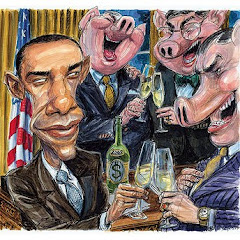
By Donald McArthur, The Windsor StarMarch 18, 2009

Canadian Auto Workers Union Local 195 President Gerry Farnham, left, and Windsor Police Sgt. Tony Garro converse as a large crowd of CAW supporters and employees block the main entrance of the Aradco Management Ltd. plant in Windsor, Ont. on Tuesday. On Wednesday, they continued to lobby the plants' owners for wages and benefits they claim are owed to them.Photograph by: Jason Kryk, Windosr StarWINDSOR, Ont. — A group of Aradco workers here continued to occupy a shuttered auto-parts plant Wednesday morning as union organizers geared up for an afternoon rally for workers' rights outside the plant.
Canadian Auto Workers President Ken Lewenza is scheduled to speak at the 3:30 p.m. rally.
The workers stormed the plant Tuesday night intent on stopping Chrysler from removing parts and tooling inside. The union was reluctant to divulge numbers, but said "more than a handful" of workers remained inside.
Gerry Farnham, president of CAW Local 195, said at the scene Wednesday the workers plan on occupying the plant until issues surrounding outstanding severance and termination pay are resolved.
"You have workers in there who have never been in trouble with the law. They're scared but they're willing to do this to get what they are entitled to," said Farnham. "They're not coming out until we can get this issue resolved. They are strong and they are resolved."
About 80 workers with Aradco and its sister plant, Aramco, were told not to report to work a week ago Monday after Chrysler terminated its contract with the two suppliers, effectively shuttering the plants.
A lawyer for the U.S.-based company that owns the two plants, Catalina Precision Products, said Chrysler accounted for about 99 per cent of their business.
Workers claim Catalina owes them about $1.7 million in vacation and back pay and severance and termination pay. Workers rejected an offer Monday from Chrysler that would have paid them about $205,000 in vacation and back pay, but no severance.
Acceptance of that deal would have ended the blockade outside Aradco that, according to a Chrysler spokesperson, is threatening production at multiple Chrysler plants in North America. Workers say the tooling inside the plant is their only leverage in the bid to secure their severance monies.
Chrysler obtained an injunction in a Toronto courtroom last week granting it permission to remove parts and tooling from inside the plant. A blockade of about 100 workers, including workers from Windsor's Chrysler Assembly Plant, turned a truck away Tuesday afternoon.
Workers entered the plant a few hours later.
Farnham said the workers are seeking more than the monies they are owed. They are also seeking legislative changes that would enhance unemployment benefits and ensure workers get their severance monies before banks and other creditors in the event of company bankruptcies.
"They feel as though the law isn't working for them," said Farnham. "They are prepared to fight that fight for all workers, union and non union."
Giving the money legally owed to workers would have a more beneficial impact on the local economy than giving the money to banks, added Farnham.
"If it goes to the workers, it will go back into the community and stimulate the local economy," he said.
© Copyright (c) Canwest News Service
http://www.windsorstar.com/Business/Workers+rally+outside+occupied+Windsor+plant/1402031/story.html
By Donald McArthur, The Windsor StarMarch 18, 2009

Canadian Auto Workers Union Local 195 President Gerry Farnham, left, and Windsor Police Sgt. Tony Garro converse as a large crowd of CAW supporters and employees block the main entrance of the Aradco Management Ltd. plant in Windsor, Ont. on Tuesday. On Wednesday, they continued to lobby the plants' owners for wages and benefits they claim are owed to them.Photograph by: Jason Kryk, Windosr StarWINDSOR, Ont. — A group of Aradco workers here continued to occupy a shuttered auto-parts plant Wednesday morning as union organizers geared up for an afternoon rally for workers' rights outside the plant.
Canadian Auto Workers President Ken Lewenza is scheduled to speak at the 3:30 p.m. rally.
The workers stormed the plant Tuesday night intent on stopping Chrysler from removing parts and tooling inside. The union was reluctant to divulge numbers, but said "more than a handful" of workers remained inside.
Gerry Farnham, president of CAW Local 195, said at the scene Wednesday the workers plan on occupying the plant until issues surrounding outstanding severance and termination pay are resolved.
"You have workers in there who have never been in trouble with the law. They're scared but they're willing to do this to get what they are entitled to," said Farnham. "They're not coming out until we can get this issue resolved. They are strong and they are resolved."
About 80 workers with Aradco and its sister plant, Aramco, were told not to report to work a week ago Monday after Chrysler terminated its contract with the two suppliers, effectively shuttering the plants.
A lawyer for the U.S.-based company that owns the two plants, Catalina Precision Products, said Chrysler accounted for about 99 per cent of their business.
Workers claim Catalina owes them about $1.7 million in vacation and back pay and severance and termination pay. Workers rejected an offer Monday from Chrysler that would have paid them about $205,000 in vacation and back pay, but no severance.
Acceptance of that deal would have ended the blockade outside Aradco that, according to a Chrysler spokesperson, is threatening production at multiple Chrysler plants in North America. Workers say the tooling inside the plant is their only leverage in the bid to secure their severance monies.
Chrysler obtained an injunction in a Toronto courtroom last week granting it permission to remove parts and tooling from inside the plant. A blockade of about 100 workers, including workers from Windsor's Chrysler Assembly Plant, turned a truck away Tuesday afternoon.
Workers entered the plant a few hours later.
Farnham said the workers are seeking more than the monies they are owed. They are also seeking legislative changes that would enhance unemployment benefits and ensure workers get their severance monies before banks and other creditors in the event of company bankruptcies.
"They feel as though the law isn't working for them," said Farnham. "They are prepared to fight that fight for all workers, union and non union."
Giving the money legally owed to workers would have a more beneficial impact on the local economy than giving the money to banks, added Farnham.
"If it goes to the workers, it will go back into the community and stimulate the local economy," he said.
© Copyright (c) Canwest News Service
The big lie about AIG
The big lie about AIG:
From---
U.S.News & World Report (see complete article following my comments)
What's Good, What's Bad About the AIG Bailout
“It's keeping AIG's insurance businesses stable. Here's something that's really startling: The entire problem at AIG was caused by one unit, the Financial Products division, whose employees constituted less than one percent of AIG's overall workforce. AIG's insurance units - the core of its business - essentially had nothing to do with the fiasco. But if AIG had been forced to liquidate, it could have affected the insurance units and millions of policyholders. With a more orderly process underway, the policyholders are now completely protected.”
This is the truth:
The entire problem at AIG was caused by one unit, the Financial Products division
But if AIG had been forced to liquidate, it could have affected the insurance units and millions of policyholders. With a more orderly process underway, the policyholders are now completely protected.
Question:
Who are these AIG “policyholders?”
Answer:
These AIG “policyholders” are the largest multi-national corporations in the world… and include corporations from every industry, from media to banking/mortgage to auto and steel to toys.
Question:
What kind of insurance policies have the multi-national corporations purchased from AIG?
Answer:
These “policyholders” have purchased insurance from AIG to protect their profits.
Question:
What kind of “claims” are they filing?
Answer:
These multi-national policyholders are making claims based upon their loss of profits due to the recession/depression.
Comment:
Our tax-dollars are paying on “claims” being filed by these multi-national corporations for losses in profits as the economy goes south.
Comment:
While the disgraceful tens of millions of dollars in executive “bonuses” paid by AIG are now the justified topic of wide-spread discussion; these “bonuses” are being used a “Trojan Horse” of sorts by the media and politicians who don’t want to disclose to the American people where the hundreds of BILLIONS of dollars are going.
Comment:
Make no mistake, the $170,000,000,000.00 (one-hundred seventy billion dollars) paid out to AIG is just the beginning… as the depression deepens these multi-national corporations will continue filing claims and AIG will have to honor the policies these corporations purchased to protect their profitability… our tax-dollars are going directly into the pockets of the Wall Street coupon clippers and the very mortgage company crooks who ripped off the American people.
Comment:
For the American tax-payer, there is nothing “good” about the bailout of AIG… except to the stock and bondholders and bankers and mortgage companies and the big industrialists and investors who will continue to pocket profits at tax-payer expense, everything about the AIG “bailout” is bad.
Conclusion:
The “bailout” of AIG with our tax-dollars is doing nothing but stabilizing Wall Street “profits.”
AIG’s insurance business is the business of protecting multi-national corporations against a loss in profits.
Once the tax-dollars stop flowing into the coffers of AIG and flooding out to the multi-national corporations, the world stock markets will collapse and we will be in the midst of the worst capitalist economic depression humanity has ever known--- complete with all the accompanying human misery and social strife one would expect--- now being widely predicted by many diverse voices.
On top of all of this, the American dollar will become worthless and we will be forced to purchase oil with Euros and Rubles… then what?
And if the Chinese aren’t dumb enough to buy into the American capitalist economic mess… then what?
In spite of what the highest-paid capitalist sooth-Sayers are telling us, capitalism as an economic system is finished… it is time to explore a socialist solution where production takes place to solve human needs rather than for profit… there is no other solution.
The multi-national corporations purchased insurance policies to protect their profits against recession/depression incurred losses from AIG, a private--- for profit--- insurance company, which assumed the risk in underwriting such policies.
The multi-national corporations did not purchase insurance policies from the United States government; so why should tax-payers be the ones paying out on these claims?
This is the biggest corporate swindle in history… in comparison, Bernie Madoff is a piker… we are being played for suckers.
We need a national “people’s bailout” based on the “Minnesota People’s bailout.”
The time has come to take a “left turn” to get us off this road to perdition as the capitalist system collapses.
Big-business created this economic mess as they reaped the profits while leaving working people with ALL the problems.
Alan L. Maki
U.S.News & World Report
What's Good, What's Bad About the AIG Bailout
http://biz.yahoo.com/usnews/090317/17_whats_good_whats_bad_about_the_aig_bailout.html?.&.pf=insurance
Tuesday March 17, 1:52 pm ET
By Rick Newman
"There are times when one would like to hang the whole human race, and finish the farce."
The latest surreal twists in the AIG bailout bring to mind Mark Twain, who could spot folly as if he were hunting for it with a spyglass. Had Twain had AIG to work with as raw material, we'd probably have another couple dozen enduring epigrams skewering the greedy and the foolish.
Many Americans would like to finish the farce and simply cut AIG off, especially now that the company has paid $165 million in bonuses to executives at the very unit that nearly caused the firm's downfall and triggered an unprecedented taxpayer bailout that now totals $170 billion. To almost everybody, it seems self-evident that traders shouldn't be rewarded for wrecking their company and then burning through vast amounts of public funds. Yet AIG insists it is legally obligated to pay the bonuses, because of contracts signed before the damage occurred and taxpayers got involved. There have also been suggestions that the rascals who devised these complex derivatives deals may be the only ones who know how to unwind them, so AIG has no choice but to keep them around - and pay for the privilege of their company. In other words, the bonuses amount to extortion.
Okay. Breathe deep. Think calming thoughts. Find your center. Amidst this outrage, it's worth keeping in mind that the AIG bailout is actually doing some good. It's also a kind of learn-as-you-go experiment that's never really been done before. Here's a rough scorecard of what's working and what's not:
What's working
The AIG bailout has helped stabilize the financial markets. Take a moment to revisit September 2008. That's when Lehman Brothers failed, Merrill Lynch almost did, and AIG would have been forced into a chaotic bankruptcy if the feds didn't arrange an emergency $85 billion loan. With a bit of hindsight, it's starting to seem that AIG, which brokered more than $2.5 trillion worth of derivatives known as credit-default swaps held by many of the world's biggest banks, was the death star of that troubled troika.
We've survived the Lehman bankruptcy, after all, and Merrill found a buyer. "The real surprise wasn't Lehman Brothers, it was AIG," Frederic Mishkin, a Columbia Business School professor and former member of the Federal Reserve Board, said in a recent speech. "Who would have thought that an insurance company would have been affected by all this? When that happened, all bets were off."
All that federal money has helped AIG redeem some of those derivatives contracts, getting them off its books and out of the system. The financial markets still aren't back to normal, but they're heading in that direction. Forestalling another industrial-strength financial failure, and the chain reaction it would have triggered if AIG had collapsed, has certainly helped.
It's also helping AIG unwind itself. AIG's problems snowballed in September when suddenly it had to produce billions of dollars worth of collateral to back up those credit-default swaps. The collateral call was triggered by an unexpected drop in AIG's credit rating, along with the plunge in value of mortage-backed securities around the world. AIG didn't have the cash, and to come up with it, the only option would have been to sell off illiquid assets like its highly profitable insurance divisions or its aircraft leasing company. Try doing that in a week.
Had AIG been forced to liquidate those assets, it would have had to accept fire-sale prices, which would have led to a sudden collapse in the prices of other similar assets and companies throughout the world. AIG would have gotten pennies on the dollar for valuable assets and many other businesses would suddenly have been devalued, too.
AIG is still in the process of selling off assets, to pay off the government loans that effectively served as its collateral. But it's doing that in a more orderly way, seeking the highest bidders and the best terms. That's generally good for everybody, and it's also the best way for taxpayers to get most or all of their money back.
It's keeping AIG's insurance businesses stable. Here's something that's really startling: The entire problem at AIG was caused by one unit, the Financial Products division, whose employees constituted less than one percent of AIG's overall workforce. AIG's insurance units - the core of its business - essentially had nothing to do with the fiasco. But if AIG had been forced to liquidate, it could have affected the insurance units and millions of policyholders. With a more orderly process underway, the policyholders are now completely protected.
What's not working
Revolting bonuses. It simply goes without saying that giving bonuses to the people who brought down AIG is a perversion of justice. Officials at the Federal Reserve and the Treasury Dept. should have put terms into the original bailout agreement that prevented this. They didn't. It was a chaotic time, and legitimate worries about a global financial collapse obviously clouded thoughts about rules to prevent rapacious traders from holding the government hostage. If it's any consolation, the $165 million bonus pool is relatively small. Still, it grates.
Counterparty payouts. AIG has used much of the $170 billion in government aid to basically refund money to big banks and other "counterparties," to cash out some of those credit-default swaps and reduce AIG's massive liabilities. That's sensible, and it's basically the original idea behind the "Troubled Assets Relief Program," which was intended to get the worst derivatives and other securities off the market.
The problem is that the government has apparently agreed to $105 billion worth of payouts - at the full face value of the securities. That means that banks like Goldman Sachs, Merrill Lynch, Societe General and Deutsche Bank - among the world's most sophisticated investors - are taking no loss at all on securities that had a market value of half their face value or less when AIG redeemed them in full. It's like house prices falling in your neighborhood by 50 percent, and somebody coming in and buying one house for what it was worth at the market peak a couple years ago. And using a government loan to finance it.
Regulators at the Fed, Treasury, and other departments still haven't explained why the counterparties got all their money back. They're certainly going to be asked at upcoming Congressional hearings. But in a situation where just about everybody is taking a loss - taxpayers and consumers especially - it will be tough to make a case that the world's richest banks deserve full redemption.
Secrecy. We keep learning the terms of the AIG bailout well after the fact. Obviously there are times when the feds need to move quickly and can't have a 60-day comment period. But it's not the same crisis atmosphere as last fall. In general, we should learn the details of the bailout as they occur.
AIG strongly resisted releasing the list of counterparties that have been paid back with bailout money, for instance. As recently as March 5, Federal Reserve Vice Chairman Donald Kohn defended that secrecy, saying that firms might be reluctant to deal with AIG in the future if they knew their dealings could become public.
Then a week later, under mounting pressure, AIG released a list of counterparties. The world didn't end. AIG is also refusing to release the names of individuals in the Financial Products division who are getting bonuses. They may lose that battle too, since New York Attorney General Andrew Cuomo has asked for the names and started an investigation, much as he has with Merrill Lynch. Information is going to come out one way or the other, and AIG and its regulators should stop trying to protect the failing company any more than they already are. When AIG pays back that $170 billion in taxpayer money, they can keep all the secrets they want. In fact, once we've got our money back, the less we hear about AIG the better.
Alan L. Maki
58891 County Road 13
Warroad, Minnesota 56763
Phone: 218-386-2432
Cell phone: 651-587-5541
E-mail: amaki000@centurytel.net
Check out my blog:
Thoughts From Podunk
http://thepodunkblog.blogspot.com/
From---
U.S.News & World Report (see complete article following my comments)
What's Good, What's Bad About the AIG Bailout
“It's keeping AIG's insurance businesses stable. Here's something that's really startling: The entire problem at AIG was caused by one unit, the Financial Products division, whose employees constituted less than one percent of AIG's overall workforce. AIG's insurance units - the core of its business - essentially had nothing to do with the fiasco. But if AIG had been forced to liquidate, it could have affected the insurance units and millions of policyholders. With a more orderly process underway, the policyholders are now completely protected.”
This is the truth:
The entire problem at AIG was caused by one unit, the Financial Products division
But if AIG had been forced to liquidate, it could have affected the insurance units and millions of policyholders. With a more orderly process underway, the policyholders are now completely protected.
Question:
Who are these AIG “policyholders?”
Answer:
These AIG “policyholders” are the largest multi-national corporations in the world… and include corporations from every industry, from media to banking/mortgage to auto and steel to toys.
Question:
What kind of insurance policies have the multi-national corporations purchased from AIG?
Answer:
These “policyholders” have purchased insurance from AIG to protect their profits.
Question:
What kind of “claims” are they filing?
Answer:
These multi-national policyholders are making claims based upon their loss of profits due to the recession/depression.
Comment:
Our tax-dollars are paying on “claims” being filed by these multi-national corporations for losses in profits as the economy goes south.
Comment:
While the disgraceful tens of millions of dollars in executive “bonuses” paid by AIG are now the justified topic of wide-spread discussion; these “bonuses” are being used a “Trojan Horse” of sorts by the media and politicians who don’t want to disclose to the American people where the hundreds of BILLIONS of dollars are going.
Comment:
Make no mistake, the $170,000,000,000.00 (one-hundred seventy billion dollars) paid out to AIG is just the beginning… as the depression deepens these multi-national corporations will continue filing claims and AIG will have to honor the policies these corporations purchased to protect their profitability… our tax-dollars are going directly into the pockets of the Wall Street coupon clippers and the very mortgage company crooks who ripped off the American people.
Comment:
For the American tax-payer, there is nothing “good” about the bailout of AIG… except to the stock and bondholders and bankers and mortgage companies and the big industrialists and investors who will continue to pocket profits at tax-payer expense, everything about the AIG “bailout” is bad.
Conclusion:
The “bailout” of AIG with our tax-dollars is doing nothing but stabilizing Wall Street “profits.”
AIG’s insurance business is the business of protecting multi-national corporations against a loss in profits.
Once the tax-dollars stop flowing into the coffers of AIG and flooding out to the multi-national corporations, the world stock markets will collapse and we will be in the midst of the worst capitalist economic depression humanity has ever known--- complete with all the accompanying human misery and social strife one would expect--- now being widely predicted by many diverse voices.
On top of all of this, the American dollar will become worthless and we will be forced to purchase oil with Euros and Rubles… then what?
And if the Chinese aren’t dumb enough to buy into the American capitalist economic mess… then what?
In spite of what the highest-paid capitalist sooth-Sayers are telling us, capitalism as an economic system is finished… it is time to explore a socialist solution where production takes place to solve human needs rather than for profit… there is no other solution.
The multi-national corporations purchased insurance policies to protect their profits against recession/depression incurred losses from AIG, a private--- for profit--- insurance company, which assumed the risk in underwriting such policies.
The multi-national corporations did not purchase insurance policies from the United States government; so why should tax-payers be the ones paying out on these claims?
This is the biggest corporate swindle in history… in comparison, Bernie Madoff is a piker… we are being played for suckers.
We need a national “people’s bailout” based on the “Minnesota People’s bailout.”
The time has come to take a “left turn” to get us off this road to perdition as the capitalist system collapses.
Big-business created this economic mess as they reaped the profits while leaving working people with ALL the problems.
Alan L. Maki
U.S.News & World Report
What's Good, What's Bad About the AIG Bailout
http://biz.yahoo.com/usnews/090317/17_whats_good_whats_bad_about_the_aig_bailout.html?.&.pf=insurance
Tuesday March 17, 1:52 pm ET
By Rick Newman
"There are times when one would like to hang the whole human race, and finish the farce."
The latest surreal twists in the AIG bailout bring to mind Mark Twain, who could spot folly as if he were hunting for it with a spyglass. Had Twain had AIG to work with as raw material, we'd probably have another couple dozen enduring epigrams skewering the greedy and the foolish.
Many Americans would like to finish the farce and simply cut AIG off, especially now that the company has paid $165 million in bonuses to executives at the very unit that nearly caused the firm's downfall and triggered an unprecedented taxpayer bailout that now totals $170 billion. To almost everybody, it seems self-evident that traders shouldn't be rewarded for wrecking their company and then burning through vast amounts of public funds. Yet AIG insists it is legally obligated to pay the bonuses, because of contracts signed before the damage occurred and taxpayers got involved. There have also been suggestions that the rascals who devised these complex derivatives deals may be the only ones who know how to unwind them, so AIG has no choice but to keep them around - and pay for the privilege of their company. In other words, the bonuses amount to extortion.
Okay. Breathe deep. Think calming thoughts. Find your center. Amidst this outrage, it's worth keeping in mind that the AIG bailout is actually doing some good. It's also a kind of learn-as-you-go experiment that's never really been done before. Here's a rough scorecard of what's working and what's not:
What's working
The AIG bailout has helped stabilize the financial markets. Take a moment to revisit September 2008. That's when Lehman Brothers failed, Merrill Lynch almost did, and AIG would have been forced into a chaotic bankruptcy if the feds didn't arrange an emergency $85 billion loan. With a bit of hindsight, it's starting to seem that AIG, which brokered more than $2.5 trillion worth of derivatives known as credit-default swaps held by many of the world's biggest banks, was the death star of that troubled troika.
We've survived the Lehman bankruptcy, after all, and Merrill found a buyer. "The real surprise wasn't Lehman Brothers, it was AIG," Frederic Mishkin, a Columbia Business School professor and former member of the Federal Reserve Board, said in a recent speech. "Who would have thought that an insurance company would have been affected by all this? When that happened, all bets were off."
All that federal money has helped AIG redeem some of those derivatives contracts, getting them off its books and out of the system. The financial markets still aren't back to normal, but they're heading in that direction. Forestalling another industrial-strength financial failure, and the chain reaction it would have triggered if AIG had collapsed, has certainly helped.
It's also helping AIG unwind itself. AIG's problems snowballed in September when suddenly it had to produce billions of dollars worth of collateral to back up those credit-default swaps. The collateral call was triggered by an unexpected drop in AIG's credit rating, along with the plunge in value of mortage-backed securities around the world. AIG didn't have the cash, and to come up with it, the only option would have been to sell off illiquid assets like its highly profitable insurance divisions or its aircraft leasing company. Try doing that in a week.
Had AIG been forced to liquidate those assets, it would have had to accept fire-sale prices, which would have led to a sudden collapse in the prices of other similar assets and companies throughout the world. AIG would have gotten pennies on the dollar for valuable assets and many other businesses would suddenly have been devalued, too.
AIG is still in the process of selling off assets, to pay off the government loans that effectively served as its collateral. But it's doing that in a more orderly way, seeking the highest bidders and the best terms. That's generally good for everybody, and it's also the best way for taxpayers to get most or all of their money back.
It's keeping AIG's insurance businesses stable. Here's something that's really startling: The entire problem at AIG was caused by one unit, the Financial Products division, whose employees constituted less than one percent of AIG's overall workforce. AIG's insurance units - the core of its business - essentially had nothing to do with the fiasco. But if AIG had been forced to liquidate, it could have affected the insurance units and millions of policyholders. With a more orderly process underway, the policyholders are now completely protected.
What's not working
Revolting bonuses. It simply goes without saying that giving bonuses to the people who brought down AIG is a perversion of justice. Officials at the Federal Reserve and the Treasury Dept. should have put terms into the original bailout agreement that prevented this. They didn't. It was a chaotic time, and legitimate worries about a global financial collapse obviously clouded thoughts about rules to prevent rapacious traders from holding the government hostage. If it's any consolation, the $165 million bonus pool is relatively small. Still, it grates.
Counterparty payouts. AIG has used much of the $170 billion in government aid to basically refund money to big banks and other "counterparties," to cash out some of those credit-default swaps and reduce AIG's massive liabilities. That's sensible, and it's basically the original idea behind the "Troubled Assets Relief Program," which was intended to get the worst derivatives and other securities off the market.
The problem is that the government has apparently agreed to $105 billion worth of payouts - at the full face value of the securities. That means that banks like Goldman Sachs, Merrill Lynch, Societe General and Deutsche Bank - among the world's most sophisticated investors - are taking no loss at all on securities that had a market value of half their face value or less when AIG redeemed them in full. It's like house prices falling in your neighborhood by 50 percent, and somebody coming in and buying one house for what it was worth at the market peak a couple years ago. And using a government loan to finance it.
Regulators at the Fed, Treasury, and other departments still haven't explained why the counterparties got all their money back. They're certainly going to be asked at upcoming Congressional hearings. But in a situation where just about everybody is taking a loss - taxpayers and consumers especially - it will be tough to make a case that the world's richest banks deserve full redemption.
Secrecy. We keep learning the terms of the AIG bailout well after the fact. Obviously there are times when the feds need to move quickly and can't have a 60-day comment period. But it's not the same crisis atmosphere as last fall. In general, we should learn the details of the bailout as they occur.
AIG strongly resisted releasing the list of counterparties that have been paid back with bailout money, for instance. As recently as March 5, Federal Reserve Vice Chairman Donald Kohn defended that secrecy, saying that firms might be reluctant to deal with AIG in the future if they knew their dealings could become public.
Then a week later, under mounting pressure, AIG released a list of counterparties. The world didn't end. AIG is also refusing to release the names of individuals in the Financial Products division who are getting bonuses. They may lose that battle too, since New York Attorney General Andrew Cuomo has asked for the names and started an investigation, much as he has with Merrill Lynch. Information is going to come out one way or the other, and AIG and its regulators should stop trying to protect the failing company any more than they already are. When AIG pays back that $170 billion in taxpayer money, they can keep all the secrets they want. In fact, once we've got our money back, the less we hear about AIG the better.
Alan L. Maki
58891 County Road 13
Warroad, Minnesota 56763
Phone: 218-386-2432
Cell phone: 651-587-5541
E-mail: amaki000@centurytel.net
Check out my blog:
Thoughts From Podunk
http://thepodunkblog.blogspot.com/
Subscribe to:
Posts (Atom)