Texas Longhorns with newborn calf in Bluebonnets

Texas Longhorns with newborn calf in Bluebonnets

Please note I have a new phone number...

512-517-2708

Alan Maki

Alan Maki
Doing research at the LBJ Library in Austin, Texas

It's time to claim our Peace Dividend

It's time to claim our Peace Dividend

We need to beat swords into plowshares.

We need to beat swords into plowshares.

A program for real change...

http://peaceandsocialjustice.blogspot.com/2013/03/a-progressive-program-for-real-change.html


What we need is a "21st Century Full Employment Act for Peace and Prosperity" which would make it a mandatory requirement that the president and Congress attain and maintain full employment.


"Voting is easy and marginally useful, but it is a poor substitute for democracy, which requires direct action by concerned citizens"

- Ben Franklin

Let's talk...

Let's talk...

Thursday, March 3, 2016

Bernie Sanders' "American Health Security Act;" one more scam.

How will Bernie Sanders pay for his proposed "American Health Security Act?"


I find it interesting neither Bernie nor his supporters ever mention where most of the funding will come from... and where most of the money will go.


First of all, in the act itself it states that most of the funding will come from a new income tax dedicated specifically to fund this program. Why is this never stated that we will have another new tax imposed on all of us?


Second is the problem of where all the money will go. Well, instead of the money going into the pockets of insurance companies, those raking in enormous profits will be doctors, hospitals, the pharmaceutical industry, the private research institutes and the medical equipment industry along with the hospitals and nursing homes.


But, why aren't Bernie Sanders and his supporters telling us about this new income tax Bernie has in mind?


And, why are these socialists so loathe to advocate for a National Public Health Care System which would be publicly funded, publicly administered and publicly delivered?


Oh, and Bernie's "American Health Security Act" would even be administered by the for-profit crowd! Albeit through a quasi-governmental agency in which all the profiteers would select the board members. As well as being privately delivered.


The only thing "public" about Bernie's "American Health Security Act" would be the way it is primarily going to be financed--- through a new income tax system dedicated just for this purpose which would have a "trust fund" to hold our money... in other words, what would be created is a fund like the Social Security Trust Fund that the politicians could rob to pay for more wars.


As it stands right now, Bernie's "American Health Security Act" does not have one single co-sponsor... and we should be happy it doesn't have any.


Like with Medicare, doctors would establish their own fees.


I knew there had to be a reason not one single supporter of Bernie Sanders introduced a resolution for Bernie's much ballyhooed "American Health Security Act" during the Precinct Caucuses here in Minnesota... someone might have asked how it was going to be paid for.


I am sure Bernie's most loyal fans will toss more insults my way claiming I have not told how other methods will be used to raise the funding for this "American Health Security Act;" but, every time I have asked them to explain how the plan would be funded they never mentioned that most of the funding would be derived from a new income tax imposed on all of us... and, as we all know, many corporations, millionaires and billionaires pay hardly no tax at all and many don't pay any tax while a few billionaires like Warren Buffett pay as much as their secretaries.


We need to put an end to all these phony health care schemes and just bring forward a plan for National Public Health Care System paid for by beating swords into plowshares. Will we get wars and more wars or health care?


Bernie Sanders must be a complete fool if he expects the American people to fund these dirty wars and health care.


Cut the profits out of health care and providing health care for free for everyone will cost a lot less than providing everyone with a free public education and a whole lot less than militarism and these dirty imperialist wars.


I have an idea. Let's do this the democratic way... let's put it to a national vote.


Make the question real simple:


Do you want a National Public Health Care System; or do you want more wars?

We need a national organization to educate for, advocate for and fight for a National Public Health Care System.

No more promises that aren't kept. No more schemes and scams. No more "baby steps." No more "incremental reforms."


We have to learn to establish a new public agenda for real change by talking about the politics and economics of livelihood.

Reject racism in all of its ugly forms.

Why it's Possible to Reject the Klan and Still Support Racism

By Rev. Dr. William J. Barber, II and Jonathan Wilson-Hartgrove

If Donald Trump is telling the truth, he only recently learned that David Duke, former Grand Wizard of the Ku Klux Klan, is an avowed segregationist. Apparently, the KKK and its history have faded from many white Americans’ memory. Jeffrey Lord argued on national television this week that the Klan is an invention of “the left.” As native sons of the South, we could forgive these men their ignorance. (“Bless their hearts. They ain’t from around here,” is the polite way to say it.) But we can neither forgive nor ignore the way 400 years of white supremacy have been naively reduced to whether a candidate will disavow the support of a hate group leader. Racism lives on in policies that perpetuate racial disparities, with or without the KKK.

For those unfamiliar with Southern history, white supremacists in the South have a long history of disavowing the KKK. Strom Thurmond disavowed them in 1964, even as he filibustered the Civil Rights Bill in the US Senate. White Citizens Councils disavowed them while they fought desegregation in Mississippi. George Wallace publicly disavowed Klan violence in Alabama, but hired Klansman Al Lingo to oversee his state’s Highway Patrol.

No one wants to be associated with the KKK in polite company today. But almost no one wanted to be publicly associated with them fifty years ago either.

Nor sixty years before that. Here in North Carolina, Democrats waged a take-over of state government in 1898, seeding a propaganda campaign to incite racial fears and arming the vigilante Red Shirts. But no sooner than they had regained power, Democratic leaders disavowed all violence and called for civility and a restoration of order.

Racial disparities in America have not persisted since the end of the Civil War because people believe in the ideology or the tactics of the KKK. Inequality continues because we have never finished the work of Reconstruction.

“Forty acres and a mule” was the promise to formerly enslaved people during the First Reconstruction, recognizing that their success would require an economic base. But black representatives in Reconstruction legislatures were clear that more was needed; they demanded equal access to education, voting rights and equal protection under the law. The Klan’s violence didn’t end Reconstruction. While terror intimidated both black and white progressives, it took the denial of African-American voting rights and regressive legislative action to usher in the era of Jim Crow. While white Southerners have often been willing to resort to terror to maintain control, they disavow violence whenever power is securely in their hands.

We have learned that nothing challenges white supremacy more than the people joining hands across dividing lines to confront race-based policy. In the summer of 2013, over one thousand black, white and brown North Carolinians--rich and poor, Republican, Independent and Democrat—were arrested in the largest state government-focused civil disobedience campaign in US history. Our movement noted that the same Constitutional provision that prohibits KKK influence in state government also guarantees all citizens the right to instruct our legislators about matters affecting the general welfare. A Superior Court judge agreed, dismissing charges against us and affirming our right to publicly disavow race-based policies.

Some Republicans have suggested they cannot support Trump if he refuses to disavow the KKK. But the question we should ask of every politician is, Do you also disavow policies that perpetuate racial inequality and disparity. Because it is possible to reject the Klan and still support racism. We need more than trite disassociation; we need true political transformation.

We cannot reconstruct democracy in America without disavowing efforts to resegregate public schools through voucher programs, neighborhood schools, and attacks on public funding. In order to address disparities in our criminal justice system, we must also disavow the racially charged War on Drugs, mandatory minimum laws, and the death penalty. More black people died this year because of state governments refusing to expand Medicaid than at the hands of police officers. We must disavow policies that deny a living wage while 62 million Americans struggle to survive on less than 15 dollars an hour.  54% of African-Americans earn less than a living wage, and many Southern states do not have a minimum wage 150 years after the end of slavery. We must also disavow the inherent racism that fuels fear and hate mongering by politicians toward Latinos and Muslims.

Every aspect of institutional racism must be disavowed to complete the work of Reconstruction in America, but maybe none is more important than the current attack on voting rights. In the midst of the first Presidential campaign since the Supreme Court’s Shelbydecision gutted the Voting Rights Act, we must disavow the racially gerrymandered districts and voter suppression laws, many of which are in play for the first time during this primary season. Nothing could be more racist than the cynical attempt to maintain white control in a nation where whites are quickly becoming one among many minorities by suppressing people of color’s voting power.

These are not conservative or liberal issues; they are moral issues that deserve the same outrage that Americans on the left and the right have expressed about the KKK.

It’s past time for a grown up conversation about race in America. Let’s stop talking about whether Trump will, has or should disavow the KKK and start asking who will disavow the policies that perpetuate racial disparities and prevent us from achieving freedom and justice for all.

Rev. Dr. William J. Barber II is President of the NC NAACP and founder of Repairers of the Breach. Together with Jonathan Wilson-Hartgrove, he is author of the recently released The Third Reconstruction: Moral Mondays, Fusion Politics, and the Rise of a New Justice Movement.

Delmer Berg, Last Survivor of the Abraham Lincoln Brigade, Dies at 100

Delmer Berg, Last Survivor of Abraham Lincoln Brigade, Dies at 100


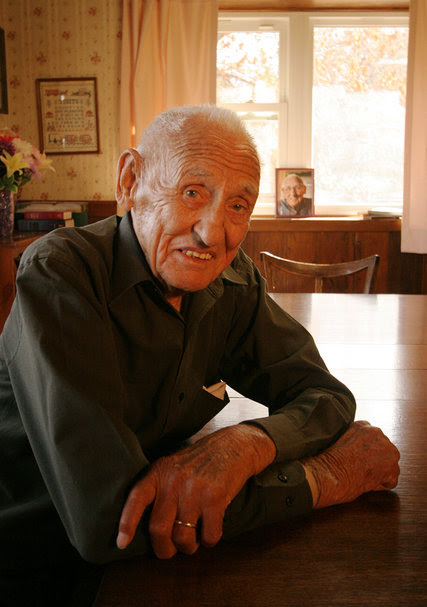
Delmer Berg at his home in 2014. 
Delmer Berg, the last known living veteran of the Abraham Lincoln Brigade, which vainly fought against Fascism’s advance into Spain in the late 1930s, died on Sunday at his home in Columbia, Calif. He was 100.
His death was confirmed by Marina Garde, the executive director of theAbraham Lincoln Brigade Archives in New York, who said Mr. Berg was believed to have been the only survivor left of the nearly 3,000 quixotic [sic] young Americans who volunteered for the Spanish Civil War in a bloody prelude toWorld War II. About 800 of those who volunteered were believed to have been killed.
Mr. Berg, an unreconstructed [sic]Communist, was a 21-year-old union-card-carrying hotel dishwasher in 1937 when he spotted a billboard for the brigade and, through the Young Communist League, enlisted. After cobbling together bus fare to New York, he boarded the French luxury liner Champlain for France.
“I was a worker,” Mr. Berg told The Modesto Bee, a California newspaper, in November. “I was a farmer. I was in support of the Spanish working people, and I wanted to go to Spain to help them.”
The war was an audition by proxies for World War II, with a democratically elected leftist government under siege from rebels led by Gen. Francisco Franco.
Through the Communist Party, the Soviet Union was supporting the Republicans, or Loyalists. Nazi Germany and Fascist Italy fortified Franco. Franco won the war in 1939 and installed a dictatorship that endured until his death in 1975. The United States was officially neutral during the war.
Mr. Berg slipped into Spain in January 1938, crossing the snow-capped French border. He went on to install communication lines for front-line antiaircraft artillery near Barcelona, defended the mountain town Teruel and fought at the Battle of the Ebro, the biggest battle of the Spanish Civil War.
He was wounded that August when Italian bombers missed a railroad station and instead struck a monastery where he and others were billeted. Shrapnel from the bomb remained in his liver for the rest of his life.
The Munich Pact, which appeased Nazi Germany by allowing Hitler to annex portions of Czechoslovakia, left many Loyalists demoralized. Mr. Berg left Spain and returned home early in 1939.
Unlike a number of other starry-eyed [sic] recruits to the Abraham Lincoln Brigade, Mr. Berg never outgrew his devotion to underdogs.
He joined the Communist Party USA in 1943, became a vice president of his local chapter of the N.A.A.C.P., organized farm workers and protested the war in Vietnam and nuclear weapons.

Delmer Berg, standing second from right wearing a beret, with the Abraham Lincoln Brigade in Spain around 1938.
“He was always attached to just causes,” a friend, Pat Cervelli, said in an interview.
Delmer Esley Daniel Berg was born in Anaheim, Calif., on Dec. 20, 1915, of Ukranian, Dutch and Bavarian ancestry. His father was a tenant farmer.
He left high school in Manteca, Calif., as a junior during the Depression (auspiciously, given his stint in Spain, after studying Latin and “Don Quixote”) to help support his family in Oregon. He later moved to Los Angeles, where, tempted by recruiters for the military and the circus, he joined the National Guard.
He legally bought his way out of the Guard for $120 and got a job washing dishes at the Roosevelt Hotel in Hollywood, when he saw the billboard advertising for Lincoln Brigade recruits.
After returning from Spain, he was drafted into the Army in 1939 and assigned to an antiaircraft battery in New Guinea. He was discharged early in 1942 because of his shrapnel wound from the fighting in Spain.
After the war, he worked as a farm laborer and a landscaper, and started a cement and stonemasonry business with one of his sons.
He and his wife, June, lived in the Sierra Nevada foothills. She died last year. Survivors include his sons from an earlier marriage, Ernst and Tom, and two grandsons.
Asked in 2013 what his proudest moments had been since Spain, hetold the weekly Anderson Valley Advertiser in Mendocino County: “When I was elected vice president of the local N.A.A.C.P. and when one of my grandsons was valedictorian at his Oregon high school graduation and said in a newspaper interview, ‘My grandfather is my inspiration. He’s a Communist!’”
In 2014, according to the Archives, after the death of John Hovan of Rhode Island, Mr. Berg became the only known survivor of the Lincoln Brigade.
Nearly 80 years after the war, as the last torch bearer, he still considered his mission incomplete. “It bothers me a little that at 99 you’re going to die any minute,” he told The New York Times Magazine in 2015, “because I have a lot of other things I want to do.”

Poisoning the land; poisoning the water; Poisoning our food.

A tale of corporate capture in MN

Potato-harvest
Guest post by Lex Horan, Pesticide Action Network North America
Crossposted from Lex Horan's blog at PANNA
Editor's note: We've written about the pineland-to-potatoes battle in the past, as well as tracing political contributions from executive-level individuals working for R.D. Offutt to Minnesota politicians. Lex Horan tells the story of the corporation's regulatory capture and its discontents in this post.
What do you call it when the nation’s largest potato company, with strong ties to the pesticide industry, digs in its deep pockets to dodge accountability for its impacts on local communities? Here at PAN we call it “corporate capture” — the outsize influence that pesticide companies and other corporate powerholders in our food system have over the agencies that are meant to regulate them.
Recently in Minnesota I’ve been watching potato giant RD Offutt (RDO) resort to a number of the most common moves from the corporate capture playbook. But I'm happy to report that I've also seen a determined coalition of community members stand up to RDO and our state agencies, calling for stronger protections from chemical-intensive agriculture.

An agency, a corporation... 

I’ve written before about Toxic Taters, a grassroots organization led by rural and Native residents of north central Minnesota who are fed up with health-harming pesticide drift from nearby potato fields. PAN has worked closely with community members in the area since 2006. It’s a bold campaign taking on two giants of the food system: RD Offutt, the nation’s largest potato grower, and McDonald’s, who buys potatoes from RDO to make its “world famous fries.” Now RDO is aiming to expand its chemical-intensive potato fields — and local communities are fighting back.
Watching RDO’s attempted expansion unfold in the last year has been a little like watching a high-stakes tennis match. The back-and-forth has looked like this:
A few years back, RDO started buying up thousands of acres of pine forest, formerly owned by a timber company, to expand its potato fields. New land in hand, the company requested irrigation permits for the potato fields it intended to plant there.
The Minnesota Department of Natural Resources (MDNR) gets to decide who receives irrigation permits and when — and usually gives them out when asked. But last winter, MDNR was looking at a stack of 54 irrigation permit requests from RDO, connected to a whopping 7,000 acres of forestland that would be cleared for potato production. At that time, MDNR did the right thing. The agency stepped up and called for RDO to do an environmental assessment on the impacts of its “pine-to-potatoes” project before proceeding.
The environmental assessment worksheet the agency called for is a small ask for a company poised to use a great deal of a public resource — our state’s groundwater — for its private gain. Any project that has “potential for significant environmental effects” merits an environmental assessment, according to state law. Aren't seven thousand acres of new potato fields, and the pesticide applications that go with them a significant envirnomental impact? And communities near existing potato fields are already spending $2.5 million in taxpayer dollars to clean up drinking water. That sounds like significant environmental impact, too.
But RDO disagreed. The company sued MDNR, and the many months of legal back-and-forth followed.
The resolution was a signed memorandum of understanding between the company and MDNR, the agency responsible for regulating them. RDO agreed to drop most of its irrigation permit requests, leaving only five on the table. (Though, no promises that the company wouldn’t slowly trickle in irrigation permit requests over the course of the next few years.) And MDNR would no longer require an environmental assessment. Together, the company and the agency would approach the Minnesota legislature to ask for taxpayer money to fund a study of the impacts of potato production.

...and the rest of us

If you’re keeping track, there’s one character who hasn’t shown up in this story yet: the rural residents whose communities, drinking water and air would be impacted by RDO’s new potato fields.
MDNR lost the backbone to require the corporation to do an environmental assessment, but PAN and local community groups didn’t. Toxic Taters took the lead on a petition to MDNR calling for an environmental assessment, with support from Land Stewardship Project, White Earth Land Recovery Project, and PAN. Local residents and other Minnesotans signed the petition in support.
Shortly before MDNR was due to decide on our petition, the agency invited us to sit down at the negotiating table with RDO and MDNR. The goal was to see if we could come to some agreement about the “special study” that MDNR and RDO had already agreed to.
We accepted the invitation and sat at the table with RDO and MDNR, sharing our concerns about the study as currently proposed — and offering suggestions for how it might be improved. We weren’t convinced that a “special study” could replace a full environmental review process, but we stayed in the conversation.
We stayed until last week, two meetings in, when RDO left the negotiating table. At that point, the ball was in MDNR’s court. The agency rejected our petition for an environmental assessment, after RDO pulled its requests for two more irrigation permits.
Where the potato giant had originally requested 54 permits, now they have only three irrigation well requests approved or pending. It’s a mixed victory: public pressure made sure that 51 well permits were withdrawn, but RDO has still managed to avoid a public review and full environmental assessment of its proposed expansion.

No small potatoes — big picture problems

How did PAN end up in a tussle with the largest potato grower in the country and a Minnesota regulatory agency? Why does this issue matter so much?
First, it’s high time to transition away from pesticide-intensive agriculture — and RD Offutt’s potato production is about as pesticide-heavy as it gets. If the company is sincere about working to cut pesticide use, we’re all for it. But sound public policy should aim to prevent the harms of pesticide contamination before they occur, and an environmental assessment is an important public tool to do that.
And when harm has already occurred — like on thousands of acres in Minnesota and on the White Earth Indian Reservation where RDO’s potato operations have already contaminated air, water and communities with hazardous pesticides — the company’s first responsibility should be remediating harms before planting new fields.
Second, public agencies should serve the public. Federal agencies like the U.S. Environmental Protection Agency  and U.S. Department of Agriculture, and state agencies like MDNR, work for us. Their responsibility is to protect public resources and public health. But unfortunately they’re under a tremendous amount of pressure from major corporations to set policy and enforce regulations to the benefit of corporate players in our food system. As we’ve said time and again, we need to remind public agencies loudly and clearly that they work for us, not the pesticide industry and other corporate actors.
Finally, and perhaps most importantly, the communities that are most affected by regulatory decisions and agricultural practices need to be at the center of decision-making. Without frontline communities at the table, the solutions that governments and corporations propose will always miss the mark.
Rural Minnesotans are calling on state agencies to protect their basic rights to clean air, clean drinking water, and decision-making in their communities. Regulatory agencies need to listen.  
Lex Horan is PAN's Midwest Organizer. He is based in PAN’s Minneapolis office, where he organizes alongside Midwest communities facing the harmful impacts of pesticides. He works on campaigns to protect bees from pesticides and to stop pesticide contamination in large-scale potato production.

Monday, February 29, 2016

When will democracy come to the U.S.A. in a form where people are free to vote for the party which best represents their interests and concerns?

Has anyone noticed how so many members of the Congressional Progressive Caucus are supporting the warmonger Hillary Clinton?

Even John Conyers who stakes his claim to fame on supporting HR 676, the single-payer bill, is supporting Hillary Clinton.

Does anyone really believe that a guy who supports Hillary Clinton is going to actually lead a struggle for single-payer universal health care.

John Conyers is the same guy who said he was going to fight to impeach Bush and Cheney and then ended up having Cindy Sheehan arrested instead.

We don't need a bunch of phony "progressives" in the Democratic Party looking out for our interests; what we need is a real progressive people's party that is working class based and anti-monopoly/anti-imperialist which brings forward the best citizen activists who we can rely on to fight for real reforms like a National Public Health Care System, a National Public Child Care System, a "21st Century Full Employment Act for Peace and Prosperity" which views creating jobs improving the lives of the people their main priority with the required funding coming from ending militarism and wars.

Does anyone really believe that a bunch of members of the Congressional Progressive Caucus now supporting Hillary Clinton have advanced a "People's Budget" for any other reason than to keep people trapped in the Democratic Party under the illusion that the lives of working class Americans will really be improved through voting for a bunch of Dumb Donkeys?

We need a new party to challenge Wall Street for political and economic power and we need this new party NOW, not decades down the road while we are still waiting for the Democrats to take a few baby steps on a long trail of non-existing "incremental reforms."

How much longer will people tolerate this farce that is nothing but a two-party trap being paced off as the world's greatest bastion of democracy?

Kind of ironic that people in Toronto and London are more familiar with this song than people here in the United States:

Tuesday, February 23, 2016

Bernie; how about an answer?

Just what is Bernie Sanders' position on Wall Street's Military-Industrial Complex which breeds global warming and climate change, poverty and, of course, wars?

Does Bernie Sanders support a populist people's progressive agenda which calls for beating swords into plowshares?

Or, does Bernie Sanders merely support more of the same old jingoistic great power chauvinism of "support our troops" bullshit... combined with asking the greedy profit-driven Wall Street merchants of death and destruction to be a little more frugal while carrying out their barbaric, savage and cannibalistic imperialist agenda of world domination at our expense and in detriment to so many people around the world under the guise of "humanitarian intervention?"

I really think we HAVE to have this question answered in a straight forward manner by Bernie and his supporters BEFORE Super Tuesday.

Before I take to supporting Bernie Sanders on Precinct Caucus night in Minnesota, I want to know if Bernie Sanders and his supporters are going to push for a "21st Century Full Employment Act for Peace and Prosperity."

Monday, February 22, 2016

Bill and Hillary Clinton are playing us all for fools.

How strange all of this is:

Bill and Hillary Clinton are very long-time personal friends with Donald Trump and his wife and in spite of all that is being said they remain good personal friends.

Bill and Hillary Clinton are extremely long-time personal friends with Bernie Sanders and his wife... and, in spite of all that is being said they remain good personal friends.

Are Bill and Hillary Clinton and their friends playing the American people for fools by putting Trump in the Republican Party primaries to make the Republican Party look like a bunch of morons, bigots, ogres, fools and idiots (which we all know they are even though in reality they are much more deceitful and slick about then Trump while using Bernie Sanders to bait people deeper into the Democratic Party trap?

The vile racist Michigan State legislator, Roy Schmidt (https://ballotpedia.org/Roy_Schmidt), got caught doing this very thing not long ago and yet this great free media we have in this country fails to explore the relationships between the Clintons, the Sanders and the Trumps even though what is at stake is the highest office of the land.

Notice how Hillary Clinton is trying to position herself as the voice of reason, fairness and pragmatism situated between Sanders and Trump... if this isn't a setup playing us all for fools it sure is one heck of a coincidence that this is all playing out as is happening.

Hillary and Bill Clinton are both well known for their selfish, self-serving deceit, dishonesty and shenanigans in manipulating and controlling the politics of our country; is it far fetched to think they are pulling a fast one over on us now?

Roy Schmidt almost got away with pulling off this dirty stunt; will Bill and Hillary Clinton get off with the same dirty deed?

Sunday, February 21, 2016

Going to a Precinct Caucus? Take a resolution on health care with you.

If you are going to go to the Precinct Caucuses of any political party, are you going to submit resolutions bringing forward progressive solutions to our problems?

An example of a resolution on health care you may wish to present for discussion and a vote at your precinct caucus:

Whereas health care is in a mess in this country;

Whereas Obamacare has made health care less affordable for most people in this country;

Whereas private, pro-profit market-driven health care has failed miserably;

Whereas the politician have undermined and sunk the single-payer universal health care movement;

Whereas trillions of dollars are being squandered on militarism and wars;

Therefore, be it resolved the only real solution to this health care mess is a National Public Health Care System which is publicly financed, publicly administered and publicly delivered just like public education which works as intended when adequately funded;

Therefore, be it resolved militarism and wars must end to pay for health care--- health care not warfare.

Submitted by:
Seconded by:

Passed: Yes______ No______

Number for:_______ Number against:______

Thursday, February 18, 2016

Thoughts about retiring...

People ask me what I intend to do when I "retire."

I'll do a lot more reading and writing; Fish more often; go for more walks in the woods and take lots of pictures of everything and do some sailing on my Columbia T-23, the "Afternoon Delight." Probably take a trip to Cuba.

One thing that I am going to do for sure is open up a fight to rescind the deportation order the Canadian government unjustly imposed upon me, and fight for my right to enter Canada to visit my children and grandchildren. The Canadian government imposed a lifetime ban on me from ever again re-entering Canada even though my kids and grandchildren live there.


The struggle continues...

American Political Refugees Fight to Stay in Canada

by Len Bush


You would never guess that the Federal Bureau of Investigation once considered Alan Maki to be one of the most dangerous men in the United States—for his politics, not because he committed a heinous crime, robbed banks, or injured anyone. Now the Canadian government wants to deport Alan back to a 30-year campaign waged against him and his family.


Alan is a communist. His parents are communists and his grandparents were part of the founding of the Communist Party of the United States. A lifelong activist in the civil rights, peace and labour movements, his activities prompted the FBI and the Michigan State Police's "Red Squad" to start a campaign of surveillance and intimidation. His employers have been questioned, his friends and family watched. He has been arrested 60 times for incidents as trivial as spitting on the sidewalk while walking with striking workers. A Canadian immigration adjudicator could not find a single charge that they thought should have been laid. In fact, after all these years of surveillance not one serious charge has ever been laid against him.


His binders contain over a thousand pages of evidence of what has been done to him and it is overwhelming. He asks, "how would you like to live under these conditions," and people shudder at the thought. The government of the United States encouraged right wing extremists to spy on, and harass, his family home in Michigan. These individuals, members of the Michigan Militia, painted swastikas on his house and shot at his 10-year-old son Jeremy.


After the shooting in 1990 (the police captured, but never charged, three people), the Makis decided to get their children to safety. Moving to Marchand, Manitoba, they have been good members of that community since.


But Alan's "big mouth", as the Minister of Immigration calls it, has gotten him into trouble. After being elected to the board of the Manitoba Trappers Association, he wrote articles for the Canadian Trapper and the Grassroots News about anti-aboriginal racism in the association. These articles infuriated the president of the association. Within days the RCMP visited the Maki home, waived the articles at him, and issued a deportation order.


In violation of the Universal Declaration of Human Rights, the RCMP constable and immigration agent tried to prevent Jeremy from going school. Only after the principal, superintendent and provincial Deputy Minister of Education asserted Jeremy's right to go to school was the order revoked. His daughter was ordered to give back her Governor General's and Citizenship Awards, but public outcry allowed her to keep it.


The Makis want to stay in Canada. This is their home. The Makis want to be recognized as political refugees as a result of the persecution they were subjected to in the US. Unfortunately, the Canadian government worries that granting the Makis political refugee status would embarrass the US government. The Makis are asking for a fair hearing open to the public and with full disclosure of all FBI files and related documents from the "Red Squad" files. Neither have been forthcoming.


Former Attorney-Generals of Manitoba Howard Pawley, Roland Penner and Al Mackling urge the Minister of Immigration, Lucienne Robillard, to use her Ministerial Discretion and allow the Maki family to stay as landed immigrants on humanitarian and compassionate grounds. Something that, as former Manitoba Premier Howard Pawley said on CBC radio, "you would expect a good Liberal to do."


Len Bush is an Ottawa area activist who thinks that most of the world's refugees should be considered political refugees of the United States.


Converted October 11, 1999 - Lg


To follow up on this article, contact the author or the organizations/individuals mentioned; do not contact the Peace and Environment Resource Centre - we cannot provide follow up or contact information. This article is an archival copy of the printed one in the Peace and Environment News (PEN). Viewpoints expressed should not be taken to represent the opinions of the Peace and Environment Resource Centre, the PEN, or our supporters.

Democracy... or so the hypocrites claim it to be.

You know, to me all this talk we hear from the United States and Canadian governments about how great democracy is in the two countries makes me sick.

Canada began deportation proceedings against me and my family because I wrote a couple articles against racism.

I moved to Canada in the first place because of the never-ending political repression I was subjected to by the FBI which included the FBI egging on right wing bigots shooting at my kids and the family pets.

When Canada's Minister of Immigration, the Liberal Elinor Caplan, was asked in our meeting with her and her legal staff in her Toronto Office as to why she was being so persistent in deporting me she said in no uncertain terms uttering these very words, "Look at the things Mr. Maki is saying about our government and economic system as he travels across Canada while under a deportation order... the next thing he would be doing if we let him stay is running for public office."

So, the good "liberal" Minister was afraid I would run for public office as a Communist.

Deported from Canada; banned from re-entering Canada for life.

And the FBI's dirty anti-Communist political repression continues unabated just like this rotten Wall Street's government's dirty imperialist wars.

So much for these great big bastions of democracy.

And some people wonder what makes me think capitalism is a stinking rotten to the core system.

According to these pathetic and poor excuses for human beings who are elevated to power in these countries through blatant corruption, people are just supposed to acquiesce and cower to political repression, exploitation, poverty, war and racism.

But now lots of people are standing up and speaking their minds and the government doesn't know what to do about us.

I wonder if they are thinking how many more there are of US then of THEM?

Oh; and I am planning on spending my retirement years fighting my ban on entering Canada and speaking out even more against this rotten social and economic system of capitalism while advocating for socialism--- probably why the United States government is trying to prevent me from collecting the Social Security I'm entitled to... more about this, later.

The next time you hear anyone talking about these two great big bastions of democracy tell them to come talk to me... I'll give them the massive FBI dossier that has been compiled on me.

Monday, February 15, 2016

Now is the time to create a new political party.

I keep posting about the need for a new political party. Right now the opportunity is presenting itself to us. Will we seize this opportunity?

Why not hold the founding convention of a real people's party in Philadelphia at the same time the Democrats are holding their National Convention?

This effort should be as broad as possible with the intent of building a party that is both anti-monopoly and anti-imperialist advocating implementation of the United Nations' Universal Declaration of Human Rights and very upfront about the need to break free from the corporate controlled and manipulated two-party trap with the intention of challenging Wall Street for political and economic power.

We bring young and old and the working class together by advocating free higher education/cancellation of student debt, real living minimum wage legislation based on cost-of-living, Social Security based on actual cost-of-living, full employment making the president and Congress responsible for attaining and maintaining full employment, bring back WPA/CCC, a National Public Health Care System and National Public Child Care System (both publicly financed, publicly administered and publicly delivered just like public education), enforcement of Affirmative Action, and pay for it all by putting an end to this insane militarism and ending these dirty Wall Street imperialist wars.

Call the movement something simple like "the new broom electoral coalition to sweep Washington clean of Wall Street bribery, corruption and wars." And let the people attending come up with the name for the new political party.

Just tossing out some ideas. What do you think?

Not only is this in the spirit of 1968... And 1972; but it is in the spirit of 1776.

A giant leap forward for the American people instead of these projected "baby steps" and "incremental reforms" promised in order to trick us out of our precious votes but which never materialize once the elections are over.

A party created in the spirit and on the foundations of the old socialist Minnesota Farmer-Labor Party and the Progressive Party.

Sunday, February 14, 2016

Hillary Clinton, answer these two questions.

I posted this on Bernie Sanders' behalf, and on behalf of all of his supporters, on Hillary Clinton's FaceBook page; please share this on your FaceBook page and keep sharing it until we get the answers:

I am concerned with Hillary repeatedly stating that experts she has consulted with tell her that Bernie Sanders' reforms would cost too much.

Two questions:

1. Can someone please provide the names of these experts?

2. If we stopped funding militarism and these dirty imperialist wars would there be enough money to finance Bernie's reforms?

Friday, February 12, 2016

Why Hillary Clinton Doesn’t Deserve the Black Vote

A very informative and interesting article raising the need for a new political party but still very weak on the question of peace. It is almost like someone has dictated that peace should not be a topic for discussion during the 2016 Elections:

Why Hillary Clinton Doesn’t Deserve the Black Vote
From the crime bill to welfare reform, policies Bill Clinton enacted—and Hillary Clinton supported—decimated black America.
By Michelle Alexander
FEBRUARY 10, 2016
The Nation

Hillary Clinton loves black people. And black people love Hillary—or so it seems. Black politicians have lined up in droves to endorse her, eager to prove their loyalty to the Clintons in the hopes that their faithfulness will be remembered and rewarded. Black pastors are opening their church doors, and the Clintons are making themselves comfortably at home once again, engaging effortlessly in all the usual rituals associated with “courting the black vote,” a pursuit that typically begins and ends with Democratic politicians making black people feel liked and taken seriously. Doing something concrete to improve the conditions under which most black people live is generally not required.

Hillary is looking to gain momentum on the campaign trail as the primaries move out of Iowa and New Hampshire and into states like South Carolina, where large pockets of black voters can be found. According to some polls, she leads Bernie Sanders by as much as 60 percent among African Americans. It seems that we—black people—are her winning card, one that Hillary is eager to play.

And it seems we’re eager to get played. Again.

The love affair between black folks and the Clintons has been going on for a long time. It began back in 1992, when Bill Clinton was running for president. He threw on some shades and played the saxophone on The Arsenio Hall Show. It seems silly in retrospect, but many of us fell for that. At a time when a popular slogan was “It’s a black thing, you wouldn’t understand,” Bill Clinton seemed to get us. When Toni Morrison dubbed him our first black president, we nodded our heads. We had our boy in the White House. Or at least we thought we did.

Black voters have been remarkably loyal to the Clintons for more than 25 years. It’s true that we eventually lined up behind Barack Obama in 2008, but it’s a measure of the Clinton allure that Hillary led Obama among black voters until he started winning caucuses and primaries. Now Hillary is running again. This time she’s facing a democratic socialist who promises a political revolution that will bring universal healthcare, a living wage, an end to rampant Wall Street greed, and the dismantling of the vast prison state—many of the same goals that Martin Luther King Jr. championed at the end of his life. Even so, black folks are sticking with the Clinton brand.

What have the Clintons done to earn such devotion? Did they take extreme political risks to defend the rights of African Americans? Did they courageously stand up to right-wing demagoguery about black communities? Did they help usher in a new era of hope and prosperity for neighborhoods devastated by deindustrialization, globalization, and the disappearance of work?

No. Quite the opposite.

* * *
When Bill Clinton ran for president in 1992, urban black communities across America were suffering from economic collapse. Hundreds of thousands of manufacturing jobs had vanished as factories moved overseas in search of cheaper labor, a new plantation. Globalization and deindustrialization affected workers of all colors but hit African Americans particularly hard. Unemployment rates among young black men had quadrupled as the rate of industrial employment plummeted. Crime rates spiked in inner-city communities that had been dependent on factory jobs, while hopelessness, despair, and crack addiction swept neighborhoods that had once been solidly working-class. Millions of black folks—many of whom had fled Jim Crow segregation in the South with the hope of obtaining decent work in Northern factories—were suddenly trapped in racially segregated, jobless ghettos.

On the campaign trail, Bill Clinton made the economy his top priority and argued persuasively that conservatives were using race to divide the nation and divert attention from the failed economy. In practice, however, he capitulated entirely to the right-wing backlash against the civil-rights movement and embraced former president Ronald Reagan’s agenda on race, crime, welfare, and taxes—ultimately doing more harm to black communities than Reagan ever did.

We should have seen it coming. Back then, Clinton was the standard-bearer for the New Democrats, a group that firmly believed the only way to win back the millions of white voters in the South who had defected to the Republican Party was to adopt the right-wing narrative that black communities ought to be disciplined with harsh punishment rather than coddled with welfare. Reagan had won the presidency by dog-whistling to poor and working-class whites with coded racial appeals: railing against “welfare queens” and criminal “predators” and condemning “big government.” Clinton aimed to win them back, vowing that he would never permit any Republican to be perceived as tougher on crime than he.

Just weeks before the critical New Hampshire primary, Clinton proved his toughness by flying back to Arkansas to oversee the execution of Ricky Ray Rector, a mentally impaired black man who had so little conception of what was about to happen to him that he asked for the dessert from his last meal to be saved for him for later. After the execution, Clinton remarked, “I can be nicked a lot, but no one can say I’m soft on crime.”

As president, Bill Clinton mastered the art of sending mixed cultural messages.

Clinton mastered the art of sending mixed cultural messages, appealing to African Americans by belting out “Lift Every Voice and Sing” in black churches, while at the same time signaling to poor and working-class whites that he was willing to be tougher on black communities than Republicans had been.

Clinton was praised for his no-nonsense, pragmatic approach to racial politics. He won the election and appointed a racially diverse cabinet that “looked like America.” He won re-election four years later, and the American economy rebounded. Democrats cheered. The Democratic Party had been saved. The Clintons won. Guess who lost?

* * *
Bill Clinton presided over the largest increase in federal and state prison inmates of any president in American history. Clinton did not declare the War on Crime or the War on Drugs—those wars were declared before Reagan was elected and long before crack hit the streets—but he escalated it beyond what many conservatives had imagined possible. He supported the 100-to-1 sentencing disparity for crack versus powder cocaine, which produced staggering racial injustice in sentencing and boosted funding for drug-law enforcement.

Clinton championed the idea of a federal “three strikes” law in his 1994 State of the Union address and, months later, signed a $30 billion crime bill that created dozens of new federal capital crimes, mandated life sentences for some three-time offenders, and authorized more than $16 billion for state prison grants and the expansion of police forces. The legislation was hailed by mainstream-media outlets as a victory for the Democrats, who “were able to wrest the crime issue from the Republicans and make it their own.”

When Clinton left office in 2001, the United States had the highest rate of incarceration in the world. Human Rights Watch reported that in seven states, African Americans constituted 80 to 90 percent of all drug offenders sent to prison, even though they were no more likely than whites to use or sell illegal drugs. Prison admissions for drug offenses reached a level in 2000 for African Americans more than 26 times the level in 1983. All of the presidents since 1980 have contributed to mass incarceration, but as Equal Justice Initiative founder Bryan Stevenson recently observed, “President Clinton’s tenure was the worst.”

Some might argue that it’s unfair to judge Hillary Clinton for the policies her husband championed years ago. But Hillary wasn’t picking out china while she was first lady. She bravely broke the mold and redefined that job in ways no woman ever had before. She not only campaigned for Bill; she also wielded power and significant influence once he was elected, lobbying for legislation and other measures. That record, and her statements from that era, should be scrutinized. In her support for the 1994 crime bill, for example, she used racially coded rhetoric to cast black children as animals. “They are not just gangs of kids anymore,” she said. “They are often the kinds of kids that are called ‘super-predators.’ No conscience, no empathy. We can talk about why they ended up that way, but first we have to bring them to heel.”

Both Clintons now express regret over the crime bill, and Hillary says she supports criminal-justice reforms to undo some of the damage that was done by her husband’s administration. But on the campaign trail, she continues to invoke the economy and country that Bill Clinton left behind as a legacy she would continue. So what exactly did the Clinton economy look like for black Americans? Taking a hard look at this recent past is about more than just a choice between two candidates. It’s about whether the Democratic Party can finally reckon with what its policies have done to African-American communities, and whether it can redeem itself and rightly earn the loyalty of black voters.

* * *
An oft-repeated myth about the Clinton administration is that although it was overly tough on crime back in the 1990s, at least its policies were good for the economy and for black unemployment rates. The truth is more troubling. As unemployment rates sank to historically low levels for white Americans in the 1990s, the jobless rate among black men in their 20s who didn’t have a college degree rose to its highest level ever. This increase in joblessness was propelled by the skyrocketing incarceration rate.

Why is this not common knowledge? Because government statistics like poverty and unemployment rates do not include incarcerated people. As Harvard sociologist Bruce Western explains: “Much of the optimism about declines in racial inequality and the power of the US model of economic growth is misplaced once we account for the invisible poor, behind the walls of America’s prisons and jails.” When Clinton left office in 2001, the true jobless rate for young, non-college-educated black men (including those behind bars) was 42 percent. This figure was never reported. Instead, the media claimed that unemployment rates for African Americans had fallen to record lows, neglecting to mention that this miracle was possible only because incarceration rates were now at record highs. Young black men weren’t looking for work at high rates during the Clinton era because they were now behind bars—out of sight, out of mind, and no longer counted in poverty and unemployment statistics.

To make matters worse, the federal safety net for poor families was torn to shreds by the Clinton administration in its effort to “end welfare as we know it.” In his 1996 State of the Union address, given during his re-election campaign, Clinton declared that “the era of big government is over” and immediately sought to prove it by dismantling the federal welfare system known as Aid to Families With Dependent Children (AFDC). The welfare-reform legislation that he signed—which Hillary Clinton ardently supported then and characterized as a success as recently as 2008—replaced the federal safety net with a block grant to the states, imposed a five-year lifetime limit on welfare assistance, added work requirements, barred undocumented immigrants from licensed professions, and slashed overall public welfare funding by $54 billion (some was later restored).

They are not just gangs of kids anymore…they are ‘super-predators.’ —Hillary Clinton, speaking in support of the 1994 crime bill

Experts and pundits disagree about the true impact of welfare reform, but one thing seems clear: Extreme poverty doubled to 1.5 million in the decade and a half after the law was passed. What is extreme poverty? US households are considered to be in extreme poverty if they are surviving on cash incomes of no more than $2 per person per day in any given month. We tend to think of extreme poverty existing in Third World countries, but here in the United States, shocking numbers of people are struggling to survive on less money per month than many families spend in one evening dining out. Currently, the United States, the richest nation on the planet, has one of the highest child-poverty rates in the developed world.

Despite claims that radical changes in crime and welfare policy were driven by a desire to end big government and save taxpayer dollars, the reality is that the Clinton administration didn’t reduce the amount of money devoted to the management of the urban poor; it changed what the funds would be used for. Billions of dollars were slashed from public-housing and child-welfare budgets and transferred to the mass-incarceration machine. By 1996, the penal budget was twice the amount that had been allocated to food stamps. During Clinton’s tenure, funding for public housing was slashed by $17 billion (a reduction of 61 percent), while funding for corrections was boosted by $19 billion (an increase of 171 percent), according to sociologist Loïc Wacquant “effectively making the construction of prisons the nation’s main housing program for the urban poor.”

Bill Clinton championed discriminatory laws against formerly incarcerated people that have kept millions of Americans locked in a cycle of poverty and desperation. The Clinton administration eliminated Pell grants for prisoners seeking higher education to prepare for their release, supported laws denying federal financial aid to students with drug convictions, and signed legislation imposing a lifetime ban on welfare and food stamps for anyone convicted of a felony drug offense—an exceptionally harsh provision given the racially biased drug war that was raging in inner cities.

Perhaps most alarming, Clinton also made it easier for public-housing agencies to deny shelter to anyone with any sort of criminal history (even an arrest without conviction) and championed the “one strike and you’re out” initiative, which meant that families could be evicted from public housing because one member (or a guest) had committed even a minor offense. People released from prison with no money, no job, and nowhere to go could no longer return home to their loved ones living in federally assisted housing without placing the entire family at risk of eviction. Purging “the criminal element” from public housing played well on the evening news, but no provisions were made for people and families as they were forced out on the street. By the end of Clinton’s presidency, more than half of working-age African-American men in many large urban areas were saddled with criminal records and subject to legalized discrimination in employment, housing, access to education, and basic public benefits—relegated to a permanent second-class status eerily reminiscent of Jim Crow.

It is difficult to overstate the damage that’s been done. Generations have been lost to the prison system; countless families have been torn apart or rendered homeless; and a school-to-prison pipeline has been born that shuttles young people from their decrepit, underfunded schools to brand-new high-tech prisons.

* * *
It didn’t have to be like this. As a nation, we had a choice. Rather than spending billions of dollars constructing a vast new penal system, those billions could have been spent putting young people to work in inner-city communities and investing in their schools so they might have some hope of making the transition from an industrial to a service-based economy. Constructive interventions would have been good not only for African Americans trapped in ghettos, but for blue-collar workers of all colors. At the very least, Democrats could have fought to prevent the further destruction of black communities rather than ratcheting up the wars declared on them.

Of course, it can be said that it’s unfair to criticize the Clintons for punishing black people so harshly, given that many black people were on board with the “get tough” movement too. It is absolutely true that black communities back then were in a state of crisis, and that many black activists and politicians were desperate to get violent offenders off the streets. What is often missed, however, is that most of those black activists and politicians weren’t asking only for toughness. They were also demanding investment in their schools, better housing, jobs programs for young people, economic-stimulus packages, drug treatment on demand, and better access to healthcare. In the end, they wound up with police and prisons. To say that this was what black people wanted is misleading at best.

By 1996, the penal budget was twice the amount that had been allocated to food stamps.
To be fair, the Clintons now feel bad about how their politics and policies have worked out for black people. Bill says that he “overshot the mark” with his crime policies; and Hillary has put forth a plan to ban racial profiling, eliminate the sentencing disparities between crack and cocaine, and abolish private prisons, among other measures.

But what about a larger agenda that would not just reverse some of the policies adopted during the Clinton era, but would rebuild the communities decimated by them? If you listen closely here, you’ll notice that Hillary Clinton is still singing the same old tune in a slightly different key. She is arguing that we ought not be seduced by Bernie’s rhetoric because we must be “pragmatic,” “face political realities,” and not get tempted to believe that we can fight for economic justice and win. When politicians start telling you that it is “unrealistic” to support candidates who want to build a movement for greater equality, fair wages, universal healthcare, and an end to corporate control of our political system, it’s probably best to leave the room.

This is not an endorsement for Bernie Sanders, who after all voted for the 1994 crime bill. I also tend to agree with Ta-Nehisi Coates that the way the Sanders campaign handled the question of reparations is one of many signs that Bernie doesn’t quite get what’s at stake in serious dialogues about racial justice. He was wrong to dismiss reparations as “divisive,” as though centuries of slavery, segregation, discrimination, ghettoization, and stigmatization aren’t worthy of any specific acknowledgement or remedy.

But recognizing that Bernie, like Hillary, has blurred vision when it comes to race is not the same thing as saying their views are equally problematic. Sanders opposed the 1996 welfare-reform law. He also opposed bank deregulation and the Iraq War, both of which Hillary supported, and both of which have proved disastrous. In short, there is such a thing as a lesser evil, and Hillary is not it.

The biggest problem with Bernie, in the end, is that he’s running as a Democrat—as a member of a political party that not only capitulated to right-wing demagoguery but is now owned and controlled by a relatively small number of millionaires and billionaires. Yes, Sanders has raised millions from small donors, but should he become president, he would also become part of what he has otherwise derided as “the establishment.” Even if Bernie’s racial-justice views evolve, I hold little hope that a political revolution will occur within the Democratic Party without a sustained outside movement forcing truly transformational change. I am inclined to believe that it would be easier to build a new party than to save the Democratic Party from itself.

Of course, the idea of building a new political party terrifies most progressives, who understandably fear that it would open the door for a right-wing extremist to get elected. So we play the game of lesser evils. This game has gone on for decades. W.E.B. Du Bois, the eminent scholar and co-founder of the NAACP, shocked many when he refused to play along with this game in the 1956 election, defending his refusal to vote on the grounds that “there is but one evil party with two names, and it will be elected despite all I do or say.” While the true losers and winners of this game are highly predictable, the game of lesser evils makes for great entertainment and can now be viewed 24 hours a day on cable-news networks. Hillary believes that she can win this game in 2016 because this time she’s got us, the black vote, in her back pocket—her lucky card.

She may be surprised to discover that the younger generation no longer wants to play her game. Or maybe not. Maybe we’ll all continue to play along and pretend that we don’t know how it will turn out in the end. Hopefully, one day, we’ll muster the courage to join together in a revolutionary movement with people of all colors who believe that basic human rights and economic, racial, and gender justice are not unreasonable, pie-in-the-sky goals. After decades of getting played, the sleeping giant just might wake up, stretch its limbs, and tell both parties: Game over. Move aside. It’s time to reshuffle this deck.

MICHELLE ALEXANDER Michelle Alexander is a legal scholar, human rights advocate, and author of The New Jim Crow: Mass Incarceration in the Age of Colorblindness (The New Press).