Texas Longhorns with newborn calf in Bluebonnets

Texas Longhorns with newborn calf in Bluebonnets

Please note I have a new phone number...

512-517-2708

Alan Maki

Alan Maki
Doing research at the LBJ Library in Austin, Texas

It's time to claim our Peace Dividend

It's time to claim our Peace Dividend

We need to beat swords into plowshares.

We need to beat swords into plowshares.

A program for real change...

http://peaceandsocialjustice.blogspot.com/2013/03/a-progressive-program-for-real-change.html


What we need is a "21st Century Full Employment Act for Peace and Prosperity" which would make it a mandatory requirement that the president and Congress attain and maintain full employment.


"Voting is easy and marginally useful, but it is a poor substitute for democracy, which requires direct action by concerned citizens"

- Ben Franklin

Let's talk...

Let's talk...

Monday, June 14, 2010

U.S. Identifies Vast Riches of Minerals in Afghanistan

This is what this dirty imperialist war in Afghanistan has always been about: Profits.

Does anyone really believe Barack Obama intends to leave this wealth behind?

How many more people are going to have to suffer and die for Wall Street's profits?

Alan L. Maki


From:


June 13, 2010

U.S. Identifies Vast Riches of Minerals in Afghanistan

By JAMES RISEN

WASHINGTON — The United States has discovered nearly $1 trillion in untapped mineral deposits in Afghanistan, far beyond any previously known reserves and enough to fundamentally alter the Afghan economy and perhaps the Afghan war itself, according to senior American government officials.

The previously unknown deposits — including huge veins of iron, copper, cobalt, gold and critical industrial metals like lithium — are so big and include so many minerals that are essential to modern industry that Afghanistan could eventually be transformed into one of the most important mining centers in the world, the United States officials believe.

An internal Pentagon memo, for example, states that Afghanistan could become the “Saudi Arabia of lithium,” a key raw material in the manufacture of batteries for laptops and BlackBerrys.

The vast scale of Afghanistan’s mineral wealth was discovered by a small team of Pentagon officials and American geologists. The Afghan government and President Hamid Karzai were recently briefed, American officials said.

While it could take many years to develop a mining industry, the potential is so great that officials and executives in the industry believe it could attract heavy investment even before mines are profitable, providing the possibility of jobs that could distract from generations of war.

“There is stunning potential here,” Gen. David H. Petraeus, commander of the United States Central Command, said in an interview on Saturday. “There are a lot of ifs, of course, but I think potentially it is hugely significant.”

The value of the newly discovered mineral deposits dwarfs the size of Afghanistan’s existing war-bedraggled economy, which is based largely on opium production and narcotics trafficking as well as aid from the United States and other industrialized countries. Afghanistan’s gross domestic product is only about $12 billion.

“This will become the backbone of the Afghan economy,” said Jalil Jumriany, an adviser to the Afghan minister of mines.

American and Afghan officials agreed to discuss the mineral discoveries at a difficult moment in the war in Afghanistan. The American-led offensive in Marja in southern Afghanistan has achieved only limited gains. Meanwhile, charges of corruption and favoritism continue to plague the Karzai government, and Mr. Karzai seems increasingly embittered toward the White House.

So the Obama administration is hungry for some positive news to come out of Afghanistan. Yet the American officials also recognize that the mineral discoveries will almost certainly have a double-edged impact.

Instead of bringing peace, the newfound mineral wealth could lead the Taliban to battle even more fiercely to regain control of the country.

The corruption that is already rampant in the Karzai government could also be amplified by the new wealth, particularly if a handful of well-connected oligarchs, some with personal ties to the president, gain control of the resources. Just last year, Afghanistan’s minister of mines was accused by American officials of accepting a $30 million bribe to award China the rights to develop its copper mine. The minister has since been replaced.

Endless fights could erupt between the central government in Kabul and provincial and tribal leaders in mineral-rich districts. Afghanistan has a national mining law, written with the help of advisers from the World Bank, but it has never faced a serious challenge.

“No one has tested that law; no one knows how it will stand up in a fight between the central government and the provinces,” observed Paul A. Brinkley, deputy undersecretary of defense for business and leader of the Pentagon team that discovered the deposits.

At the same time, American officials fear resource-hungry China will try to dominate the development of Afghanistan’s mineral wealth, which could upset the United States, given its heavy investment in the region. After winning the bid for its Aynak copper mine in Logar Province, China clearly wants more, American officials said.

Another complication is that because Afghanistan has never had much heavy industry before, it has little or no history of environmental protection either. “The big question is, can this be developed in a responsible way, in a way that is environmentally and socially responsible?” Mr. Brinkley said. “No one knows how this will work.”

With virtually no mining industry or infrastructure in place today, it will take decades for Afghanistan to exploit its mineral wealth fully. “This is a country that has no mining culture,” said Jack Medlin, a geologist in the United States Geological Survey’s international affairs program. “They’ve had some small artisanal mines, but now there could be some very, very large mines that will require more than just a gold pan.”

The mineral deposits are scattered throughout the country, including in the southern and eastern regions along the border with Pakistan that have had some of the most intense combat in the American-led war against the Taliban insurgency.

The Pentagon task force has already started trying to help the Afghans set up a system to deal with mineral development. International accounting firms that have expertise in mining contracts have been hired to consult with the Afghan Ministry of Mines, and technical data is being prepared to turn over to multinational mining companies and other potential foreign investors. The Pentagon is helping Afghan officials arrange to start seeking bids on mineral rights by next fall, officials said.

“The Ministry of Mines is not ready to handle this,” Mr. Brinkley said. “We are trying to help them get ready.”

Like much of the recent history of the country, the story of the discovery of Afghanistan’s mineral wealth is one of missed opportunities and the distractions of war.

In 2004, American geologists, sent to Afghanistan as part of a broader reconstruction effort, stumbled across an intriguing series of old charts and data at the library of the Afghan Geological Survey in Kabul that hinted at major mineral deposits in the country. They soon learned that the data had been collected by Soviet mining experts during the Soviet occupation of Afghanistan in the 1980s, but cast aside when the Soviets withdrew in 1989.

During the chaos of the 1990s, when Afghanistan was mired in civil war and later ruled by the Taliban, a small group of Afghan geologists protected the charts by taking them home, and returned them to the Geological Survey’s library only after the American invasion and the ouster of the Taliban in 2001.

“There were maps, but the development did not take place, because you had 30 to 35 years of war,” said Ahmad Hujabre, an Afghan engineer who worked for the Ministry of Mines in the 1970s.

Armed with the old Russian charts, the United States Geological Survey began a series of aerial surveys of Afghanistan’s mineral resources in 2006, using advanced gravity and magnetic measuring equipment attached to an old Navy Orion P-3 aircraft that flew over about 70 percent of the country.

The data from those flights was so promising that in 2007, the geologists returned for an even more sophisticated study, using an old British bomber equipped with instruments that offered a three-dimensional profile of mineral deposits below the earth’s surface. It was the most comprehensive geologic survey of Afghanistan ever conducted.

The handful of American geologists who pored over the new data said the results were astonishing.

But the results gathered dust for two more years, ignored by officials in both the American and Afghan governments. In 2009, a Pentagon task force that had created business development programs in Iraq was transferred to Afghanistan, and came upon the geological data. Until then, no one besides the geologists had bothered to look at the information — and no one had sought to translate the technical data to measure the potential economic value of the mineral deposits.

Soon, the Pentagon business development task force brought in teams of American mining experts to validate the survey’s findings, and then briefed Defense Secretary Robert M. Gates and Mr. Karzai.

So far, the biggest mineral deposits discovered are of iron and copper, and the quantities are large enough to make Afghanistan a major world producer of both, United States officials said. Other finds include large deposits of niobium, a soft metal used in producing superconducting steel, rare earth elements and large gold deposits in Pashtun areas of southern Afghanistan.

Just this month, American geologists working with the Pentagon team have been conducting ground surveys on dry salt lakes in western Afghanistan where they believe there are large deposits of lithium. Pentagon officials said that their initial analysis at one location in Ghazni Province showed the potential for lithium deposits as large of those of Bolivia, which now has the world’s largest known lithium reserves.

For the geologists who are now scouring some of the most remote stretches of Afghanistan to complete the technical studies necessary before the international bidding process is begun, there is a growing sense that they are in the midst of one of the great discoveries of their careers.

“On the ground, it’s very, very, promising,” Mr. Medlin said. “Actually, it’s pretty amazing.”

Thursday, June 10, 2010

Treaty fishing--- the missing issues

This is a letter I sent to Mr. Anderson a reporter at the St. Paul Star-Tribune.


From: Alan L. Maki [mailto:amaki000@centurytel.net]

Sent: Thursday, June 10, 2010 1:45 PM

To: 'danderson@startribune.com'

Cc: bswenson@bemidjipioneer.com; sovrn@hotmail.com; rep.bill.hilty@house.mn; rep.tony.sertich@house.mn; rep.tom.anzelc@house.mn; rep.al.juhnke@house.mn; rep.dave.olin@house.mn; rep.carlos.mariani@house.mn; rep.maryellen.otremba@house.mn; rep.tom.rukavina@house.mn; 'rep.brita.sailer@house.mn'; 'rep.john.percell@house.mn'; sen.david.tomassoni@senate.mn; 'sen.mary.olson@senate.mn'; awuhl@msn.com; annamarie.hill@state.mn.us

Subject: Re: Treaty fishing,--- the missing issues

Mr. Anderson,

Please bear with me here because I am going to explain to you what this issue of Treaty Rights and the present controversy over fishing has to do with John McCarthy and the Minnesota Indian Gaming Association.

The Treaty Rights/fishing issue is obviously a very legitimate issue--- why the state would waste a single dime fighting this I don’t understand--- the state is going to lose and the state should lose after having stolen this land and the resources and then pushed people into poverty on reservations. However, I question the manner in which this has been raised and for what purposes. I believe there are people who want to use impoverished Native American Indians to provide them with cheap fish so they can make a hefty profit.

I wanted to let you know that I asked the Minnesota Department of Natural Resources (James Dunn, the head of enforcement in the Cass Lake-Bemidji area) to investigate to see if John McCarthy, the Executive Director of the Minnesota Indian Gaming Association is properly licensed to sell walleye in Minnesota.

McCarthy has sold walleye to the DFL for fund-raising events as the minutes of the Beltrami County DFL meetings will show.

This came to light after a dispute arose as to whether John McCarthy donated the walleye to the Beltrami County DFL or sold them the walleye for a fundraiser. You can check the Beltrami County DFL minutes and their financial records and you will find John McCarthy sold the Beltrami County DFL the walleye for the fund-raiser.

There may not be anything illegal going on here but there sure as heck is something very unethical going on here.

A little background on John McCarthy.

John McCarthy came to the area as a VISTA (Volunteers In Service To America) volunteer to help poor people; he now heads up the Minnesota Indian Gaming Association as its Executive Director.

As I am sure you are aware, the Minnesota Indian Gaming Association hands out millions of dollars in campaign contributions to politicians--- mostly Democrats.

What you may not be aware of is that John McCarthy has purchased Tony Doom Enterprises--- this is the outfit which for years has been producing and selling politicians all kinds of advertising gimmicks from pencils and pens to yard signs, etc.

Now, don’t you think it is at least just a tad bit unethical for someone in John McCarthy’s position to be handing out campaign contributions to politicians expecting them to vote and support the Indian Gaming Industry with one hand, and then taking those campaign contributions right back with his other hand as payment for yard signs, etc.?

Well, now you have this same John McCarthy who more or less dictates MN DFL policies when it comes to gaming issues, now selling walleye to DFL fundraisers after he has made contributions to these DFL units like Beltrami County. Again… giving out money with one hand, taking it back in the other hand.

Now, consider this… Archie LaRose and Frank Bibeau are friends of John McCarthy. Are either of these individuals really concerned with Native rights issues? After all… they have no problem with power lines and pipelines being run across Leech Lake Tribal Lands… and, they have no problem with a Canadian corporation coming into mine peat in the Big Bog without even consulting with them. Neither Frank Bibeau or Archie LaRose raised their voices or lifted a finger to demand the enforcement of affirmative action concerning the Bemidji Regional Event Center even though there is massive unemployment on the Leech Lake Indian Reservation. Now, along comes Archie LaRose and Frank Bibeau talking about how they are for “Treaty Rights” and they just happen to ignore all these other issues that involve Treaty Rights and they just out of nowhere, without even any push from the people, decide they are going to stand up for Treaty Rights when it comes to the right to fish… and, standing by to sell tons of walleye to over 350 casinos in the Indian Gaming Industry and for Democratic Party fund-raisers is their good friend John McCarthy who has already been selling walleye to DFL fundraisers… a man with such little ethics he hands money out with one hand to politicians and the Democratic Party and through Tony Doom Enterprises and selling walleye he is taking the money right back with his other hand… and, all the while that these millions of dollars attained from the profits of what is supposed to be Indian Casinos, John McCarthy is getting rich off the poverty of the Indian people who just happen to work in these smoke-filled casinos at poverty wages without any rights under state or federal labor laws--- while Indian fishers will not be working in smoke-filled casinos they will be working for poverty wages and they will be working without any rights forced to sell their small harvests for a mere pittance. “Sovereignty” is used as the excuse to exploit casino workers; “Treaty Rights” will now be used to exploit fishers.

Sovereignty and Treaty Rights--- including the right to fish for subsistence or commercially--- are both very legitimate rights; but, who financially benefits from this “Indian sovereignty” and “Indian Treaty Rights?” A rich white man, John McCarthy, gorges himself at the expense of so many people living in poverty… it seems to me there is a story to be told here. Where are the journalists willing to tell the full and complete story about why there is so much poverty on Indian Reservations while so much wealth is being generated off the labor of Indian people.

I’m wondering; why hasn’t the state of Minnesota gone into partnership with Tribal governments and established a fish marketing board like they have in Manitoba to assure the fishers receive real living incomes for their labor? Probably for the same reason the State of Minnesota and Tribal Governments haven’t gone into the very lucrative business of manufacturing slot machines so Native American Indian would actually own the slot machines instead of John McCarthy’s rich WHITE friends.

At different times the Red Lake fishery supplied food to feed our military through a Red Lake Cooperative fishery and processing plant… who profits from the Red Lake fish processing plant today? There is no reason why the five huge lakes up here in northern Minnesota couldn’t become a commercial fishery providing quality fresh water fish products--- the only question is: Will such a commercial fishery enrich a wealthy white men like John McCarthy or would such a Native American Indian fishery help end the poverty?

I wonder why Archie LaRose and Frank Bibeau have not suggested a freshwater fish marketing corporation similar to what exists in Manitoba? Maybe you should ask John McCarthy.

Oh, I noticed with one hand John McCarthy and the Indian Gaming Industry hand out quite a bit of money to the newspapers for advertising; and with no mention of the relationship between poverty wages and poverty McCarthy seems to be getting a little something back in return in the other hand, too. And, maybe, just maybe, this is why we aren’t seeing any of what I am bringing up in print.

I hope you are going to be checking to see if John McCarthy has the proper licenses to sell walleye to the Minnesota Democratic Farmer-Labor Party for fundraising events… and don’t forget Tony Doom Enterprises; I’m wondering why he hasn’t changed the name to John McCarthy Enterprises… but, like they say on the Internet: LOL!

You know, while you are checking into things maybe you should check into those figures you published about the $115 million dollar casino empire Leech Lake operates… will the fishery have the same kind of book-keeping standards? Wouldn’t it be nice to see where this $115 million dollars is actually going since we know it isn’t going for real living wages? I’m wondering, also, what do Frank Bibeau and Archie LaRose think might be a real living wage for commercial fishers?

Have you ever checked to see what the Red Lake processing plant is paying fishers? Have you checked on the wages in this plant? What about the working conditions and workers’ rights?

Come on, really, now; sovereignty and Treaty Rights are not about poverty wages and the continuation of poverty--- what kind of sovereignty and Treaty Rights create more poverty?

Alan L. Maki
Director of Organizing,
Midwest Casino Workers Organizing Council

58891 County Road 13
Warroad, Minnesota 56763

Phone: 218-386-2432
Cell Phone: 651-587-5541

E-mail: amaki000@centurytel.net

Please check out my blog: http://thepodunkblog.blogspot.com/

Wednesday, June 9, 2010

Tribal fishing battles loom in Minnesota

Tribal fishing battles loom in Minnesota

DENNIS ANDERSON, Star Tribune [ danderson@startribune.com ]

LEECH LAKE RESERVATION -- The stage is set for an off-reservation treaty rights battle to begin Friday in Bemidji that ultimately could engulf much of northern Minnesota. Some Leech Lake Chippewa band members say they'll set nets in Lake Bemidji the day before Minnesota's walleye and northern pike seasons begin.

The Indians are gambling they'll be busted for violating state angling rules, sparking a legal battle not only over northern Minnesota fish but also its wildlife and perhaps its timber, minerals and other resources.

Citing a treaty more than 150 years old, the Chippewa say most state fish and wildlife rules don't apply to them across a large section of northern Minnesota -- generally north of Interstate 94 -- that they ceded to the federal government in 1855.

The stakes are high for everyone. The Leech Lake Chippewa, and those of the White Earth band about an hour away, risk backlashes that could cut into their casino profits and fracture relations with nonband members that in some instances are already tenuous.

And while the state has signaled it will hold fast to its contention that the bands have no off-reservation hunting, fishing and gathering rights, its costly defeat in the U.S. Supreme Court to the Mille Lacs and other Chippewa bands over similar treaty claims in 1999 hasn't been forgotten.

"We need to exercise our rights or our sovereignty is just a thought,'' said Renée Jones-Judkins, 52, of Cass Lake, who with her four sons will net Lake Bemidji on Friday. She was one of about 125 Leech Lake members (out of a tribal enrollment of 9,400) who attended a tribal treaty rights meeting Friday at the band's Palace Casino in Cass Lake.

The White Earth and Leech Lake tribal councils aren't sanctioning the protests. Instead, they will sponsor a public forum on Friday in Bemidji to inform nonband members about rights the Chippewa say they hold.

The councils want to adopt a conservation code governing off-reservation resource use before advocating regional fishing by band members. "We want to have a code so they [the state] can't prosecute in state court; it will go to tribal court instead,'' tribal attorney Frank Bibeau said.

This latest push for treaty rights was first reported two weeks ago. But the minutes of a Leech Lake and White Earth treaty rights committee meeting in March indicate that a decision to demand off-reservation rights by some band members and Chippewa leaders, including Leech Lake tribal chairman Arthur LaRose, was made months ago.

"If the state does not comply [with the band's demands], our next step would be to do the fish-off on May 14th, but only in public places, and in daylight hours,'' the minutes say. "We will need some nonviolence training and some legal witnesses. Get 20-30 lawyers to be legal observers. We could do this at the south end of [Lake] Bemidji, where we will have the press and they can see how many people are exercising their rights. We will need people with video cameras so it does not get violent, because it is a possibility.''

Bibeau acknowledges a long treaty rights legal battle with the state would be costly. But he said he believes the federal government will pick up the tab if the bands and the state face off in court. "If the state doesn't respond, we'll ask the Department of Justice to come in,'' Bibeau said.

Meanwhile, Audrey Thayer, executive director of the American Civil Liberties Union in Bemidji, has said her group's lawyers likely will defend any Chippewa cited by the state for illegal fishing.

Tribe members split

The bands' treaty rights claim has further split an already divided Leech Lake tribal council, just weeks ahead of a June 8 election whose outcome could affect how quickly the band pushes its demands.

LaRose, 38, is a life-long reservation resident. Now midway in his first four-year term, he is campaigning to unseat the band's secretary-treasurer and fellow council member, Mike Bongo.

"Four of six [Chippewa] reservations in Minnesota already exercise their treaty rights,'' LaRose said. "It makes sense for Leech Lake and White Earth to do the same.''

Bongo, 53, who was born on the reservation and worked for 20 years in various corporate positions in the Twin Cities before returning in 2003, agrees treaty rights are important. But so are the band's pressing economic and social issues, he said, such as widespread poverty and its need for a new hospital and high school.
"Among Indians, the issue [treaty rights] is so emotional, it can be difficult to make the decision that is best for the band unless we think it through carefully,'' Bongo said. "We should get more legal opinions and historians' expert opinions about how winnable our case is, then make a decision.''

Bongo said most band members knew nothing about the treaty rights issue until recently. "We were blindsided,'' he said.

On a reservation where some say nepotism and cronyism have long been part of the political fabric, dissension among council members is common -- as are firings and rehirings.

Bibeau, for example, was fired about 10 days ago at a special council meeting held by Bongo and council members Robbie Howe and Lyman Losh, after Bibeau publicly advocated for a treaty rights protest.

As quickly, LaRose voided the firing, saying the meeting was illegal.

Said council member Howe, 38: "This is like being in the movie 'The Departed.' It's chaos. This is a new day. We have to find a new way to express ourselves. We're not going back to 1855.''

Treaty history long

Treaties with the Chippewa, also known as the Anishinabe, predate Minnesota's founding and form the backbone of the 1999 U.S. Supreme Court decision in the Mille Lacs case.

Federal court decisions in the 1980s granted Wisconsin Chippewa similar rights and awarded them as much as half the harvestable fish, game and other resources across most of the northern part of that state.

But whether those rights exist for the Leech Lake and White Earth bands isn't clear.
Unlike the government's 1854 treaty on which the Wisconsin treaty rights case turned and the 1837 treaty that supported the Mille Lacs band's claims, the 1855 treaty affecting Leech Lake and White Earth is silent about hunting, fishing and gathering rights in the ceded territory.

"They [the bands] are making a different kind of argument here, and it's more challenging,'' said Bruce White, a St. Paul historical anthropologist who was among the Mille Lacs band's expert witnesses in their successful U.S. Supreme Court petition.

"In the Mille Lacs case, the 1855 treaty came up because there was no explicit termination of hunting, fishing and gathering rights in it. That meant the rights still existed. I'm not saying [the Leech Lake and White Earth treaty case] is impossible. But it's challenging.''

Peter Erlinder, a William Mitchell Law School professor, said he believes the bands can win a treaty case. Erlinder is an Indian-rights activist whose recently completed legal treatise forms virtually the sole opinion on which the Leech Lake and White Earth bands base their treaty assertions. Erlinder also believes the state might owe the bands $350 million or more for failing to recognize their off-reservation rights.

Leech Lake and White Earth would have joined the Mille Lacs and Wisconsin cases, some band members say. But the bands were broke at the time, those band members say, and their governments corrupt.

Said Jones-Judkins, the Leech Lake member who will net Lake Bemidji on Friday: "If the state of Minnesota owes us $350 million for not exercising our rights, then why the heck shouldn't I fish? Those are my resources.''

danderson@startribune.com


Leech Lake Reservation at a glance

Last update: May 10, 2010 - 8:27 PM

• The Leech Lake Reservation measures
about 680,000 acres and encompasses three
of Minnesota's largest and best fishing lakes:
Leech, Cass and Winnibigoshish.

The lakes' surface area covers about a third
of the reservation. Of the remaining 465,000
acres, other governments own 332,000
acres.

• About 5,000 of 9,400 band members live
on the reservation, about a third of whom
live below the nation's poverty level
,
according to the band.

• Government is by a five-member
Reservation Business Committee. Its two
officers, chairman Arthur LaRose and
secretary-treasurer Mike Bongo, are elected
at-large. The other three represent specific
districts.

• The reservation has a tribal K-12 school,
Bug-O-Nay-Ge-Shig; a hospital and satellite
health clinics, and a two-year tribal college.

• A 1972 agreement with the state allows
nonband anglers to fish on the reservation in
exchange for up to $7 million annually to the
band.

• Leech Lake band members can net lakes
within the reservation to feed themselves and
their families. Few nets are set. Sometimes
nets are illegally destroyed by nonband
inhabitants.

• The band owns three casinos, with gross
annual revenue of about $100 million and a
profit of about $15 million, according to the
band. The casinos have 1,269 employees,
768 of whom are Leech Lake Chippewa or
other natives.

• Nonband members of the Leech Lake
Fishing Task Force, a community group that
helps stock walleyes, say the band and its
casinos have been invaluable in supporting
their efforts. Last summer, 650 band and
nonband members attended a walleye fry and
gathering. "Whatever we talk about, whatever
we do here [in Walker] and on Leech Lake, it's
the Indian and non-Indian community
working together,'' said Terry Holly of
Walker, a task force member who does not
belong to the band.

DENNIS ANDERSON

(Note: The "poverty level" referred to is a shamefully low figure used by politicians to hide and conceal the real poverty statistics and designed to conceal institutionalized racism and the fact that the more than 700 Native American Indians employed in the three casinos referenced ALL receive poverty wages. In fact, over 70% of the people are living in poverty on the reservation when using the more accurate data of the United States Department of Labor's Bureau of Labor Statistics which calculates based upon cost of living factors.

Another fact not mentioned is that there is no accountability for any of the money--- profits or otherwise--- from the casino businesses. Actual gross revenues and "profits" are at least four to five times more because of the skimming operation and the fact that less than 15% of the real profits are ever seen by the Leech Lake Band because the mobsters who own the slot machines skim 30% to 60% right off the top for which there is no accounting. Archie LaRose and Frank Bibeau are nothing but corrupt politicians forcing hundreds of casino workers to work in smoke-filled casinos at poverty wages without any rights. It is amazing how every single reporter for the mainstream media and even those writing for the "alternative" media refuse to mention the issues involving casino workers even though when mentioning "poverty" they never mention the fact that these casino workers receive poverty wages from their own Band governments operating these casinos and fronting for a bunch of mobsters who own the slot machines. Alan L. Maki)

In fact, this article is part of the institutionalized racism responsible for the continued poverty resulting from racist unemployment and racist poverty wages which the Star Tribune and this reporter, Dennis Anderson have never reported on with the living and working conditions of casino workers and the fact that affirmative action has not been enforced on the planning, construction and staffing of the Bemidji Regional Event Center because Archie LaRose and Frank Bibeau would rather Native American Indians work for poverty wages at tribally owned businesses whose only profiteers are rich white people in the fishing and casino industries.

Maybe if this reporter would report the salaries of Archie LaRose, Frank Bibeau and the guy pulling their strings, John McCarthy of the Minnesota Indian Gaming Association who lives like an old feudal lord in a multi-million dollar mansion raking in the profits of these industries we would get a better picture of why poverty exists in the first place amidst the generation of so much wealth. Mr. Anderson might want to ask the Beltrami County DFL who it pays for the walleye served at its fund-raising dinners.

What is John McCarthy's role in the commercial and tourist fishing industry on the Leech Lake Indian Reservation.

John McCarthy hands out millions of dollars in bribes to Minnesota's politicians only to take this money back in through the business he purchased: Tony Doom, Inc. where the politicians spend their campaign contributions on everything from pens to yard signs and leaflets. If John McCarthy is involved in this kind of unethical money-making while bribing politicians, one has to wonder if John McCarthy doesn't have his dirty, corrupt little racist fingers stuck in the fishing industry since Beltrami County Democrats purchase their walleye from McCarthy.

What is the role of John McCarthy in all of this? Is he looking to exploit Native American Indian fishers like he does casino workers.

The corrupt Frank Bibeau does John McCarthy's dirty work in trying to keep workers from having a union at the three tribally owned casinos and everyone knows that Archie LaRose is nothing but a worthless crook.

And Audrey Thayer and the American Civil Liberties Union have spent over $800,000.00 in less than five years on an office in northern Minnesota that has done absolutely nothing and now she is saying the ACLU is going to fight for the Treaty Rights of Leech Lake Band members to fish... when, in fact, the only thing being fought for is to use Leech Lake Band members as a source of cheap labor to harvest these fish... just like is being done right now with the Red Lake fishers who work hard harvesting the fish only to be paid a pittance for their catches from a white-owned processing operation getting rich which is trying to destroy the Canadian Freshwater Fishing Marketing Corporation in Manitoba which assures commercial fishers real living incomes for their catches.

I find it very interesting that the American Civil Liberties Union has never stood up for casino workers nor fought for the enforcement of affirmative action... but, here comes Audrey Thayer and the ACLU supporting one more poverty wage paying industry under the guise of defending sovereignty and Treaty Rights.

Make no mistake, Native Americans have the right to fish under their treaties which the racist Minnesota government refuses to respect; however, those like Archie LaRose, Frank Bibeau, John McCarthy and Audrey Thayer will only fight to enforce these treaties to the extent that white people will continue to profit from the poverty of Indian people, the majority of whom are working class and who will be stuck with nothing but more poverty wage jobs and the Star Tribune and its white reporter will never report on the poverty of the people forced to work in these poverty wage jobs... talk about institutionalized racism... here it is--- and why those reporting on this important struggle to protect the Treaty Rights of Indian people for the "alternative" media like Monthly Review end up tailing the reporters of the mainstream media instead of looking beneath the surface for ALL the facts is of concern.

Come on, we have the right to know... will Audrey Thayer and the ACLU fight for the rights of Leech Lake fishers for real living wages from their catches while protected under state or federal labor laws?

I find it very interesting that Frank Bibeau and his attorney friends will run to the federal government for the funds to fight for Treaty Rights under the guise of sovereignty will let his own people languish at poverty wage jobs without any rights under state or federal labor laws.

At what point do workers' rights and their livelihoods figure into all of this when it comes to sovereignty and Treaty Rights?

Tribal fishing battles loom in Minnesota--- along with a whole lot of hypocrisy.

Alan L. Maki

Ballot case delayed: Mack will take 10 days to decide Warriors for Justice case

Check out this article in today's (June 9, 2010) Bemidji Pioneer Press, the largest daily newspaper in northern Minnesota... it didn't mention that the "small group of protesters" were standing out in the rain for five hours. Nor does it mention that this public official, Kay Mack decided the petitions were not valid even though she doesn't even know the law. Many people on Indian Reservations are registered to vote using their P.O. Box number and now these racist public officials are going to go through the petitions with a fine tooth comb to come up with something else because THEIR FIRST CHALLENGE wasn't based on the law... in fact, in addition to this being a vile act of racism in trying to deny the Warriors for Justice ballot status... it further goes to prove how these vile acts of racism by these public officials is an attack on the most fundamental and basic democratic and constitutional right we have as American citizens: the right to vote for candidates of our choice--- and the right not to vote for a bunch of worthless Republicans and Democrats who do nothing to help solve the problems of the people and then they come around at election time wanting our money and our votes.

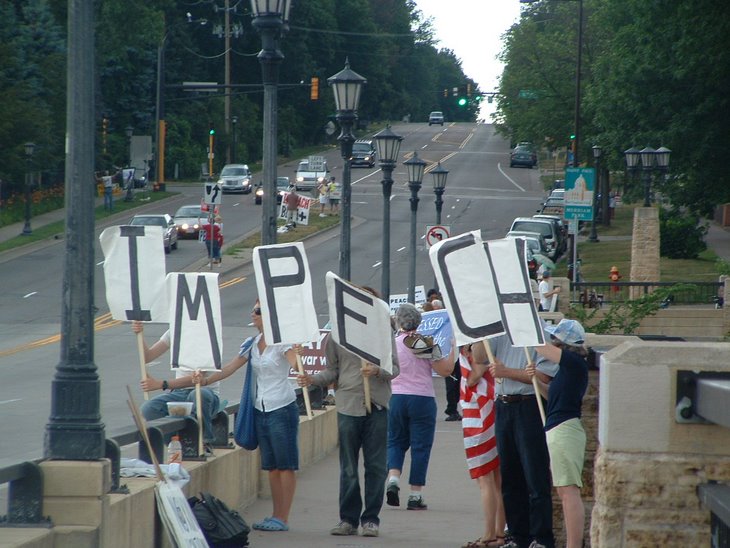
Here is the article from the Bemidji Pioneer about our small demonstration--- no mention of what our signs said:

* Bemidji, Minnesota; most racist city in America

* Boycott Bemidji

* End Institutionalized Racism

* Enforce Affirmative Action


Ballot case delayed: Mack will take 10 days to decide Warriors for Justice case

A final decision on whether two Warriors for Justice candidates may gain access to the Nov. 2 ballot will run its full course.

By: Brad Swenson, Bemidji Pioneer

A final decision on whether two Warriors for Justice candidates may gain access to the Nov. 2 ballot will run its full course.

Beltrami County Auditor-Treasurer Kay Mack said Monday that on advise of the Secretary of State’s Office, she will take the full 10 days as prescribed by law to decide on the Warriors for Justice case.

She had said last week that a decision would be made on Monday.

Nicole Beaulieu and Greg Paquin had hoped to start a new political party, Warriors for Justice, and run under that banner on Nov. 2.

Beaulieu seeks the House 4A seat held by Rep. John Persell, DFL-Bemidji, and Paquin seeks the Senate 4 post held by Sen. Mary Olson, DFL-Bemidji.

Mack made an initial decision after filing closed June 1 that Beaulieu and Paquin didn’t have the required 500 signatures on a petition to gain the November. At issue were more than 100 signatures of people showing post office box numbers as their residence.

Under Minnesota election law, petition signers must include their physical residence, including a street and house number.

Beaulieu and Paquin allege they were told by someone in the Secretary of State’s Office that they could use P.O. Box numbers.

“We’re going to use the extra time to go through all the signatures on the petition,” Mack said Monday. “We know that not only are there a lot of P.O. Box addresses, there are also some with no addresses and others with addresses outside the district, which also don’t count.”

A final decision should be made by Friday.

Meanwhile Tuesday, Beaulieu, Paquin and a small group of supports protested at several locations on the Beltrami County campus.

They said they visited with American Civil Liberties Union staff, who have sent a letter to Mack stating their belief that state law allows P.O. box addresses on American Indian reservations.

Both Beaulieu and Paquin have decided to stay in the race as write-in candidates should Mack declare their petitions invalid.

Warriors for Justice hopes to create awareness of what it believes is institutional racism in Bemidji. Paquin has used the lack of a affirmative action policies in the construction of the Bemidji Regional Event Center as his centerpiece.

A lawsuit he filed to contest the lack of affirmative action policies against the city and contractor was dismissed. Paquin, however, plans to appeal the ruling to the Minnesota Court of Appeals.

bswenson@bemidjipioneer.com

Justice, from Bhopal to Rwanda

This “sentence” is an outrage. (see article at very bottom)

After all this time this is all that is done to punish these corporate criminals.

Where is the outrage of the peoples of the world?

I find it very interesting how “justice” works.

Peter Erlinder sits in a prison cell in Rwanda and these Union Carbide criminals get a little slap on the wrist while the CEO of British Petroleum isn’t even fired and continues to receive his huge salary and bonuses and Native American Indians are facing stiffer penalties for exercising their Treaty Rights for fishing in Lake Bemidji and I am banned from Canada for life for writing an article against racism and for the rights of working people.

These corporate criminals ply the world in quest of maximum corporate profits as they engage in these criminal activities destroying lives, families, entire communities along with our living environments and democracy as they use all kinds of racist, ethnic and cultural differences to drum up hate between peoples to keep people divided so cannot unify to put an end to this corporate exploitation of people and the rape of their lands--- and the injustices go on and on--- once again we see in this Bhopal “judgment” how there is one set of laws for the rich and powerful and another set of laws for working people.

I wonder why the corporate attorneys who defended Union Carbide are not sitting in a prison cell like Peter Erlinder? A question you might want to ponder while sitting around the dinner table tonight.

Alan L. Maki
58891 County Road 13
Warroad, Minnesota 56763

Phone: 218-386-2432
Cell Phone: 651-587-5541

E-mail: amaki000@centurytel.net

Please check out my blog: http://thepodunkblog.blogspot.com/


From: Working_Class_Study_and_Action@yahoogroups.com
Sent: Wednesday, June 09, 2010 7:35 AM
To: Working_Class_Study_and_Action@yahoogroups.com
Subject: [Working_Class_Study_and_Action] Bhopal Judgment Sends Wrong Message


Bhopal judgement sends 'wrong message' to business community

Updated June 9, 2010 19:30:15

http://www.radioaustralia.net.au/asiapac/stories/201006/s2922990.htm

There has been outrage in India at this week's two-year prison terms meted out to local managers of Union Carbide, the company blamed for the 1984 Bhopal gas leak disaster that killed three thousand people. In the world's worst industrial accident, the lethal cyanide gas leak also maimed an estimated 25,000 people. Indian government statistics put the chronically sick at another 100,000 in 1994. Victims say they have been treated with contempt by the courts and the Indian government.

Monday, June 7, 2010

Oberstar launches campaign for 19th term


There has been no response to my questions... 

Oberstar launches campaign for 19th term and he is still ignoring the problems of the people.


From: Alan L. Maki [mailto:amaki000@centurytel.net]
Sent: Sunday, June 06, 2010 4:35 PM
To: bswenson@bemidjipioneer.com
Subject: Questions about this article you wrote...

Brad Swenson,

Could you identify those you cited merely as “…and representatives of tribal government?”

Also, is there a reason why Congressman Oberstar wasn’t asked by you about the enforcement of affirmative action on all the projects he was so instrumental in securing stimulus funding for. Certainly no one can argue Executive Order #11246 should not have kicked in on these projects.  

I also noticed you didn’t question Oberstar about the peat mining operation in the Big Bog and why he helped a Canadian corporation get the permit. How many members of the Operating Engineers have been working on this project?

Also, Oberstar supported the Enbridge pipeline project. How many employees from the Leech Lake Tribal Construction Company got jobs on this pipeline project; was there an affirmative action policy in place?

Of the 10,700 construction jobs the stimulus funding has created in Minnesota… how many Native American Indians were employed? How many total man/woman hours have been worked? How many Native American man/woman hours have been logged?

It is nice to see that after being in the U.S. Congress for thirty years, Oberstar was able to turn out 30 people for his campaign rally in a city the size of Bemidji. Seems to me people might not be all that thrilled with Oberstar.

Oh, yes, did Oberstar happen to mention what he thinks of racist and undemocratic attempts being made to deny the Warriors for Justice their right to ballot status?

I don’t imagine you asked Oberstar how much allowing smoking in these Indian Gaming Casinos is costing workers in terms of ill health or tax-payers in terms of tax-dollars? Did you happen to ask Mr. Oberstar what he thinks of 41,000 Minnesotans being forced to work in smoke-filled casinos at poverty wages without any rights under state or federal labor laws under conditions much worse than people are employed in South Korea where BP’s off-shore rig was built?

Say, Brad… did any of Oberstar’s thirty supporters happen to suggest that it might be most cost effective and create a few jobs to have a plant built on one of the Indian Reservations to build these off-shore oil rigs using Minnesota iron ore processed in a mill built on an Indian Reservation and fabricated in a plant on an Indian Reservation? What’s with these partnerships with the Chinese in mining operations; jobs to South Korea using Chinese produced Steel.

Oh, Brad; you didn’t happen to ask Jim Oberstar to see some documentation proving the steel pipes used on water lines in Bemidji actually were made with Iron Range ore, did you?

Say, wasn’t Oberstar this big union man nominated to run in a non-union, smoke-filled casino where workers have no rights?

Really, has Oberstar been listening to any people outside of these 30 hand-picked boosters at his campaign rally that couldn’t even fill the little Cabin Coffeehouse owned by a racist?

You know, Brad; I hate to dump too many questions on you, but, did you ask Congressman Oberstar why he is supporting the construction of 700 new military bases in Afghanistan instead of building 700 community-based public healthcare centers right here in the United States? And, speaking of healthcare; a very big and important issue with Congressman Oberstar, you didn’t happen to ask him why the Indian Health Service is so underfunded, did you? Or, why VA isn’t adequately funded to serve the vets here in northern Minnesota who are coming back from Iraq and Afghanistan as nutcases and paraplegics when they aren’t coming back in body bags. Which brings up one last question--- Congressman Oberstar is claiming all the credit for insisting on proper safety and inspections now that the BP oil rig has collapsed and tax-payers are going to get stuck with one hell of a tab for damages and clean-up; kind of reminds me that Congressman Oberstar had the exact same response when the I-35 Bridge collapsed--- how come this guy has never been such a forceful advocate before these disasters take place on his watch while under his “leadership.”

I notice you didn’t suggest to Congressman Oberstar that he might accompany you on a tour of the Leech Lake Indian Reservation so he could get a better understanding of racist poverty.

Gees, one last question; did you happen to ask Congressman Oberstar how it came to be under his leadership that racist redistricting took place which served to divide the votes of Native American Indians on the Leech Lake Indian Reservation? It seems from your article here that Congressman Oberstar presented you the perfect opportunity to ask this question.

Alan L. Maki


Bemidji Pioneer

Published June 06 2010
Oberstar launches campaign for 19th term
U.S. Rep. Jim Oberstar told a story Saturday of helping find federal financing for a new community/business center for the Leech Lake Band of Ojibwe after the band was turned down by two Republicans.
By: Brad Swenson, Bemidji Pioneer 
U.S. Rep. Jim Oberstar told a story Saturday of helping find federal financing for a new community/business center for the Leech Lake Band of Ojibwe after the band was turned down by two Republicans.

“That’s what I do — economic development,” Oberstar said he told the late Tribal Chairman Hartley White in the early 1980s. “Tell me what your project is.”

Oberstar said he secured U.S. Economic Development Administration funding for the $1.2 million project, and saw that the tribe’s construction company was qualified to do the job.

At that time, the Leech Lake Reservation wasn’t even in the Democrat’s 8th District.

“Being representative means that you represent people – to do that you have to listen to them and hear what their needs are and concerns are,” says Oberstar. “You then translate those into legislative action or changing of the attitudes of bureaucracies, and make government work for people.”

And Oberstar want to work for people in a 19th term, as he kicked off his re-election campaign Saturday in North Branch, Duluth, Bemidji and Brainerd.

In Bemidji, he was met by about 30 people late Saturday afternoon at the Cabin Coffeehouse. Also there were Sen. Mary Olson, DFL-Bemidji, and Reps. John Persell, DFL-Bemidji, and Brita Sailer, DFL-Park Rapids.

He spoke of building relationships through the years, such as with the Leech Lake Band of Ojibwe, Such partnerships have been good for northeast Minnesota, he said.

He also laid out progress under the federal economic stimulus measure, which he said has created 1.3 million jobs in 15 months, including 10,700 construction jobs in Minnesota.

The hiring of 1.3 million Americans has provided $489 million in federal income revenue, and prevented $383 million from being spent on unemployment compensation.

“It has made a difference in people’s lives,” Oberstar said, telling about a visit he made to Bemidji last summer and saw sewer and water pipe replaced along Irvine Avenue – a federal stimulus project.
“Old rusted pipes 75 years old out of the ground and new pipe to go into the ground that the Operating Engineers (Local 49ers) were installing,” he said. “I get excited about things like that, to see people working. I know that the new pipe going in was made from iron ore pellets produced on the Iron Range and went to lower (Great) Lakes steel mills that made the steel to produce the pipe that went into the ground and put people to work here.”

He called a circle that benefits all.

A report card shows the economic stimulus package reconstructed 34,434 lane miles of highway, including 534 lane miles in Minnesota. It paid for 12,062 bridge replacements or repairs, 120 in Minnesota.

Seniors were given a $250 check, and the third phase of a minimum wage law hike went into effect. Congress also passed and Obama signed a pay equity bill.

“Children’s health insurance — we passed it, Obama signed it, 4 million children have it,” Oberstar said.
Congress also approved and Obama signed a health care reform bill, something that had been on the table since the days of President Harry S Truman, he said.

One Republican voted for Social Security in 1935 and only one Republican voted to bring Medicare to the House floor in 1965, Oberstar said. No Republicans supported the current health care bill.

“They’re consistent,” he said. “They haven’t been for it in 70 years. But what does it do for you? You can’t be denied coverage, you can’t be capped, you can’t lose your health care, there is no lifetime limit, there are no limits annually on your coverage, your children will be covered t age 26, free preventive care for seniors under Medicare.”

People won’t be denied coverage because of a pre-existing condition, he said. “They can’t drop you when you get sick. There’s temporary insurance for early retirees. There are tax credits for small businesses.

“That is health insurance — that is good government — that is an investment in the future well-being of this nation,” Oberstar said.

Oberstar was introduced by a number of people, including the three legislators, and representatives of tribal government, labor and education.

Gina Bernard, Bemidji High School teacher and vice president of the Bemidji Education Association, said the economic stimulus package provided $1 billion to Minnesota, including $4 million to Bemidji.

“The vast majority of this money went to education, almost half of it to keep money flowing to local school districts,” Bernard said. Bemidji received $1.2 million for special education and about $800,000 for the district’s Title I program.

“Without this stimulus money, the damage to our schools and student education would have been much greater,” Bernard said. “We know there’s still financial trouble ahead. It’s good to know that Rep. Oberstar’s at our back.”

Olson said Oberstar on many occasions has come to the State Capitol to chastise legislators and Gov. Tim Pawlenty for turning down federal funds by not providing matching funds.

“Congressman Oberstar has seen us pass up hundreds of millions of dollars that could be putting working Minnesotans to work right now,” she said.

“He’s also been a very strong advocate locally in making sure that we had some road projects that have kept people working through this very difficult time,” Olson said.

“This election is about the future,” Oberstar said. “This is about America’s future. This is about our well-being.”


Alan L. Maki
58891 County Road 13
Warroad, Minnesota 56763

Phone: 218-386-2432
Cell Phone: 651-587-5541


Please check out my blog: http://thepodunkblog.blogspot.com/

Saturday, June 5, 2010

The struggle to end racist injustices in employment uncovers a web of institutionalized racism in every part of the social, political and economic structure of northern Minnesota...

Published June 05 2010

Warriors for Justice candidates: Petitions likely to be denied

Warriors for Justice candidates Nicole Beaulieu and Greg Paquin likely will have their petitions to gain the Nov. 2 ballot denied on Monday. 

By: Brad Swenson, Bemidji Pioneer

Warriors for Justice candidates Nicole Beaulieu and Greg Paquin likely will have their petitions to gain the Nov. 2 ballot denied on Monday.

Beaulieu is seeking the House 4A seat held by Rep. John Persell, DFL-Bemidji, and Paquin is seeking the Senate 4 seat held by Sen. Mary Olson, DFL-Bemidji.

A petition of 500 signatures is needed to gain the Nov. 2 ballot under their new party, Warriors for Justice, and both candidates had more than 550 signatures each.

But the number of signatures with just post office box numbers give each candidate insufficient valid signatures to certify the petitions, Beltrami County Auditor-Treasurer Kay Mack said Friday.

Mack said she plans to issue a final ruling Monday after consulting with County Attorney Tim Faver.

“We’re very confident that we’re not going to be able to use the people who just signed using their P.O. box,” she said. “And that’s with advisement from the Secretary of State’s Office, and why I feel really confident, not only because it’s the same kind of rules and laws for voter registration, but under advisement of the secretary of state it has to be a physical address.”

Beaulieu said she called the Secretary of State’s Office in May and was assured P.O. boxes would be enough. She’s talked to the American Civil Liberties Union and may file a lawsuit against the county.

Her petition had 580 signatures, she said Friday. The petition was submitted to Mack Tuesday afternoon. Mack called her minutes later to say it could not be accepted as more than 100 signatures had P.O. boxes rather than physical addresses.

Mack also said a number of signatures had no addresses and others were clearly from out of the 4A district.
“On May 19 Greg Paquin and I contacted the Secretary of State’s Office … in the Elections department to verify these P.O. boxes were going to be considered valid and he told us that they were,” Beaulieu said in an interview.

So they proceeded to collect signatures, allowing them to list P.O. boxes in the address section, she said.
“I was just as lost as her,” Beaulieu said about phone calls going back and forth Tuesday between her and Mack. “I kept arguing the fact that I had called them (Secretary of State’s Office) and they verified that those were going to be considered valid, and here she’s saying they’re not valid.”

Minnesota election law, Chapter 204B, describes how to obtain nomination petitions and states that, “Immediately after the signature, the signer shall write on the petition the signer’s residence address, including street and number, if any, and mailing address if different from residence address.”

Mack said she held off on making a formal dismissal in order to check out Beaulieu’s claim with the Secretary of State’s Office. “I will give them any benefit of the doubt,” she said, but couldn’t track down without a name anyone in the department that indicated P.O. boxes would be OK.

If the petition is denied, “I guess at that point I’ll be out of the election race,” Beaulieu said. “But as far as the Warriors for Justice we’re still going to be vocal with that.”

Paquin and Beaulieu say Bemidji is ripe with institutionalized racism, using as an example construction of the Bemidji Regional Event Center. They say affirmative action laws dictate that a number of minorities – American Indians – be hired and that the contractor and city are ignoring affirmative action laws.

Paquin filed a district court lawsuit against the city and contractor, alleging just that, which was recently dismissed.

Both first tried to seek the DFL endorsement for the two seats, Denied that, they first thought of forcing Persell and Olson to DFL primaries, but later decided on forming their own political party and seek the general election ballot.

“They were very interested in this,” Beaulieu said of her visit with ACLU staff in Bemidji. “They agreed with my argument that in the more rural areas, P.O. boxes are accepted and are considered valid. It just happens in my district that the majority of the Leech Lake Reservation falls in that district. To me, that’s considered rural.”

A lot of people get their mail delivered through the P.O. box on the reservation, she said. “Due to the poverty and the violence there, a lot of the people I got signatures from don’t have mailboxes on their house so therefore they go to the post office.”

Beaulieu believes there should be an exemption for signatures gained on the reservation.

“I want to do what’s right,” says Mack. “If there was any doubt, we would err on the side of giving them credit for all the hard work they did, but we can’t make rules. It either is or isn’t going to be allowable.”

Beaulieu said she may try again in 2012, or she may run for chairman of the Leech Lake Band of Ojibwe, but no decision will be made for quite some time. She may try a write-in campaign this fall.

“It couldn’t possibly be as hard as running this campaign this time around,” she said. “I just feel they’re targeting the native Americans, and goes back to the way the districts are aligned.”

She hopes that with redistricting, all of the Leech Lake Reservation will be included in one House district rather than two as it is now.

“It’s set up so the native Americans cannot unify the vote,” she said.”We are excluded from decision-making processes.”

She says that “we will continue to speak out against this institutionalized racism. It’s getting ridiculous and it’s getting out of hand.”

“When the laws were drafted, they weren’t drafted with any specific race, with any specific geographical area or person in mind,” Mack said. “Election law just literally wants to be sure that there is one person, one vote, and to precinct them. They have to put them in a physical location for their residence. And that’s consistent across all election law.”

People can’t reside in a P.O. box, Mack said.

Racism, workers' rights and politics in Minnesota

Friday, June 4, 2010

A Posting I made on The Great Lakes Town Hall Forum

Comments

New
Alan Maki's picture
The way into the future
Submitted by Alan Maki on Fri, 06/04/2010 - 10:21.

There is a way into the future.

The "red" Finns of the Iron Range took up the struggle for this future many years ago as they successfully took on the mining and forestry bosses to organize unions and establish the network of "red" Finn Co-operatives and Mesaba Co-operative Park while bringing forward an alternative to the two parties of big-business with the pro-people, environmentally friendly, pro-peace, anti-racist, anti-capitalist, socialist Minnesota Farmer-Labor Party.

The "red" Finns and their friends were instrumental in electing two socialist governors, Floyd Olson and Elmer Benson, along with the Communist Congressman from Eveleth, John Bernard.

It was a terrible mistake to merge the Minnesota Farmer-Labor Party with the Democratic Party because, today, the Minnesota Democratic Farmer-Labor Party is a very corrupt, anti-labor, anti-environmental political party controlled from top to bottom by the very mining and forestry bosses along with the power generating and banking industries that the socialist Minnesota Farmer-Labor Party fought for so many years.
Socialism, not capitalism, is the way into the future.

Our country and specifically our state and most especially the Iron Range was plunged into political darkness as first the very corrupt Harold Stassen, and then Joe McCarthy plied their dirty brand of anti-communist politics which hit Minnesota especially hard. If we are going to move into a future where there is a respect for labor and Mother Nature we are going to have to once and for all break free from the darkness of anti-communist politics in Minnesota and get back on track from where Floyd Olson, Elmer Benson and John Bernard left off with democracy being suffocated by the corporations and the politicians they hire to protect their profits.

The Iron Range has been one big "money pit" for the Wall Street coupon clippers and this must end.
Also, no one wants to talk about the fact that a very large portion of the iron ore mined and the taconite being processed has gone, and continues to go, into building up this insane military-financial-industrial complex in militarizing our country and fighting these dirty wars. We need to ask: How much has been taken from these iron ore pits for this senseless killing and destruction which kills and destroys so much as the wealthy few profit? The "red" Finns of the Iron Range had the moral and political courage to ask these questions and so should we.
    

Alan L. Maki
58891 County Road 13
Warroad, Minnesota 56763
E-mail: amaki000@centurytel.net
Phone: 218-386-2432

Thursday, June 3, 2010

Boycott, Divest, Sanction... Stop the Israeli killing machine!


June 1, 2010

The Elders group of past and present world leaders, including former South African president Nelson Mandela and Archbishop Desmond Tutu, on Monday condemned as “completely inexcusable” the deadly Israeli attack on a flotilla carrying aid for Gaza.

At least 10 [and as many as 16] people are reported to have been killed when Israeli commandos raided the boats on Monday in an operation that has drawn international condemnation.

“The Elders have condemned the reported killing by Israeli forces of more than a dozen people who were attempting to deliver relief supplies to the Gaza Strip by sea,” the 12-member group said in a statement issued in Johannesburg, where it met over the weekend.

The group, which was launched by Mr. Mandela on his birthday in 2007 to try to solve some of the world’s most intractable conflicts, called for a “full investigation” of the incident and urged the UN Security Council “to debate the situation with a view to mandating action to end the closure of the Gaza Strip.” “This tragic incident should draw the world’s attention to the terrible suffering of Gaza’s 1.5 million people, half of whom are children under the age of 18,” the group said.

Israel’s three-year blockade of Gaza was not only “one of the world’s greatest human rights violations” and “illegal” under international law, it was also “counterproductive” because it empowered extremists in the Palestinian territory, they said.

The Elders includes six Nobel peace prize winners — former UN secretary general Kofi Annan, former Finnish president Martti Ahtisaari, former U.S. president Jimmy Carter, detained Burmese leader Aung San Suu Kyi, and Mr. Mandela and Tutu.

Norway’s first female Prime Minister Gro Brundtland; former Brazilian president Fernando Henrique Cardoso; former Irish president and ex—UN High Commissioner for Human Rights Mary Robinson; Mozambican social activist Graca Machel; Indian women’s rights activist Ela Bhatt; and Algerian veteran UN envoy Lakhdar Brahimi are the other members.