Texas Longhorns with newborn calf in Bluebonnets

Texas Longhorns with newborn calf in Bluebonnets

Please note I have a new phone number...

512-517-2708

Alan Maki

Alan Maki
Doing research at the LBJ Library in Austin, Texas

It's time to claim our Peace Dividend

It's time to claim our Peace Dividend

We need to beat swords into plowshares.

We need to beat swords into plowshares.

A program for real change...

http://peaceandsocialjustice.blogspot.com/2013/03/a-progressive-program-for-real-change.html


What we need is a "21st Century Full Employment Act for Peace and Prosperity" which would make it a mandatory requirement that the president and Congress attain and maintain full employment.


"Voting is easy and marginally useful, but it is a poor substitute for democracy, which requires direct action by concerned citizens"

- Ben Franklin

Let's talk...

Let's talk...

Monday, March 25, 2013

The reactionary nature of Keynesian economics.

I had a lengthy discussion with a very liberal Minnesota State Senator this morning about my stating that there is nothing progressive about Keynesian economics. His position is that any government initiative which creates jobs should be considered progressive.

It is impossible to ague that the creation of any number of jobs with so many millions of people unemployed is not good. But, because the creation of any jobs may be good does not make Keynesian economics progressive.

No matter how hard anyone tries, there is no getting around the fact that Keynesian economics is all about using public capital and social capital (many people use the term "public funds" which is an okay definition but there is a difference between public capital and social capital which combined we can consider "public funds") during times of economic recession and depression in order to stimulate just enough spending get the capitalist consumer market going in order to increase production in the private sphere.

Keynesians prefer to spend public and social capital putting people to work on public projects managed by privately owned corporations but will agree to limited public works projects as a last resort--- hence what they do in the public sphere is always too little, too late even though the money workers employed on these public works projects ends up in the coffers of the extremely wealthy.

Keynesians view production as being the prerogative--- the exclusive right--- of private sector of the economy. They can make all the exaggerated claims they want about helping "small business" but anyone who looks can see they are really about helping only the largest Wall Street monopolies and multi-national corporations.

Does anyone really believe the Congressional Progressive Caucus would be able to create 7 million new jobs through subsidizing small business? The government doesn't even hire small businesses to pick up the garbage or fill small pot-holes in the roads and when public infrastructure like water and sewer is privatized, how often do you see the work turned over to small businesses?

The first insight we have that Keynesian economics is not progressive is that it's primary concern is the stimulation of the capitalist consumer market. The second is that the Keynesians take the position production is the exclusive right of private industry.

Progressives take the position that production should take place for social well-being so everyone can have the basic needs met.

Most people in this country, or any other country, spend what income they have on meeting their basic human needs so it is not any kind of far out left thinking to assert this basic fact of life--- and economics.

Progressives take the position that production in a public sector should occur--- especially when private production fails. A progressive position would be one in which it is advocated to bring all these closed mines, mills and factories back into production under public ownership using public capital and social capital--- just imagine what we could do with the trillions of dollars from the Social Security Trust Fund in order to start up production to meet social and human needs. Keynesians want no part of public ownership of the mines, mills and factories or power generating, communications, transportation or retail industry (distribution of goods produced through cooperatives).

Anyone with an ounce of common sense can see that for the Keynesians the economy can "bounce back" to what is considered a "recovery" with the "new norm" for unemployment remaining for years at 7% to 8.5%--- the president of the Minneapolis Federal Reserve Board stated this.

The Keynesians in fact believe, but won't publicly state, that this obscene level of unemployment is good because it depresses all wages. In fact, they will couch their approval by talking about how they use various levers to manage the economy so we don't get hyper inflation from spending on militarism and wars--- huge "public works projects" though the Keynesians don't like to admit how much they love militarism and wars--- hence the Congressional Progressive Caucus makes no bones they are for huge military expenditures while claiming they are for making "modest reductions" while using tax-dollars in a most frugal way only to "modernize" the war machine--- but, you notice when they speak of "modernization" they avoid all talk of what they really mean--- making the killing machine more efficient and effective... thus they deliver drone warfare, etc. as they evade ever talking about the imperialist nature of these wars.

I pointed out to the Senator that he had done nothing to keep the St. Paul Ford Plant in production under public ownership even though he repeatedly voted to spend public funds (social capital) to subsidize Ford's operation and then he compounded his "errors" when he enabled the Ford hydro-electric generating dam--- compliments of local, state and federal tax-dollars--- to be sold by the Ford Motor Company to a Canadian multi-national at a profit so obscene no one will state the amount and then the public gets screwed again because the electricity is sold to a monopoly to rip-off consumers when this hydro-electric generating plant could have been brought under public ownership and operated to bring free electricity to our public schools, to power street lights and other public buildings saving the very tax-payers who built this hydro-electric generating plant millions upon millions of dollars just like it saved the Ford Motor Company for some 85 years.

Would anyone call allowing Ford to sell a plant it never owned "progressive?" These Keynesians want to evade all talk about specifics because every time there is a discussion they end up exposing themselves for the reactionaries they are while pretending they are progressives.

The Keynesians like to pass themselves off as progressive job creators but they don't like to talk about the two-thousand jobs they flushed down the sewers into the Mississippi River when they allowed Ford Motor Company to close the St. Paul Ford Twin Cities Assembly Plant and they don't want to talk in public about how much the public is losing as water going through the Ford Dam generates 18 megawatts of electricity at a loss to tax-payers and the public for which the public once again subsidizes the electricity these Keynesians don't give a second thought to.

Keynesian economics is not only reactionary, it fosters the most crooked and corrupt kind of government seeing as how Brookfield Asset Management really spread around the campaign contributions to secure this secretive deal with the Ford Dam.

It makes me sick to hear these Keynesians try to hide their reactionary economics under the guise of being progressive.

And then when they find they can't defend their reactionary economics they claim we are too stupid to understand the complexities of economics.

Thursday, March 21, 2013

The Sequester Hits the Reservation by cutting funding to the already severely underfunded Indian Health Service

Always money for wars; but, never enough money for people...


While the New York Times blames the Republicans for the austerity driven sequester, the fact of the matter is, the sequester is a creation of Barack Obama and the Democrats who intentionally tossed the Republicans this raw meat knowing they would grab it.


Why haven't we seen tribal politicians stand up denouncing these racist cuts?

Why haven't we heard the Democrats speaking out against this continued genocide?

Why haven't we heard the foundation-funded outfits raising hell about this injustice?

Where are the churches which for centuries have been the instigators and purveyors of racist genocide who now claim they have changed their racist ways but keep their mouths shut?

Why hasn't the Democratic super majority in Minnesota passed a resolution condemning this racist injustice?

But, why hasn't the Indian Health Service raised its own voice in defense of cuts preventing its own Agency--- headed up by a Democrat--- from carrying out its mandate?

And why hasn't the head of the Department of Health and Human Services been raising awareness of these racist cuts?

And once again we see where there are no grassroots organizations responding to any of this; why not? Probably for the same reason we don't see anyone taking on the injustice of allowing smoking to continue to the detriment of workers' health in the Indian Gaming Industry... How much does allowing smoking in the Indian Gaming Industry cost the Indian Health Service as it sickens and kills workers?

http://www.nytimes.com/2013/03/21/opinion/the-sequester-hits-the-indian-health-service.html?_r=1&

Editorial

The Sequester Hits the Reservation

By 
The Congressional Republicans who brought us the mindless budget cuts known as the sequester have shown remarkable indifference to life-sustaining government services, American jobs and other programs. So what do they make of the country’s commitments to American Indians, its longstanding obligations to tribal governments under the Constitution and treaties dating back centuries?
Opinion Twitter Logo.
Very little, it seems. The sequester will impose cuts of 5 percent across the Indian Health Service, the modestly financed agency within the United States Department of Health and Human Services that provides basic health care to two million American Indians and native Alaskans. It is underfinanced for its mission and cannot tolerate more deprivation.

Here lies a little-noticed example of moral abdication. The biggest federal health and safety-net programs — Social Security, Medicaid, the Children’s Health Insurance Program, the Supplemental Nutrition Assistance Program, Supplemental Security Income, and veterans’ compensation and health benefits — are all exempt from sequestration. But the Indian Health Service is not.

The agency was supposed to be spared the worst of the automatic cuts; at least that is what its officials believed. Under a 1985 law that served as the model for the current sequester, annual cuts to appropriations for the Indian Health Service could not exceed 2 percent.

Even a cut of that amount is very bad news for the main health care provider for some of the poorest and sickest Americans, living in some of the most remote and medically underserved parts of the country. Like care for veterans, Indian health was supposed to be one area in which duty and compassion trumped cheapness.
The agency’s officials were braced for that level of cuts, but they were mistaken. The Office of Management and Budget interpreted the sequestration law to mean that the 2 percent cap did not apply to most of the Indian Health Service financing.

The agency’s director, Yvette Roubideaux, had to warn tribal leaders last September to plan for a much bigger, $220 million cut, which it expects will lead to 3,000 fewer inpatient admissions and 804,000 fewer outpatient visits each year.

The Indian Health Service operates 320 health centers, 45 hospitals, 115 health stations and 4 school health centers across the country. The vast majority of these are on reservations, where poverty, disease, substance abuse, suicide and other public health challenges are severe.

The government has been increasing its support for the service in the last decade; at a hearing on Tuesday of the House Appropriations Subcommittee on Interior, Environment and Related Agencies, the chairman, Mike Simpson, an Idaho Republican, noted that between 2000 and 2012, financing rose to $4.4 billion from $2.4 billion.

This has allowed some improvement and stability in services. But Dr. Roubideaux told Mr. Simpson that the agency’s catastrophic health emergency fund, which reimburses providers for trauma care and major surgeries, would still run out of money before the end of the year.
The federal government cannot use its budget nihilism to avoid its moral and legal obligations.
A version of this editorial appeared in print on March 21, 2013, on page A26 of the New York edition with the headline: The Sequester Hits the Reservation.


-- 
Alan L. Maki
Director of Organizing,
Midwest Casino Workers Organizing Council
 
58891 County Road 13
Warroad, Minnesota 56763

Phone: 218-386-2432
Cell: 651-587-5541

Primary E-mail: amaki000@centurytel.net

Wednesday, March 20, 2013

Repeal "At-will hiring; At-will firing."

I hope this article gets a lot of attention and creates a lot of discussion with the intent to build a real grassroots and rank-and-file movement. "At-Will Hiring and At-Will Firing" have hobbled the working class movement in this country for many decades--- denying people of color, women, the handicapped, youth and left wing activists employment in the hiring process and led to millions of unjust firings of workers as they took on union organizing at their places of employment and in the communities where they live. I have always believed this is one of the most important issues all working people and organized labor must take on. I have introduced resolutions for its repeal while working in Michigan, Virginia and Wisconsin at the local union level, in county labor councils and at precinct, county and state conventions of the Democratic Party. I have written "letters to the editor," blogged, leafleted about this issue and in speaking to groups of people in conjunction with the discussions about the Bill of Rights and the United Nations' Universal Declaration of Human Rights I have brought this issue forward.

As soon as the Minnesota Democratic Farmer-Labor Party was handed its super majority I suggested they repeal and rescind this reactionary legislation--- not one single politician in Minnesota would even consider bringing forward legislation to repeal and rescind this legislation while bringing forward in its place "Just Cause" legislation.

This issue should become a top priority for any groups considering organizing a working class based progressive people's party because until this happens the issue probably isn't going to get the attention it deserves... here in Minnesota, over 300 Democratic precinct caucuses approved a resolution for repealing this legislation and replacing it with "Just Cause" and it was the then president of the Minnesota AFL-CIO, Ray Waldron, who led the effort at the state convention to defeat the resolution.

As far as I know, only the Kent County Labor Council in Michigan has passed a resolution for its repeal... back in 1969. We need a lot more activity and movement at the local level if this is going to become a movement.

Please read and circulate widely---


Is It Time For Just Cause?

by RAND WILSON and STEVE EARLY

“It’s time for unions to stop being clever about excuses for why membership is declining and it’s time to figure out how to devise appeals to the workers out there. Workers should be looking to unions because of job insecurity and stagnant wages, but they are not.”

–Clark University Professor Gary N. Chaison as quoted in The New York Times on Jan. 24, 2013 about union density reaching a 97-year low.

The annual release of bad news about union membership levels always provides labor-oriented academics with an opportunity to pontificate.  Professor Gary Chaison is one well-known chider of unions, for their various shortcomings and mistakes. Regularly quoted in The Times, he often dispenses tidbits of advice more critical than instructive.  However, in the case of his comment above, attention must be paid.

As the new open shop movement spreads across the Midwest, it has undermined public and private sector bargaining units in Wisconsin, Michigan, and Indiana. The impact on overall union membership is now apparent in the latest national statistics. As Times reporter Steven Greenhouse reported on Jan. 24, “the percentage of workers in unions fell to 11.3 percent last year” and “that brought unionization to its lowest level since 1916, when it was 11.2 percent.”  In the private sector, the loss of 400,000 members of all kinds reduced union density to 6.6 percent in 2012. Another expert quoted in this story cited a public sector membership drop of 50,000 in Wisconsin alone.

In these new open shop environments,  unions certainly need to function differently to avoid precipitous membership losses after being stripped of collective bargaining rights and/or automatic dues check off. But the larger challenge issued by Chaison still needs to be met, and not just in states where organized labor is already on the defensive. Organized labor needs to go on the offensive, with a systematic campaign for new workplace protection that would address the widespread job insecurity cited by Chaison, and the erosion of job rights caused by de-unionization. As outlined below, this advocacy effort would increase the public appeal of unions and help lay the groundwork for a revival of collective bargaining as a tool for reversing long-term wage stagnation.

What legislative goal might inspire all workers—union and non-union alike? Due process rights at work could be the answer. The United States is alone among industrialized countries in allowing at-will employees (i.e. most of the 88.7 % without a union contract) to be terminated for arbitrary reasons. As a result of past labor movement lobbying, Germany, France, Japan, Sweden, the United Kingdom, and South Africa all require employers to demonstrate they have “just cause” to dismiss non-probationary employees.  Workers who believe they have been fired unfairly have the opportunity to contest their dismissals, and pursue money damages, before various types of industrial tribunals. In the U.S., such recourse is only available to public employees with civil service protection and/or union-represented workers with access to a negotiated grievance/arbitration procedure.

The concept of just cause appeals to basic fairness, just as due process does in our criminal justice system.  At-will employees have no job security: they can be fired for a minor mistake, a disagreement with a supervisor, a biased performance evaluation, an individual complaint about pay or working conditions, or unapproved off-duty behavior–like supporting political causes or candidates disliked by the employer (an increasing election year concern at firms owned by proselytizing Republicans). Hundreds of thousands of workers are sent packing every year under such circumstances.

One state has passed such a law, curbing wrongful dismissals (and statutes in Puerto Rico and the Virgin Islands also prohibit termination without “good cause”).  Enacted in 1987, the Montana Wrongful Discharge from Employment Act applies to non-union non-probationary employees and prohibits discharges without good cause. It permits aggrieved workers to sue for up to four years worth of back pay, and provides a method for recovery of the necessary legal fees. Business opponents tried to kill the legislation by claiming it would scare business away. Twenty-six years later, Montana’s economic growth doesn’t seem to have suffered.

State level campaigns for similar just cause legislation would serve two purposes, one narrower (because it’s related to union organizing) and the other broader, because all workers, pro- or anti-union would benefit. If just cause campaigns succeed, workers will gain another layer of legal protection in organizing drives. Montana’s unionization rate reflects its mix of industries and history of militant struggles, but it’s hard not to notice that the state, at 14.6 percent, has a much healthier percentage of union members than the national average. Neighboring Idaho has less than half the rate of unionized workers.

“Just cause” protection is helpful because one of the main reasons private sector workers shy away from organizing is their fear of being fired. As any labor organizer knows, National Labor Relations Board (NLRB) remedies for retaliatory dismissals are wholly insufficient. Discharge cases can drag on for years, before reinstatement is ordered, if the fired worker is fortunate enough to win. Interim earnings (including unemployment benefits) are deducted from back pay awards. This leaves anti-union employers with little financial incentive not to commit this most serious of unfair labor practices. In addition, few employers come right out and say they’re firing someone for being pro-union, during an organizing campaign. There’s always an official cover story–and too often the Labor Board accepts this employer pretext, rather than finding discriminatory intent and a connection to union activity.

Just cause statutes could give fired union supporters a second bite at the apple, in a different venue, just as many workers now win unemployment benefit cases based on the same set of facts that the NLRB manages to mishandle. Among the broader population of non-union workers who might challenge a dismissal unconnected to organizing, there would also be an important new union role: providing representation, advice, and information to help workers win their “just cause” cases. In workplaces where unions are trying to build employee organizations, like OUR Walmart–that function like unions but without formal recognition or bargaining rights–the ability to represent individual workers in termination proceedings would become an important selling point for signing up new members.

As longtime UE organizer and national executive board member Peter Knowlton points out:

“In most countries, except the US, if the boss wants to fire you, they can — but they have to pay you severance. The payment is normally based on a combination of pay and service time. When you make the employer pay severance for firing a worker (for reasons not having to do with discrimination based on age, race, gender, nationality, sexual orientation, disability, union activity or religion), then they will likely not do it so readily. For workers, knowing you’ll get severance eases the fear, somewhat, of speaking up to confront injustice. So there’s an economic “safeguard” for workers and a dis-incentive for employers. Plus, at least by law, it puts workers versus employers on a more equal footing.”

Winning “just cause” legislation will certainly not be easy. But building a movement on a scale similar to the push for the organizing-oriented Employee Free Choice Act, circa 2007 – 2009, would offer union activists an opportunity to champion a cause directly affecting far more workers.  Throughout the last century, organized labor led or assisted lots of uphill legislative fights for new protective legislation applying to the workplace. Some campaigns took many years but, state-by-state, labor won job injury insurance, minimum wage and overtime requirements, health and safety regulations, child labor laws, and prohibitions against employment discrimination. Every worker benefited from these regulatory initiatives, whether they had a union card or not. And whenever the labor movement was on the offensive fighting for all workers, union membership grew.

A “just cause” campaign could potentially engage working people at multiple levels. While agitating for state legislative action, local unions, central labor councils, and worker centers could promote the concept through community-based workers’ rights boards and public pressure. Community leaders and labor activists could declare certain areas “Just Cause Zones” and fight to enforce just cause as a new community standard—like living wage laws, but potentially much wider.  Unions and their allies could use the proposed legislation as a political “litmus test” for candidates. Workers fired unfairly could be enlisted to lobby and testify, along with their families, before state legislatures considering due process protection.

Even if campaigns for just cause do not succeed, millions of non-union workers will learn about the concept, especially if enactment is also pursued through popular referenda, where those are permitted under state law. By popularizing the just cause concept and raising expectations, more workers may respond by thinking, “If we can’t get this protection through legislation, let’s get it by forming a union!”

Rand Wilson has worked as a union organizer and labor communicator for more than twenty-five years and is currently on staff at SEIU Local 888 in Boston. Wilson was the founding director of Massachusetts Jobs with Justice. 

Steve Early has been active as a labor journalist, lawyer, organizer, or union representative since 1972. He is the author of Embedded With Organized Labor (Monthly Review Press, 2009) and The Civil Wars in U.S. Labor (2011). They can be reached at: rand.wilson@gmail.com

Tuesday, March 19, 2013

Two parties, Democrats and Republicans; same racist agenda.

Notice: This is not a Republican initiated piece of legislation; this comes from the Minnesota Democrats with a super majority.

Anyone not reading this proposed legislation does so at their own risk:

https://www.revisor.mn.gov/bills/status_result.php?body=Senate&search=basic&session=0882013&location=Senate&bill=1417&bill_type=bill&rev_number&submit_bill=GO&keyword_type=all&keyword&keyword_field_text=1&titleword

I wonder which lobbyists are behind this little "gem?"

Perhaps Occupy Wall Street and Idle No More should consider a joint action to occupy the Minnesota State Legislature?

Is some kind of "Summit" bringing together people of color, women and the handicapped along with all those for fairness and justice in order?

Here is the description of this legislation:

Bill Name: SF1417
Requiring the commissioner of transportation (DOT) to submit a waiver request to
the United States department of transportation, federal highway administration,
from the requirements of the federal disadvantaged business enterprise
program.

Here is the proposed legislation:

1.1A bill for an act
1.2relating to transportation; requiring a waiver request concerning the federal
1.3Disadvantaged Business Enterprise program.
1.4BE IT ENACTED BY THE LEGISLATURE OF THE STATE OF MINNESOTA:

1.5 Section 1. WAIVER; DISADVANTAGED BUSINESS ENTERPRISE PROGRAM.
1.6(a) By October 1, 2013, the commissioner of transportation shall submit to the United
1.7States Department of Transportation, Federal Highway Administration, a request under
1.8Code of Federal Regulations, title 49, section 26.15, for a waiver from the requirements
1.9of the federal Disadvantaged Business Enterprise program. The waiver request must
1.10seek establishment of separate participation goals for disadvantaged business enterprises
1.11at least 51 percent owned by the following socially and economically disadvantaged
1.12individuals: (1) women; and (2) all other individuals meeting the definition.
1.13(b) For purposes of this section, "socially and economically disadvantaged
1.14individual" has the meaning given in Code of Federal Regulations, title 49, section 26.5.
1.15EFFECTIVE DATE.This section is effective the day following final enactment.

Note: Instead of enforcing Affirmative Action we get a request for a "waiver" from the Democrats with their super majority who previously attributed such racist behavior to the Republicans--- two parties, same racist agenda.
--
Alan L. Maki
Director of Organizing,
Midwest Casino Workers Organizing Council

58891 County Road 13
Warroad, Minnesota 56763

Phone: 218-386-2432
Cell: 651-587-5541

Primary E-mail: amaki000@centurytel.net
E-mail: alan.maki1951mn@gmail.com

Blog: http://thepodunkblog.blogspot.com/

Monday, March 18, 2013

Democratic super majorities taking a stand; Where?

My response to another article in In These Times suggesting Democratic super majorities are the way forward:


Link: http://inthesetimes.com/article/14715/taking_a_stand/

There is nothing "progressive" about this "Congressional Progressive Caucus"other than how the Democrat's head hack, George Lakoff, has used linguistics to pervert and bastardize the word "progressive" to mean creating "progressive sounding policy directives" framed in a way to make people think something "progressive" is going to be done when Lakoff explicitly warns Democrats not to bring forward specific progressive solutions to any problems. (Lakoff, "Don't think of an Elephant.")

In his follow-up book ("Blueprint"); Lakoff goes on to red-bait, in typical Hubert Humphrey (author of the Communist Control Act) fashion, real progressive solutions to the problems working people and the working class are experiencing.

When it comes to "jobs;" Keith Ellison, Raul Gijava, John Conyers and Bernie Sanders play this card to the hilt--- never missing an opportunity to talk about "jobs, jobs, jobs."

Along comes Conyers with something he calls a "full employment act" when this proposed legislation has nothing what-so-ever to do with full employment other than creating some jobs, in the larger scheme of things only a few jobs, when the unemployed working people of this Nation need over fifteen-million new jobs at real living wages to achieve real full employment.

(See my suggestions in the header of my blog for what it will take to get America to work.)

Why hasn't the "Congressional Progressive Caucus" brought forward a real "Full Employment Act" which would require and mandate the President and Congress to attain and maintain full employment along the lines of the Wright Patman proposed, labor pushed--- U.S. Senate passed--- and Wall Street opposed, House defeated, "Full Employment Act of 1945" when Wall Street drew the line-in-the-sand and said, "enough!" as massive repression was initiated against the labor movement under the guise of an anti-Communist driven which-hunt creating mass national hysteria followed up with Taft-Hartley and Hubert Humphrey's "Communist Control Act?"

None of the members of the Congressional Progressive Caucus have the moral and political courage of a Wright Patman, the populist liberal Democrat from Texas; nor do any of today's labor "leaders" have the class consciousness required to mobilize the working class for such a battle.

The only thing we get from the so-called "progressive" Democrats is talk, talk, talk instead of "jobs, jobs, jobs."

If just one job was created every-time one of these politicians uttered the words, "jobs, jobs, jobs" we wouldn't have any unemployed people in this country but the dirty imperialist wars--- as Mark Twain properly called them--- which these members of the "Congressional Progressive Caucus" haven't mustered the courage nor attempted to fully mobilize the American people in opposition to, are killing jobs the same way these barbaric wars are killing people... not to mention that the wealth of our Nation needed to solve all these social and economic problems might as well be tossed into the deepest depths of the oceans rather than funding this insanity of militarism and war after war.

Is the solution to be found in electing a Democratic super majority as this article and the members of the "Congressional Progressive Caucus" are suggesting?

Well, we gave Obama a Democratic super majority which bailed out Wall Street instead of Main Street.

And look at Keith Ellison's home state of Minnesota where I live--- a huge Democratic super majority with a Democratic governor, a Democratic majority in the State House and a Democratic majority in the Minnesota State Senate and we can't even get the attention of these Democrats to repeal and rescind "At-will Employment" and replace it with "Just Employment."

This Democratic super majority refuses to pass anti-scab legislation and anti-lockout legislation.

This Democratic super majority refuses to pass Minimum Wage legislation that makes the Minimum Wage a real living wage instead of a miserly poverty wage; these Democrats don't seem to understand what my 8 year old granddaughter understands that poverty wages cause poverty.

All of these things--- real reforms--- are what politicians like to call "revenue neutral;" they cost tax-payers nothing.

But, don't we all know that massive unemployment drives all wages down and corporate profits up? Wall Street loves massive unemployment. Massive unemployment enables employer lockouts and makes the recruiting and hiring of "replacement workers" (scabs) easy.

This Democratic super majority sees an employer lockout here in the Red River Valley going on well over a year at American Crystal Sugar--- a tax-payer subsidized business/industry where scabs are working as the workers who voted these Democrats into office are suffering the consequences... this employer lockout is not "revenue neutral" it is tax-payer subsidized to the hilt.

Anyone who thinks electing more Democrats is a solution to the mess this country is in is living in some kind of "la-la land" of the make-believe; not a Nation where Wall Street dominates with a strangle-hold the social, political and economic life of this country through the creation of this two-party trap.

What is required if we are to move progressive politics forward--- the politics and economics of livelihood--- is the creation of a working class based progressive people's party with the patience, stamina and courage to challenge Wall Street for power--- Democrats will never be up to this task, they never have been. It is utterly foolish to even think that a party which is owned lock, stock and barrel by Wall Street, and beholden to Wall Street, is going to turn and defeat Wall Street's thoroughly reactionary agenda of imperialist wars abroad paid for with austerity measures here at home.

In typical George Lakoff instructed fashion, these so-called "progressive" Democrats propose a "defiant anti-austerity budget" which boils down to no specific solutions to the problems being experienced by the working class. It is mere nice-sounding words and political hyperbole without any organized fight back; a gimmick to once again hoodwink workers into thinking Democrats with super majorities are going to solve our problems when time and time again we have seen these Democratic super majorities refuse to bring forward even the most minute reforms intended to initiate the road to massive reforms required to tide the working class over as this rotten capitalist system goes through its death throws and convulsions of economic collapse before our very eyes.

Make no mistake about this: capitalism now in its highest stage of imperialism which has grown barbaric and cannibalistic is on the skids to oblivion placing us on a dangerous road leading straight to hell with no stops for a breather in purgatory.

By-the-way; I have seen first hand here in Minnesota how Congressman Keith Ellison is just one more Humphrey-Mondale knock-off playing the working class for chumps and suckers.

Minnesota's more than 40,000 casino workers workers forced to work in this hideous Indian Gaming Industry in loud, noisy, smoke-filled casinos at poverty wages without any rights under state or federal labor laws as the wealthy white mobsters run off with all the profits leaving behind greater poverty as they make huge campaign contributions to Ellison and his Minnesota Democratic super majority as a payoff for these worthless politicians to turn their backs on injustice--- if anyone thinks these Democrats are going to stand up and fight for worker's rights or the livelihoods of workers ask a worker employed at one of the more than three-hundred casinos now comprising this hideous Indian Gaming Industry which Keith Ellison, Raul Grijava, John Conyers, Bernie Sanders and those "progressives" like Senator Ben Cardin helped to create--- the very kind of workforce Scott Walker and Rick Snyder drool over and dream about for all workers.

Have we already forgotten that each and every member of this so-called "Congressional Progressive Caucus" bailed on single-payer universal health care and have backed the Israeli killing machine to the hilt with Minnesota Congressman Keith Ellison being a no-show.

Alan L. Maki
Director of Organizing,
Midwest Casino Workers Organizing Council

Tuesday, March 12, 2013

The "housing question" and "unemployment" continue to dog the capitalist economy over one-hundred and fifty years after Karl Marx said capitalists couldn't solve these basic and fundamental problems.


Something to think about:


A new study has revealed that a minimum waged worker would have to work 89 hours a week when only a few other cost of living factors are figured in to pay for an average apartment renting for $836.00 a month in Minneapolis.

The same bankers who have foreclosed on and evicted families from their homes are banking on those they have evicted from their homes will have to rent apartments or turn to condo living--- but, this might end up a bust, too, because of poverty wages:

http://finance-commerce.com/2012/12/hot-twin-cities-apartment-market-shows-signs-of-cooling-off/

The banking crowd, ever attuned to quick short-term profits, is oblivious to the pain and suffering experienced by working class families trying to keep a roof over their heads--- it's all about profits.

Which brings us to another problem Karl Marx said the capitalists could not overcome: the problem of workers not being able to purchase what they produce.

And Karl Marx pointed out that when workers can't purchase what they have produced because their wages are too low economic depressions which begin as recessions occur.

Capitalism is having difficulties with:

  • Housing.
  • Unemployment.
  • Wages.
  • Economic collapse.

And did I mention: WAR?

What about: PRICES?

Was Karl Marx really wrong?

Our much celebrated Keynesian economists advising Obama base their economic theories for a properly functioning economy on a smooth flow and interaction between investments and consumption. Nothing seems to be working out for these fellows no matter what they try and no matter how much they tinker--- and, of course, as Alan Greenspan has now acknowledged, the free market left on its own didn't fair too well, either... remember the beginning of the Depression of 2008 which just won't end?

And as liberal economist, John Kenneth Galbraith pointed out: "we can't have guns and butter at the same time"--- no doubt if Galbraith were alive today he would frame his "guns v butter" declaration somewhat differently:

Wars kill jobs the same way they kill people.

Karl Marx pointed out that when Nations spend their wealth on militarism and wars this is tantamount to dumping the Nation's wealth into the deepest depths of the oceans. (True or False?)

It seems no matter how hard Wall Street's over-paid economists and pundits try, they can't manage to win in the battle of ideas against a long dead Karl Marx.

Pretty bad when an entire intellectual Wall Street financed establishment of economists and intellectuals dedicated to saving capitalism can't figure out what to do to get us out of this economic mess... and can't even win a debate with a dead man.


http://www.graphicwitness.org/contemp/marxtitle.htm


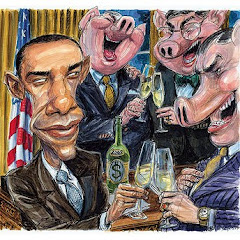
  Perhaps this guy needs a "Forever Stamp?"


Mille Lacs Band buys Crowne Plaza, DoubleTree hotels in St. Paul

Mille Lacs Band of Ojibwe purchases hotels with wealth derived from paying casino workers poverty wages


Of course the issue and question becomes: 

Who is really purchasing these hotels with the wealth derived by paying casino workers poverty wages?

The answer to this question is very simple:

The same mobsters who own the slot machines and every aspect of Mille Lacs' casinos/hotels/restaurant/bar/entertainment/resort business.

St. Paul politicians have a long history of being bribed by these same mobsters so this is nothing new for them; it will just mean more campaign contributions for the thoroughly corrupt and racist Democratic Party now headed up by a pill-popping billionaire governor.

The undemocratic, red-baiting Nancy Goldman of Unite-HERE will now have a new vicious anti-labor management to deal with... and, quite possibly, a lockout and scabs are in store with the next contract down the road... no doubt her St. Paul Democratic Party buddies so thrilled with this deal will provide the same support they did to the 2,000 St. Paul Ford Twin Cities Assembly Plant workers and the 1,300 currently locked out American Crystal Sugar workers.

Interesting how such a "poverty stricken" casino management who complain they can't afford to pay its casino workers real living wages manages to come up with the tens of millions of dollars for what is nothing but a slick money-laundering deal and scheme.

Alan L. Maki


http://www.startribune.com/local/stpaul/196898791.html?refer=y


Mille Lacs Band buys Crowne Plaza, DoubleTree hotels in St. Paul

  • Article by: KEVIN DUCHSCHERE , Star Tribune
  • Updated: March 11, 2013 - 11:45 PM
The Mille Lacs Band of Ojibwe announced the purchase of two downtown St. Paul hotels on Monday.

Rarely is an announcement about a hotel deal accompanied by an invocation in Ojibwe and ceremonial drum music, but then, the Mille Lacs Band is not a typical hotel owner. At least not yet.

On Monday, tribal leaders formally announced they had closed on the purchase of two of downtown St. Paul’s largest hotels, the Crowne Plaza Riverfront and the DoubleTree by Hilton, for an undisclosed amount of money. The band took charge of the hotels Thursday.

“Hello, St. Paul!” said Joseph Nayquonabe Jr., CEO and chairman of the board for the band’s economic development corporation, making the announcement at the Crowne Plaza’s Great River Ballroom.

“The Mille Lacs Band of Ojibwe is checking into downtown, and we plan on being here for a while.”

He said that St. Paul was just the first step in a long-term strategy to diversify the band’s investments beyond gambling, the industry the band has pursued with success since building the first Grand Casino on Lake Mille Lacs near Garrison 22 years ago.

That’s why, he said, there are no plans now or in the future to build a casino in connection with the St. Paul hotels.

“We’re really excited about creating new revenue streams for the band, so that’s really what this investment is all about,” he said.

The Crowne Plaza and the DoubleTree, which together have more than 700 rooms — nearly half the hotel rooms in the city — will be managed by Graves Hospitality Corp., the Minneapolis-based company that operates the Graves 601 in downtown Minneapolis and is run by Ben Graves, son of hotel magnate Jim Graves.
Both hotels will get makeovers that include new “destination dining experiences” that cater to locals as well as visitors, they said.

The DoubleTree will get a new entrance on Minnesota Street, and the Crowne Plaze will be “transform[ed] … both from the room side and from the public spaces,” Nayquonabe said. He didn’t put a price tag on the renovation work.

The band also is looking at possibly rebranding the hotels to drive more convention business to St. Paul, he said.

Melanie Benjamin, the band’s chief executive, said the band had been looking for a business that could build on its experience running its two Grand Casinos, their affiliated hotels and other businesses that include a lake resort.

“We intend to be good business people, good neighbors and good citizens. … Together we hope to create jobs, tax revenue for the city, and most importantly for us, two truly great hotels,” she said.

The purchase won’t take the hotels off the tax rolls. The band formed two limited-liability corporations to buy the hotels and will pay property taxes like any other business owner. Tribal officials said there were no plans to apply for tax-exempt trust status.

City leaders hailed the deal as a sign of revived interest in downtown investment building on upcoming attractions, such as the light-rail line and the Lowertown ballpark.

In a statement, Mayor Chris Coleman (who was out of town) said he was “thrilled” by the news.
“The band is looking for new, unique investment opportunities throughout the country and they chose to invest in St. Paul first. … I look forward to what is to come with both properties,” he said.

Matt Kramer, president and CEO of the St. Paul Area Chamber of Commerce, said the fact that the hotels were purchased by “fellow Minnesotans who know the market, know this area” was “incredibly good news for St. Paul.”
Kirby Payne, president of HVS Motel Management consultants, said the upgraded hotels will help the city compete for convention business.

“The change of ownership, in itself, will not generate additional demand in St. Paul for room nights,” Payne said. “However, their remodeling and improving of the hotels, along with the other things going on that are positive in St. Paul, will certainly generate additional interest.”

Nayquonabe said that the band is looking at other possible properties in New York, Washington, San Antonio and Los Angeles, as well as in Minneapolis and the Bloomington strip near the Mall of America.
“We’re thinking big, and that’s really what drives us every day,” he said.

Kevin Duchschere • 651-222-2732
Email: kduchschere@startribune.com
-- 
Alan L. Maki
Director of Organizing,
Midwest Casino Workers Organizing Council
58891 County Road 13
Warroad, Minnesota 56763

Phone: 218-386-2432
Cell: 651-587-5541

Primary E-mail: amaki000@centurytel.net

Cc'ed:

To: rep.phyllis.kahn@house.mn, rep.tom.anzelc@house.mn, sen.bev.scalze@senate.mn, sen.bill.ingebrigtsen@senate.mn, sen.bobby.champion@senate.mn, sen.carla.nelson@senate.mn, sen.chuck.wiger@senate.mn, sen.dan.sparks@senate.mn, sen.dave.thompson@senate.mn, sen.david.tomassoni@senate.mn, sen.foung.hawj@senate.mn, sen.greg.clausen@senate.mn, sen.jeff.hayden@senate.mn, sen.jim.carlson@senate.mn, sen.jim.metzen@senate.mn, sen.john.hoffman@senate.mn, sen.kathy.sheran@senate.mn, sen.katie.sieben@senate.mn, sen.kent.eken@senate.mn, sen.kevin.dahle@senate.mn, sen.lyle.koenen@senate.mn, sen.matt.schmit@senate.mn, sen.melisa.franzen@senate.mn, sen.melissa.wiklund@senate.mn, sen.michelle.benson@senate.mn, sen.rod.skoe@senate.mn, sen.roger.chamberlain@senate.mn, sen.roger.reinert@senate.mn, sen.scott.dibble@senate.mn, sen.terri.bonoff@senate.mn, sen.tony.lourey@senate.mn, sen.vicki.jensen@senate.mn, sen.warren.limmer@senate.mn, Alice Hausman , Andrea Kieffer , Andrew Falk , Anna Wills , Barb Yarusso , Ben Lien , Bob Barrett , Bob Dettmer , Bob Gunther , Brian Johnson , Bud Nornes , Carlos Mariani , Carly Melin , Carolyn Laine , Chris Swedzinski , Cindy Pugh , Connie Bernardy , Dan Schoen , David Bly , David Dill , David FitzSimmons , Dean Urdahl , Debra Hilstrom , Debra Kiel , Denny McNamara , Diane Loeffler , Duane Quam , Erik Simonson , Erin Murphy , Ernie Leidiger , Frank Hornstein , Gene Pelowski , Glenn Gruenhagen , Greg Davids , Jason Isaacson , Jason Metsa , Jay McNamar , Jean Wagenius , Jeanne Poppe , Jeff Howe , Jenifer Loon , Jerry Hertaus , Jerry Newton , Jim Abeler , Jim Davnie , Jim Newberger , JoAnn Ward , Joe Atkins , Joe Hoppe , Joe McDonald , Joe Radinovich , Joe Schomacker , John Benson , John Lesch , John Persell , John Petersburg , John Ward , Joyce Peppin , Karen Clark , Kathy Brynaert , Kathy Lohmer , Kelby Woodard , Kim Norton , Kurt Daudt , Kurt Zellers , Laurie Halverson , Leon Lillie , Linda Runbeck , Linda Slocum , Lyndon Carlson , Marion Oneill , Mark Anderson , Mark Uglem , Mary Franson , Mary Murphy , Mary Sawatzky , MaryLiz Holberg , Matt Dean , Melissa Hortman , Michael Nelson , Michael Paymar , Mike Beard , Mike Benson , Mike Freiberg , Mike Sundin , Nick Zerwas , Pam Myhra , Pat Garofalo , Paul Anderson , Paul Marquart , Paul Rosenthal , Paul Thissen , Paul Torkelson , Peggy Scott , Peter Fischer , Raymond Dehn , Rena Moran , "rep.ann.lenczewski@house.mn" , "rep.dan.fabian@house.mn" , "rep.joe.mullery@house.mn" , "rep.patti.fritz@house.mn" , Rick Hansen , Rod Hamilton , Roger Erickson , Ron Erhardt , Ron Kresha , Ryan Winkler , Sandra Masin , Sarah Anderson , Shannon Savick , Sheldon Johnson , Sondra Erickson , Steve Drazkowski , Steve Green , Steve Simon , Susan Allen , Tara Mack , Tim Faust , Tim Kelly , Tim Mahoney , Tim ODriscoll , Tim Sanders , Tina Liebling , Tom Hackbarth , Tom Huntley , Tony Albright , Tony Cornish , Will Morgan , Yvonne Selcer , Zachary Dorholt , ZZZ Ellison Keith , Karen Monahan , ddjohnson@startribune.com, dtice@startribune.com, jfriedmann@startribune.com, jmoore@startribune.com, nstanthony@startribune.com, sgillespie@startribune.com, sknutson@mnaflcio.org

Monday, March 11, 2013

Hugo Chavez: Lest We Forget

Conn Hallinan
March 11, 2013
Dispatches From The Edge
"Charismatic and idiosyncratic, capable of building friendships. Communicating to the masses as few other leaders ever have, Mr. Chavez will be missed."

In early December 2001, I was searching through my files looking for a column topic. At the time I was writing on foreign policy for the San Francisco Examiner, one of the town's two dailies. A back page clip I had filed and forgotten caught my attention: on Nov. 7 the National Security Agency, the Pentagon, and the U.S. State Department had convened a two-day meeting on U.S. policy vis-à-vis Venezuela. My first thought was, "Uh, oh."
I knew something about those kinds of meetings. There was one in 1953 just before the CIA and British intelligence engineered the coup in Iran that put the despicable Shah into power. Same thing for the 1963 coup in South Vietnam and the 1973 coup against Salvador Allende in Chile.
Chavez had reaped the ire of the Bush administration when, during a speech condemning the 2001 attack on the World Trade Center and the Pentagon, he asked if bombing Afghanistan in retaliation was a good idea? Chavez called it "fighting terrorism with terrorism," not a very good choice of words, but, in retrospect, spot on. The invasion of Afghanistan and the subsequent Iraqi War have been utterly disastrous for the U.S. and visited widespread terror on the populations of both countries.  Upwards of a million Iraqis died as a direct and indirect effect of the war, five million were turned into refugees, and the bloodshed is far from over. Much the same-albeit on a smaller scale-is happening to the Afghans.
Would that we had paid the man some attention.
But for the Bush administration, Chavez's statement presented an opportunity to rid itself of a troublesome voice. In came the White House's Latin America "A Team."
The top gun in that odious outfit was Otto Reich, assistant secretary of state for western hemispheric affairs and former Reagan Administration point man for the 1981-87 Contra War against Nicaragua. The General Accounting Office had nailed Reich during the 1986 Iran-Contra scandal for "prohibited convert propaganda," planting false stories and opinion pieces in newspapers. A Cuban exile, Reich had helped spring Orlando Bosch in 1987 from a Venezuelan prison where Bosch was in jail for bombing a civilian Cuban airliner and killing 73 people.
Rogelio Pardo-Maurer, deputy assistant secretary of defense for western hemisphere affairs, also a Cuban exile and former chief of staff for the Contras, was the Pentagon side of the team.
While Reich met with civilian opponents of Chavez and conservative businessman Pedro Carmona, Pardo-Maurer huddled with military leaders, including Gen. Lucas Romero Rincon. Carmona and Rincon would play a key role in the April 11, 2002 coup against Chavez. The National Endowment for Democracy and United States Agency for International Development were also supporting Chavez's opponents with money and advice, and both organizations have long histories of subversion and covert operations.
I had no special information about the possibility of a coup but it didn't take a crystal ball to see that the armies of the night were on the move. So I wrote a column titled "Coup in the Wind" that laid out the meetings, identified the actors, and reminded readers that the U.S. has a long and sordid history of organizing and supporting coups in Latin America.
A little more than three and a half months later, the plotters struck, arrested Chavez, suspended the constitution, dissolved the legislature, dismissed the Supreme Court, the Attorney General and the National Election Commission, and fired provincial governors. We had seen this all before, and I flinched at what I thought would inevitably follow: executions, death squads, "disappeared" opponents, smashed unions, and a cowed population. But April 11, 2002 was not 1954 in Guatemala, 1964 in Brazil, 1973 in Chile, or 1976 in Argentina. Chavez had lifted millions of people out of poverty, opened schools, increased literacy, and tackled malnutrition. In vast numbers those people rose up, and, for the first time in Latin American history, a coup was overturned.
Three days after Chavez was returned to office, Martha Honey at Foreign Policy In Focus sent me an email saying she liked the coup column and would I consider writing a follow-up for the think tank? I knew all about Martha Honey and her husband, Tony Avirgan. As reporters for the Costa Rican Tico Times, they had uncovered much of the Iran-Contra plot and were legends among those of us in the alternative press. I also knew about FPIF. It is hard to write sensible things about U.S. foreign policy without it. So I did a piece called "Anatomy of a Coup," detailing U.S. support for the plotters. Since then I have written over 200 columns, so in a way it was Hugo Chavez that landed me at FPIF.
Vhavez became the president of a country where 70 percent of the population was considered "poor," in spite of $30 billion in yearly oil revenues. It was a country where two percent of the population owned 60 percent of the land, and where the gap between rich and poor was among the widest on the continent.
Today, according to the Gini Coefficient, Venezuela has the lowest rate of inequality in Latin America. Poverty has been reduced to 21 percent, and extreme poverty from 40 percent to 7.3 percent. Illiteracy has been eliminated and, proportionally, Venezuela is number two in Latin America for the number of university students. Infant mortality has dropped from 25 per 1,000 to 13 per 1,000, the same as it is for Black Americans. Chavez's government increased the number of health clinics by 169.6 percent, and hands out free food to five million Venezuelans. Take a moment to read "The Achievements of Hugo Chavez" by public health experts Carles Muntaner, Joan Benach, and sociologist Maria Paez Victor in CounterPunch.
Comparing the man's accomplishments to his U.S. obits was like taking a trip through Alice's looking glass. Virtually none of the information about poverty and illiteracy was included, and when it was grudgingly admitted that he did have programs for the poor, it was "balanced" with claims of soaring debts, widespread shortages, rampant crime, economic chaos, and "authoritarianism."
Venezuela's debt as a percentage of Gross Domestic Product is lower than that of the U.S. and Europe. Inflation has fallen to a four-year low. There is crime, but neighboring Colombia is far more dangerous, particularly if you happen to be a trade unionist. And more people in Venezuela are eating better than they have ever eaten in the history of the country. Over the past decade growth has averaged 4. 3 percent, and joblessness dropped from 11.3 percent to 7.7 percent. Americans would kill for those figures.
As for being an "authoritarian," most the country's media is venomously anti-Chavez and publishes regularly, and his opponents hold weekly rallies and protests. Want to try that in U.S. ally Honduras (or Saudi Arabia, Bahrain, United Arab Emirates, etc.)?
The old Venezuelan elites-aided by the U.S.-will now attempt to turn the clock back to 1997, the year before Chavez took over. But that will not be easy. Quite literally millions of people have been brought into the democratic process and they will not cede power without a fight. Once people have better housing, schools, nutrition, jobs and health care, it is very difficult to take those things away. Chavez handed a better life to the vast majority of Venezuelans, and, as they demonstrated in April 2002, they are perfectly able to defend those gains.
"Charismatic and idiosyncratic, capable of building friendships. Communicating to the masses as few other leaders ever have, Mr. Chavez will be missed," is the way former Brazilian president Luiz Inacio Lula da Silva put it.
He will be missed, indeed.


Sunday, March 10, 2013

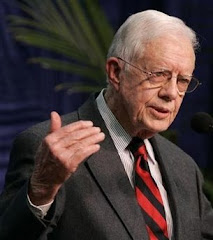
Statement From Former U.S. President Jimmy Carter on the Death of Hugo Chavez

Link: http://thepodunkblog.blogspot.com/2013/03/statement-from-former-us-president.html

Link: http://www.cartercenter.org/news/pr/hugo-chavez-030513.html

FOR IMMEDIATE RELEASE
March 5, 2013
Contact:
dcongil@emory.edu

Statement From Former U.S. President Jimmy Carter
on the Death of Hugo Chavez

Rosalynn and I extend our condolences to the family of Hugo Chávez Frías.  We met Hugo Chávez when he was campaigning for president in 1998 and The Carter Center was invited to observe elections for the first time in Venezuela.  We returned often, for the 2000 elections, and then to facilitate dialogue during the political conflict of 2002-2004.  We came to know a man who expressed a vision to bring profound changes to his country to benefit especially those people who had felt neglected and marginalized.  Although we have not agreed with all of the methods followed by his government, we have never doubted Hugo Chávez's commitment to improving the lives of millions of his fellow countrymen.


President Chávez will be remembered for his bold assertion of autonomy and independence for Latin American governments and for his formidable communication skills and personal connection with supporters in his country and abroad to whom he gave hope and empowerment.  During his 14-year tenure, Chávez joined other leaders in Latin America and the Caribbean to create new forms of integration.  Venezuelan poverty rates were cut in half, and millions received identification documents for the first time allowing them to participate more effectively in their country's economic and political life.


At the same time, we recognize the divisions created in the drive towards change in Venezuela and the need for national healing.  We hope that as Venezuelans mourn the passing of President Chávez and recall his positive legacies — especially the gains made for the poor and vulnerable — the political leaders will move the country forward by building a new consensus that ensures equal opportunities for all Venezuelans to participate in every aspect of national life.

#####

----------------------------------------------------------------------------------------------------------------------------


Declaración del  ex-presidente de los Estados Unidos Jimmy Carter
sobre la muerte de Hugo Chávez

Rosalynn y yo expresamos nuestras condolencias a la familia de Hugo Chávez Frías. Conocimos a Hugo Chávez durante la campaña presidencial de 1998 cuando el Centro Carter fue invitado, por primera vez, a observar las elecciones en Venezuela. Desde entonces, hemos regresado con frecuencia, primero para las elecciones de 2000 y luego para facilitar el diálogo durante el período de conflicto político entre los años 2002 y 2004. Conocimos entonces a un hombre que expresaba una visión de profundo cambio en su país para favorecer a aquellos sectores que se sentían ignorados o marginados. Si bien no siempre hemos coincidido con los métodos seguidos por su gobierno, nunca hemos dudado del compromiso de Hugo Chávez para mejorar las vidas de millones de sus compatriotas.

El presidente Chávez será recordado por su audaz defensa de la autonomía e independencia de los gobiernos de América Latina, así como por sus extraordinarias habilidades de comunicación y su capacidad para establecer una estrecha relación con sus seguidores en el país y en el extranjero, a quienes transmitió esperanza y empoderamiento. Durante sus 14 años en la presidencia, Chávez se unió a otros líderes de América Latina y el Caribe para establecer nuevas formas de integración. La tasa de pobreza en Venezuela se redujo dramáticamente y millones de venezolanos recibieron documentos de identidad por primera vez en sus vidas, lo que les permitió participar más efectivamente en la vida política y económica de su país.

Al mismo tiempo, reconocemos las divisiones producidas en este proceso de cambio y la necesidad de promover un proceso de reconciliación nacional. Esperamos que mientras los venezolanos lamentan el fallecimiento del presidente Chávez y recuerdan su legado positivo -especialmente el vinculado a los avances en favor de los pobres y vulnerables-, los líderes políticos encaminen el país hacia adelante, impulsando la construcción de un nuevo consenso que asegure iguales oportunidades para todos los venezolanos para participar en todos los aspectos de la vida nacional.

####

Saturday, March 9, 2013

Report: Dentists underpaid by state for low-income patient care.

The poor, poor dentists...

Did you ever notice when the issue of raising the Minimum Wage comes up the media always has to have a "balanced" approach with interviewed guests "for" and "against" raising the Minimum Wage? Public Radio has become really good at giving us this "balanced" approach to the news.

But--- why don't we get this same "balance" when it comes to dentists being "under-paid" for treating the poor?

http://minnesota.publicradio.org/display/web/2013/03/08/health/legislative-auditor-dentist-reimbursement

Notice in this story that it is never mentioned how much dentists are being paid.

When I talked to Governor Dayton about this issue a few days ago and asked him to provide me with all the facts and figures, he said, "Alan, I'm concerned with what you will do with this information. I think you should make a Data Practices Act request."

I then called Lorna Benson the reporter who did this story and asked her why she didn't include these details in her story. Her reply was, "I don't consider this pertinent information. The minute details are too much to get into; people wouldn't understand."

Governor Dayton won't provide me with the details because he knows the same thing Lorna Benson knows: Most Minnesotans would think dentists are already being paid too much and they are viewed, and rightly so, by the public as greedy and selfish for turning away the poor.

The same Democrats who refuse to pass anti-lockout legislation and anti-scab legislation and who "raise" the Minimum Wage to keep it a miserly, poverty minimum wage allow themselves and the people of Minnesota to be held hostage to a bunch of greedy, profit seeking selfish dentists who are the first to complain about the Minimum Wage being increased to a real living wage.

What I want to know, and I am pretty sure I speak for most Minnesotans, is: In posting these so called "losses" from treating the poor, how much did these dentists actually get paid from the government?

This is a very interesting approach to democracy because the last time I made a Data Practices Act request it took over two years to get the information I was requesting and I didn't even get the information from the "request." A woman "leaked" me the documents and was demoted as a result.

It is my understanding that in submitting a tax write-off of $800,000.00, dentist Michael Flynn made over twelve-million dollars at tax-payer expense. Interesting that Minnesota Public Radio did not ask dentist Michael Flynn to see his tax filings.

I called dentist Michael Flynn to ask him what he thought the Minimum Wage should be if it was in line with people having to be paid his dental bills; the woman in his office who refused to provide her name said, "He will get back to you." I haven't heard from dentist Flynn nor have I heard back from the Minnesota Dental Association after being forwarded to a voice mail.

I have noticed in doing a little research over the years on this issue that the Minnesota Dental Association is very generous in its campaign contributions to Minnesota politicians and contributes very generously to Minnesota Public Radio, too... not that I am insinuating this causes any discrepancies between how the Minimum Wage issue and pay for dentists is handled by the politicians or the way the two stories get covered by Minnesota Public Radio; but, there does seem to be greater sympathy from both the politicians and Minnesota Public Radio towards extremely wealthy dentists than towards the working class poor.   


The heart-wrenching story of dentist Michael Flynn---

Transcript of MPR story:

Report: Dentists underpaid by state for low-income patient care
 by Lorna Benson, Minnesota Public Radio
March 8, 2013

 ST. PAUL, Minn. — Minnesota doesn't pay dentists enough to treat patients enrolled in the state's Medical Assistance program, says a report issued Friday by the Minnesota Office of the Legislative Auditor.

 The report says the state should increase the base rate for dentists treating MA patients and it should simplify the claims process, so dentists will be more willing to continue serving these low-income patients.

 Dentists have long complained that Medical Assistance, the state's program for the poor, doesn't cover their expenses.

 "That needs to be addressed," says Legislative Auditor James Nobles. "If we want dentists to serve MA patients, I think we have to be more fair in our payments to them."

FORMULA OUTDATED

 Minnesota's dental payment rate is based on how much dentists charged in 1989 and not the costs of current dental services. The rate ranks among the bottom third of states, according to the report.

 The low payments have prevented patient access to dental care because many dentists have either dropped out of the program or restricted the number of MA patients they will treat, Nobles said.

 "Ultimately they are the provider network and we have to entice them to participate. We have to be fair with them," said Nobles. "And we have to have a system that is not as complicated as it currently is."

 Twenty-four percent of Minnesota dentists who responded to the Legislative Auditor's survey said they stopped serving MA patients after 2010.

"It's heartbreaking that I can't see the patients that I desire to see because I don't have the financial ability to do it."
- Dentist Michael Flynn

 The report says among all MA recipients, people with special needs and those in sparsely populated areas have experienced the greatest challenges finding a dentist.

 Dentist Michael Flynn, who has a part-time practice in Lewiston, closed his other practice located in Winona because he was losing too much money on his Medical Assistance patients.

 "Unfortunately our clinic in a given year had to write off over $800,000 in unpaid claims just because of the difference in reimbursement," said Flynn. "We just weren't affordably able to do it. So the entire staff from the Winona office is currently unemployed."

 Flynn, who is president of the Minnesota Dental Association, said he has limited new MA patients since 2010 due to the reimbursement situation.

 "I find it very hard to turn them down. To me it's heartbreaking that I can't see the patients that I desire to see because I don't have the financial ability to do it," said Flynn.

COMMUNITY CLINICS FILL IN GAPS

 Patients in urban areas have better access to dental care because there are more community dental clinics willing to serve MA patients. Six-year-old Essense Ridley of north Minneapolis got her teeth cleaned this week at a Children's Dental Services clinic in her neighborhood. Last year, the private non-profit served just over 30,000 low-income children and pregnant women in Minnesota.

 Even at her young age, Essense has already had more dental work than many adults. She has four fillings and two crowns due to cavities. And her mother said she has another cavity that is scheduled to be filled soon.

 "Essense has an issue with brushing her teeth for some reason," says Shanika Ridley. "She just says she don't want to do it. But we make her do it, though. And then they love candy. And that's a killer to teeth."

 Shanika Ridley said her daughter's tooth decay was a wakeup call for her family. She has since banned gummy fruit snacks and pop in her home. Ridley said her two younger children have healthier teeth — but they each have at least one cavity.

 Sarah Wovcha, executive director of Children's Dental Services, said her organization sees a lot of children with extensive oral disease and the problem is getting worse.

 "We have seen a tenfold increase in the need for general anesthesia, hospital cases," Wovcha said. "These are cases in which there's severe dental disease in all four quadrants of the mouth and really the only way that the child can be comfortably treated is in a general anesthesia setting."

 Wovcha attributes some of the increase in emergency care to the challenges families face in getting access to care. She said her clinics have a four-month wait for patients who need hospital-based emergency care.

 Children's Dental Services raises money from many sources to cover the costs of treating its MA clients and other patients who have no insurance. But Wovcha said it's getting harder and harder to do that. Last year, for the first time in its 94-year history, Children's Dental Services posted a loss of around $100,000.

 Bills have been introduced in the Minnesota House and Senate this session that would raise the state's dental payment rates. The legislation would take the median fees dentists charged in 2011 and reimburse providers at 75 percent of that rate.

 The Department of Human Services said in a letter that it supports the Legislative Auditor's key recommendations and has included a dental rate increase in the Gov. Mark Dayton's budget.

Friday, March 8, 2013

International Women's Day

Often when we celebrate important days people associate "famous" people with these events.

On this International Women's Day I would like to remember the work of Virginia Glenn, who, with her husband William Glenn, was active in the movements for civil rights, peace, social and economic justice for many decades and never gave up.


Virginian Glenn was a civil rights, peace and labor activist who ran for office on the Progressive Party ticket and was involved for many years with the Women's International League for Peace and Freedom.

Can Civilization Survive Capitalism?

Noam Chomsky wrote a most interesting and informative article published by In These Times, "Can Civilization Survive Capitalism?" which is making the rounds through all the liberal, progressive and leftist web sites and it is being posted all over on FaceBook and blogs.

This is good this article is getting the widespread distribution it deserves but the discussion of this article seems to kind of just end with praise rather than moving to "What needs to be done?"

As usual, Chomsky makes an excellent case against capitalism and in defense of democracy; but, also, as usual, Chomsky fails to follow through on his anti-capitalist thinking leaving the solution and our movement building to others to discuss--- those others are us.

Chomsky articulated the problems with capitalist democracy fairly well but failed to point out that Wall Street is our enemy and it is this Wall Street enemy of ours we need to challenge for power; not only to defend democracy (and Chomsky failed to point out exactly what is required to defend democracy) but to be successful in bringing about many other needed reforms.

What has changed in this country since we have won all other reforms is not that capitalism has "improved" or even that it has become so much worse--- even though it has become the epitome of everything evil and disgusting; but, the real change is that Wall Street is now so much more powerful that it can resist and stand up to any challenge people bring forward with one exception: Wall Street will not be able to withstand a challenge to its power from a people united intent on bringing Wall street down.

A defense of democracy is like all of our other problems we face and experience in this "new world" dominated by Wall Streets raw power--- in order to protect, defend and expand democracy requires challenging Wall Street for power.

With Occupy Wall Street, Idle No More and the climate change movement, why is it still so difficult to have this discussion about the need to challenge Wall Street for power?

The answer to Chomsky's question is becoming more obvious to all of humanity by the hour:

No, civilization can't survive under capitalism. So why are we waiting to abolish capitalism? Why are we being so timid in bringing forward the socialist solution as advocated by Albert Einstein over 60 years ago:

http://socialismtheoryandpractice.blogspot.com/2009/04/why-socialism.html

Here is Chomsky's article. I would encourage everyone reading Chomsky's article to read Albert Einstein's article on "Why Socialism?" because Einstein answers Chomsky's question PLUS he provides an answer which Chomsky only implies. In addition, Einstein provides the socialist alternative to capitalism which Chomsky does not.

http://inthesetimes.com/article/14684/can_civilization_survive_capitalism/


I made this comment in response to Chomsky, not as a criticism; but, to add in what he has missed in this article published on the In These Times web site:

Wall Street is our enemy. Capitalist power is concentrated in monopolies at the helm of Wall Street. Every single movement for peace (and the military industrial complex has the largest carbon footprint of all), movements for jobs and full employment, the movements for health care reform and the movement trying to halt global warming--- no matter how large and powerful these movements become which advocate reforms that would benefit people, Mother Nature and society as a whole--- all come up against a brick wall. That brick wall--- our common enemy is Wall Street. So, why aren't we advocating challenging Wall Street for political and economic power instead of throwing up our arms in bewilderment and exasperation in defeat when we aren't following through with the struggle we need to wage: the struggle for working class people's power.

We create peace movements, health care movements, labor movements, jobs/full employment movements, civil rights movements and now climate change movements but we don't follow through in bringing all of these movements together into a huge anti-capitalist, anti-imperialist, anti-monopoly movement bringing people into the streets and to the ballot box.

In fact, we don't even have a political party taking up the demands of our movements. Instead, the major tendency has been to use the Democratic Party which is one of Wall Street's parties to advance demands for reforms. Really, how likely is it that a party like the Democratic Party which is controlled and manipulated by our Wall Street enemies is going to allow us to use their party to solve the very problems Wall Street in quest of maximum profits has created for us?

As I see it, we have two tasks confronting us--- bring all of our movements together so we can take our struggles into the streets in a more powerful way and we need to create some kind of working class based peoples party capable of being the voice of the people in the streets and we need to begin the challenge to Wall Street's power.

I doubt most of the present "leaders" of any of our movements are up to the task of challenging Wall Street for political and economic power since most are now the products of the foundation-funded think tanks.

And who are the "philanthropists" who fund these foundations which in turn fund all these "think tanks" providing the "knowledge" to all of these movement "leaders?"

Aren't these "philanthropists" the very same Wall Street capitalist parasites who profit from the exploitation of our labor and the rape of Mother Nature?

Capitalism has become an barbaric and cannibalistic imperialist monster only capable of breeding wars, destroying our ecosystems and our entire living environment.

Society needs these Wall Street capitalists about as much as my dog Fred needs ticks and fleas.

Our movements, if they are going to achieve the successes--- solutions to our many common problems--- which we seek are going to have to step up the struggle to a new phase: working together united in challenging Wall Street for power.

Think anti-capitalist/anti-imperialist education.

Think organizing to challenge Wall Street for power.

Thursday, March 7, 2013

When wealth creates poverty.

Hoarding the wealth created by the working class:

http://www.forbes.com/billionaires/

The wealth they hoard amongst such massive poverty across the world is not the end of their criminality... it is their ownership and control of the mines, mills and factories where workers collectively labor to continue producing this wealth that is the real crime.

The crime is capitalism.


The criminals are the parasitical Wall Street capitalist coupon clippers who hoard this tremendous wealth they derive from exploiting labor and raping Mother Nature--- the only two sources of wealth.

Minnesota Democrats have declared war on those who hoard junk when we should be declaring war on those Minnesota millionaires and billionaires who hoard wealth.

A look at the companies listed on the various stock exchanges gives us a better understanding of who owns the wealth created by the working class but the very fact that a political and economic system of capitalism which enables the few to hoard such massive wealth while so many people who create this wealth live in such poverty without even the access to the very necessities of life as articulated in the United Nations' Universal Declaration of Human Rights is what we need to be considering: http://unudhr.blogspot.com/

Justice requires these billionaires should be behind bars for grand theft but most people would be satisfied just to see them relieved of their wealth and provided with a job working alongside those they have been exploiting daily with their wealth and all future wealth being used to improve the lives and livelihoods for the rest of the people in the world.

There simply is no excuse for the continued toleration of this kind of obscene and insane hoarding of so much wealth, which, ironically--- and as this rotten capitalist system works--- creates so much poverty.

Something to think about:

These billionaires are so wealthy BECAUSE so many people are so poor.

Question:

What is the definition of "insanity?"

Answer:

Doing something over and over expecting different results
-Albert Einstein

Albert Einstein presented the solution to this "insanity" over 60 years ago in his essay--- Why Socialism?

http://socialismtheoryandpractice.blogspot.com/2009/04/why-socialism.html